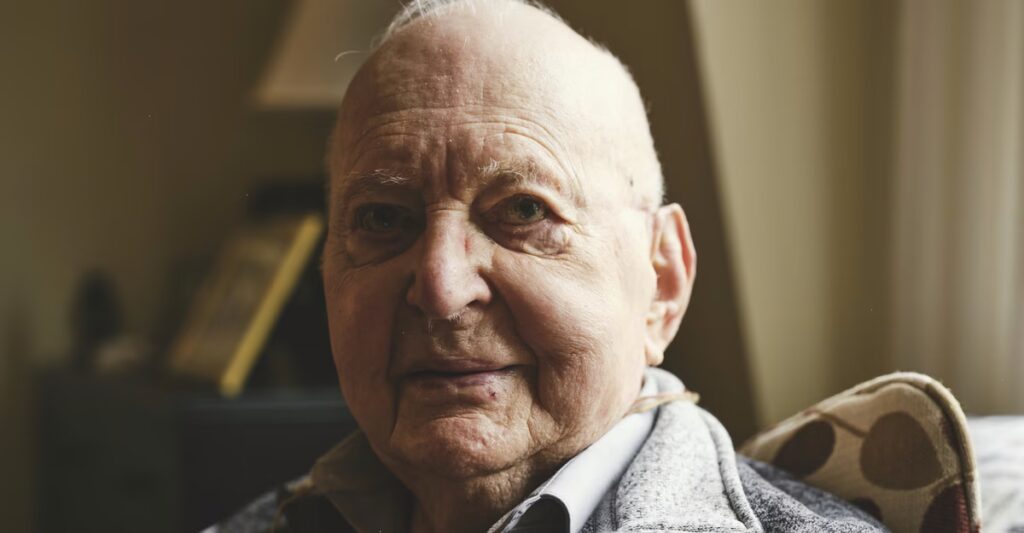
Joe Picard perched atop a precarious mound of 300-plus-pound high-explosive shells as his ship churned toward Normandy’s beaches. The teenager had been at sea only once before, to cross the Atlantic, and now he was sailing across the English Channel to pile into the breach that Allied forces had opened in Hitler’s defenses weeks earlier, on D-Day. Smoke from the fighting still rose on the horizon, but Picard’s eyes scanned the gray water below for signs of German U-boats. “You know,” he told the soldier next to him, “if we ever get hit with a torpedo here, they won’t ever find a trace of us.”
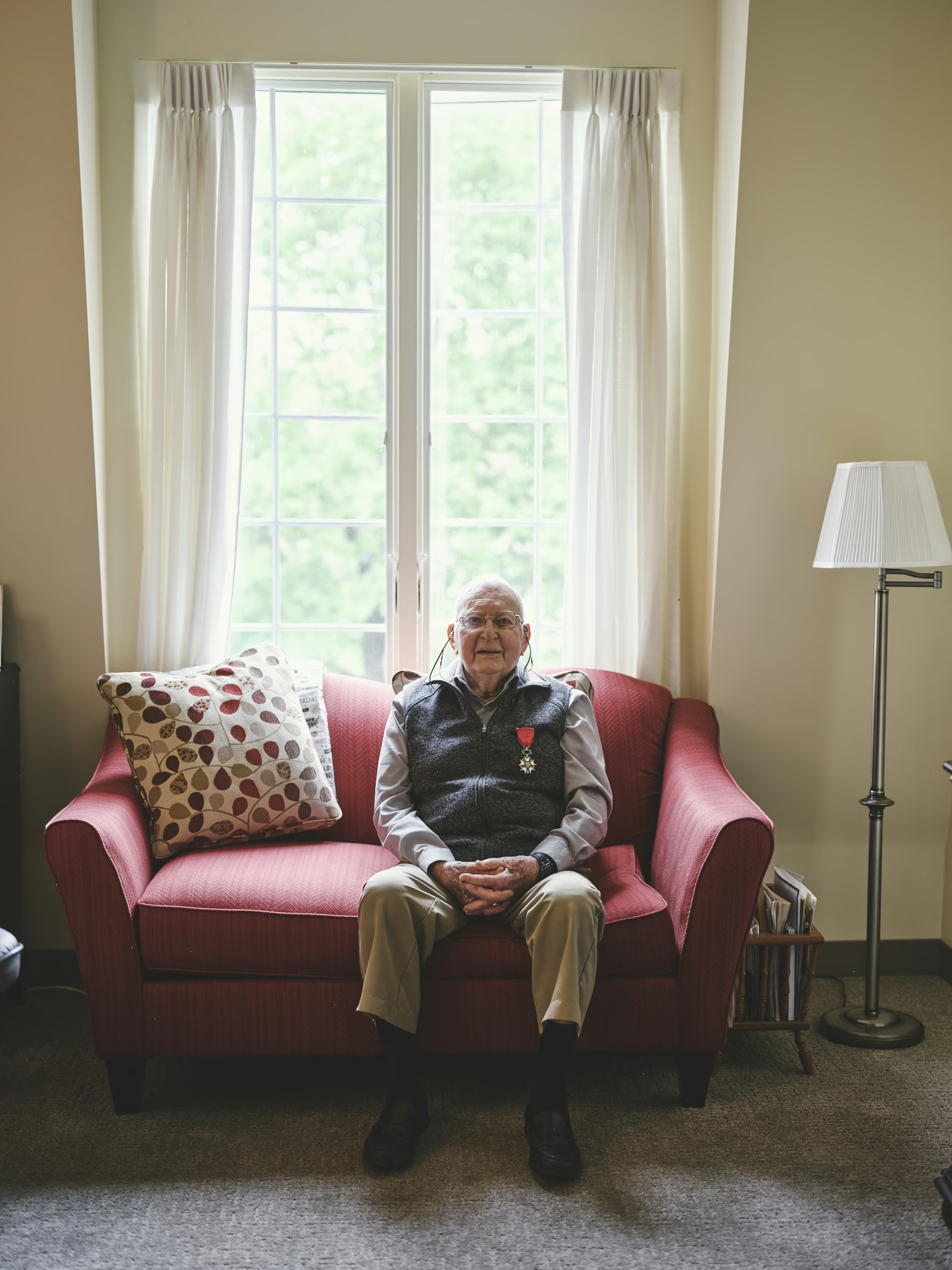
More than 80 years later, few men like Picard remain: those who participated in the boldest military operation of the 20th century and can lay claim to membership in the “greatest generation.” Less than 0.5 percent of the more than 16 million Americans who served in World War II are still alive. Before long, the great invasion of France that began on June 6, 1944—and the Second World War itself—will be recounted only in documentaries and books alongside other historic conflicts such as the First World War and the American Civil War. The immediacy of personal experience will vanish. But Picard, now 100 years old, can still recall the feel of the straw he stuffed into his mattress, the blast of a mine soon after he landed on Utah Beach, negotiations in French for the use of a château, and a friend’s death in a cold forest in Germany.
“A lot of people have said to me, God, how do you remember all that stuff?” Picard told me when we spoke at his retirement community in Rhode Island, near where he grew up. “I don’t remember what happened yesterday, but I remember what happened 80 years ago.” The memories have “always been vivid ever since the day they happened.”
Picard is still doing his part to maintain D-Day as living history. He has become, in his later years, the narrator of his own war experience. He speaks with classes of schoolchildren, constantly amazed that they care enough to listen. He has revisited and reminisced on the battlefields of Europe with the Best Defense Foundation, a nonprofit that returns veterans to the places where they served. His repetition of war stories across the years has also become a marker against which to measure how much he, and the country, has changed.
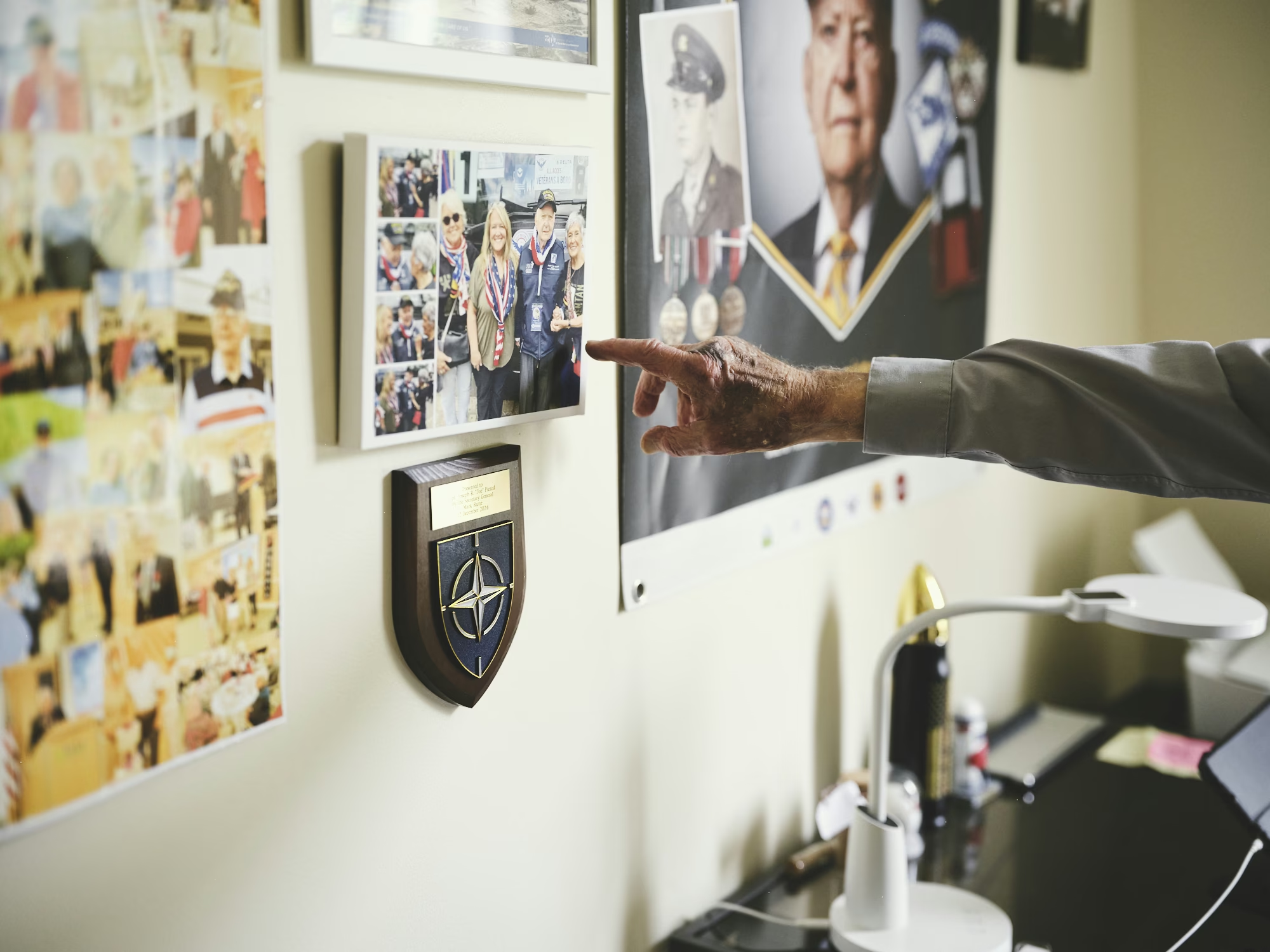
Back then, he and millions of others joined the military as volunteers or draftees. Most viewed fighting as a duty to be discharged before real adulthood began. The experience of war may have defined their lives but did not determine them. And the veterans were lauded for their service by grateful citizens, whether in France, in Germany, or at home.
Today’s service members are professionals, many of them dedicated to a career in uniform, separated to some degree from civilian life. The rancor and fissures in society run so deep that Picard finds it hard to imagine the national unity and resolve that would be required to risk millions of conscripts’ lives in pursuit of the liberation of others. “I hope that this type of situation won’t happen again,” Picard told me, with New England understatement, “because here in the U.S., I think our attitude is off a bit.”
Picard’s war began with a train ride south. A few months earlier, he’d graduated from Woonsocket High School on his 18th birthday—June 25, 1943. He registered for the draft the same day, then received a letter bearing President Franklin D. Roosevelt’s signature that told him to report for duty.
He headed for Fort Bragg, North Carolina, to join the 552nd Field Artillery Battalion. Its signature weapon was the 240-mm Howitzer M1, nicknamed the Black Dragon and the Army’s most powerful field-artillery piece. The massive gun, which was transported in two pieces and took as many as eight hours to set up, could hurl 360-pound shells as far as 14 miles. Picard trained as a lanyard man, the puller of the firing cord. But as the battalion prepared to depart for England, the clerk of his battery went AWOL. The commander needed someone who could type. Picard had taken typing lessons—a man in a class filled with women, he had been an anomaly—to bolster his long-term prospects of becoming an accountant. Armed with a portable typewriter and a box to store records, Picard became the de facto historian of the 552nd, a role he would keep throughout his service.
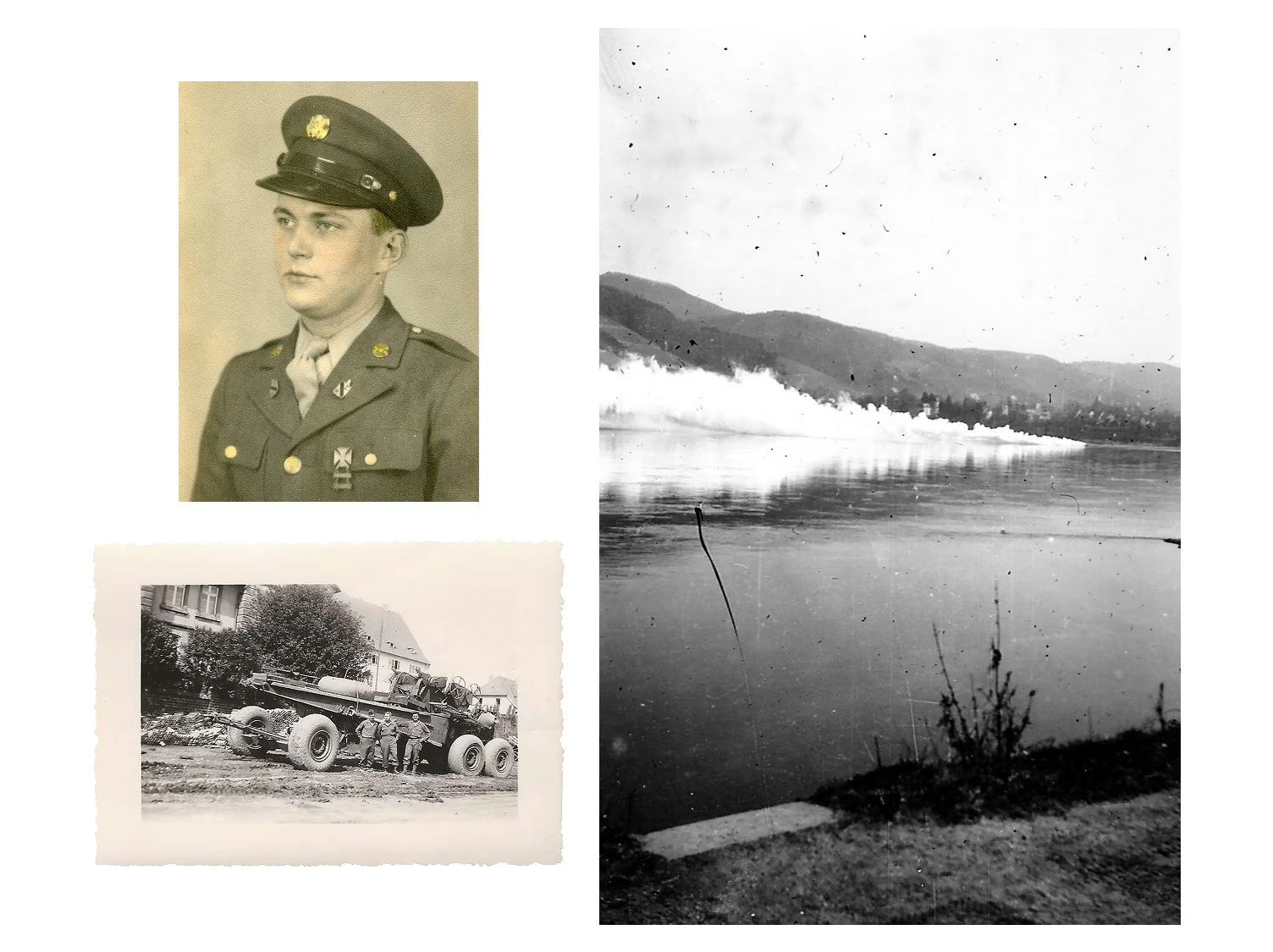
In New York, Picard boarded a liner bound for England. Whatever its former luxury, the boat now had cabins crammed with four-person bunks and an atmosphere thick with the scent of unwashed bodies and the steam of rations. His battery was tapped for guard duty, which provided some welcome relief on deck, where he subsisted on Hershey chocolates.
Picard was stationed at a seaside resort in Bournemouth, a town on England’s south coast, as the weeks ticked down to D-Day. The beds, four to a room, were made from steel slats on a wooden frame. The new arrivals were instructed to stuff their mattress from a large pile of dry straw behind the hotel. Too much straw made the mattress stiff; too little, and the mattress was uneven. Picard packed what he thought was just the right amount, only to have the bed’s metal slats dig into his back. A wing of the resort had been bombed out, which drove home that Picard was now in a war zone. He and the other men whiled away the days training in order to stay busy and spent evenings at a fish-and-chip restaurant with an orchestra led by a violinist.
[Read: How should America memorialize its wars?]
Allied commanders had spent two years planning for an armada—the largest amphibious invasion ever—involving nearly 7,000 ships and more than 130,000 Allied troops in a bid to puncture Hitler’s “Atlantic Wall,” a more than 2,000-mile network of bunkers, minefields, artillery, and barbed wire. Secrecy was paramount. That an invasion force was being trained was widely known, but its landing spot was the great mystery. The Allies went to extraordinary lengths to deceive the enemy, suggesting that the attack would focus on the Pas-de-Calais, the narrowest point of the English Channel. Only when thousands of planes and landing craft approached five Normandy beaches more than 100 miles to the west did the Nazis realize the invasion—D-Day, June 6, 1944—was under way.
Picard and his battery mates followed the initial assault on the radio from their resort. Because the Black Dragon was so difficult to set up and break down, the 552nd wasn’t part of the initial invasion. But it was slated to follow once the beaches were secure. A little more than three weeks later, the 552nd hit Utah Beach. One of Picard’s first impressions was of the death of a more experienced soldier who drove a truck full of supplies into an unmarked minefield; the explosion shredded the vehicle and killed the driver. “That kind of shakes you up a bit because that guy knew his stuff. He just didn’t know there were mines there,” Picard told me. From that moment, he added, “we were a little more careful, a little more cautious.”

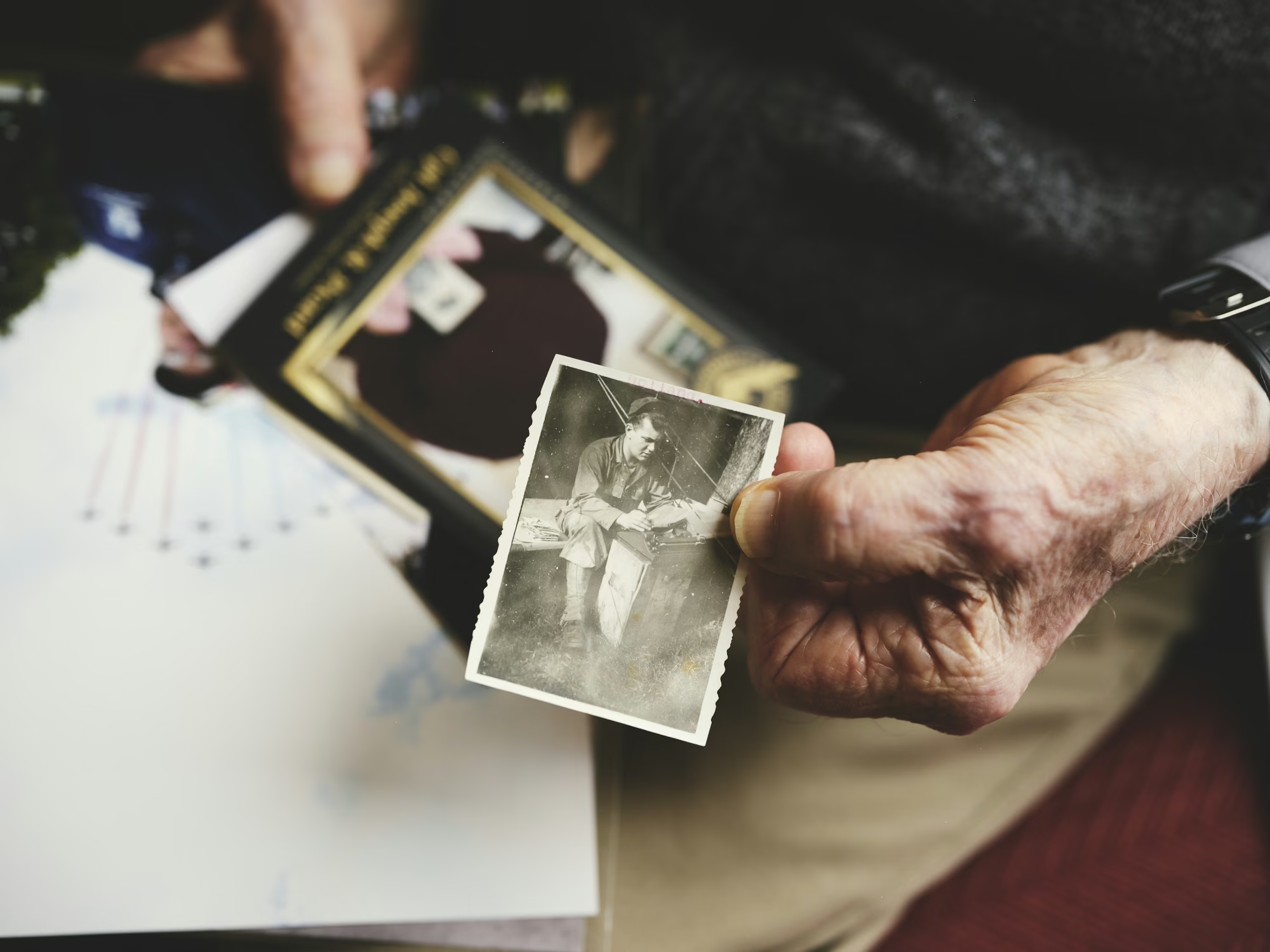
The 552nd moved inland to support the First Army through Normandy and northern France. Picard’s main task was compiling the “Morning Report,” a meticulous daily ledger of shells fired, promotions earned, and the names of the dead, typed on one small, closely guarded card. “You had to be very careful, because if you were ever captured, you don’t want your enemy to have a complete record of what you did,” he said.
The 552nd settled in a small community on the outskirts of Paris. By the end of August, Picard’s battalion was searching for new digs where the outfit could take a break and repair equipment. They needed a French speaker. Picard’s family had migrated from Canada to the U.S. in the 1920s; Canadian French was his first language. He added translation to his duties.
The battalion found a large hunting estate built around a château. Picard approached an elderly couple who rented the place as an escape from the summer heat of the French capital and asked if the 552nd could use the land. “By all means, make yourself comfortable,” the old man responded, insisting that Picard and his captain stay in the house until the rest of their unit arrived three days later. It was the first bed Picard had slept in since June. After the war, Picard returned to the château with his wife. The outside was the same. Inside was a discotheque.
Having taken France and parts of the Netherlands, Allied forces drove toward Germany. Picard recalls the elation of crossing the border into Germany and seeing Aachen, the country’s westernmost city, in Allied hands following fierce combat. The prize of defeating Hitler seemed ever closer: “Psychologically, it was a very important win.” But that November brought a tragedy that would color Picard’s memory of the conflict.
[Read: Nothing prepares you for visiting Omaha Beach]
He was camped with his battery south of Aachen in November 1944. The night was cold and wet. Picard and his fellow soldiers were trained to hit the ground at the whistle of a shell to avoid shrapnel. But both sides had begun using shells that exploded in mid-air, shooting shrapnel into the ground. One German shell exploded above where Raymond Bolduc, Picard’s best friend, was sheltering. “All of a sudden, one of these things came over, blasted right over their tent,” Picard said. “The tent was shredded to bits.” A piece of steel hit Bolduc in the neck, killing him instantly. Bolduc’s tentmate lost both legs at the knee and later died from his injuries. The next day, Picard had to type all the details into the “Morning Report”: “Btry fired four rounds at enemy batteries. Effect unknown. Enemy shelled battery position at 1815, causing casualties. Battery position was shelled at intervals.”
The government notified Bolduc’s wife via telegram but included an incorrect date of his death, causing confusion when she later received mail dated after the day he had reportedly died. Bolduc’s widow reached out to Picard because of the confusion caused by the incorrect date in the telegram, and he responded to her letter. But he couldn’t disclose the details of her husband’s death, because his mail was censored. He promised to meet with her after the war.
The Battle of the Bulge marked Nazi Germany’s final offensive on the western front, launched in mid-December 1944 as a surprise attack to split the Allied lines and capture the Belgian port of Antwerp. American forces held out until reinforcements drove the Germans back in late January 1945, helping clear a path to Berlin. After the battle, Picard’s battery supported the push from the Roer River to the Rhine as Germany’s western front collapsed. He spent his last days in the Army in a film library in France before a 12-day boat ride to Newport News, landing in Virginia on Christmas Eve, 1945. He was discharged on New Year’s Day.
Picard and millions of other returning veterans were keen to put the war behind them. Proud as they were, they viewed their service as a form of suspended animation, a break from life, and worried that others who had stayed home had gotten a head start on a career and family. “You hope that you made a difference, that your efforts contributed to the end of the war,” he said, “but as far as the rest of it was concerned, I was just concerned with establishing a new life.”
Through the GI Bill, he earned a degree in accounting and found a job in a Rhode Island bank, where he worked for more than 30 years. He married, raised three children, and lived a quiet life. The war rarely intervened. But his promise to visit Bolduc’s widow nagged at him. She had moved by the time he returned from Europe, and he was unable to track her down. Then, in 2014, 70 years after his friend’s death, Picard met Bolduc’s nephew, who volunteered on an Honor Flight trip for veterans to visit war memorials in Washington, D.C. After making the connection, Picard met with the Bolduc family in New Hampshire, where they shared pictures and discussed what had happened to his friend.
[Read: Making World War II personal]
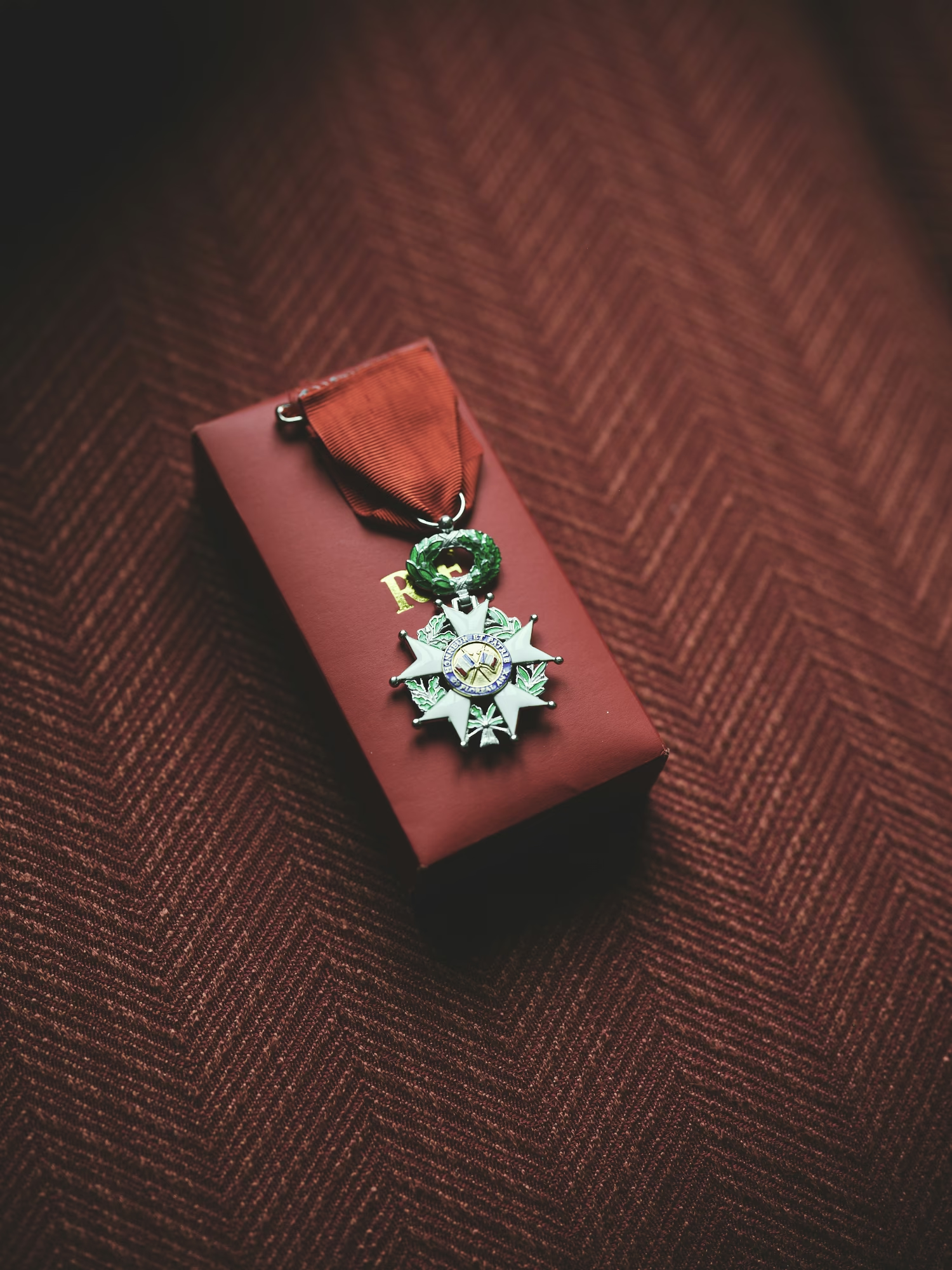
Picard has spent the last several years recounting his experiences, making D-Day a bookend to his life. As he has toured the battlefields of France and the Netherlands, people have thanked him for helping liberate Europe. And he’s had ample opportunity to recall the sense of national togetherness that made the sacrifices of millions not just possible, but worthwhile. “The beauty of that whole war was the fact that everybody in this country seemed to be behind it,” he told me. It’s a feeling, he suspects, that will be unimaginable to future generations of Americans.
The post A 100-Year-Old D-Day Survivor Reflects appeared first on The Atlantic.