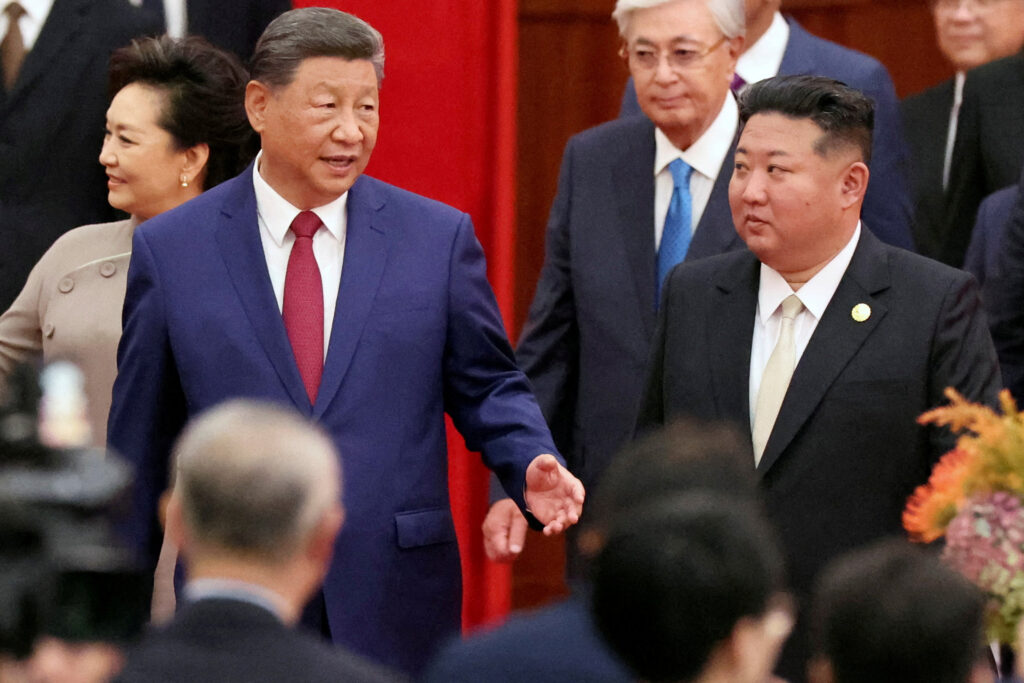
SEOUL — Chinese leader Xi Jinping will make a rare trip to North Korea next week to meet with Kim Jong Un, Xi’s first such trip in seven years and a major opportunity for Kim to show Washington that he has powerful friends, even if he is shunned by the West.
Xi will meet the North Korean leader for a state visit on June 8 and 9, state media outlets from both countries announced Friday.
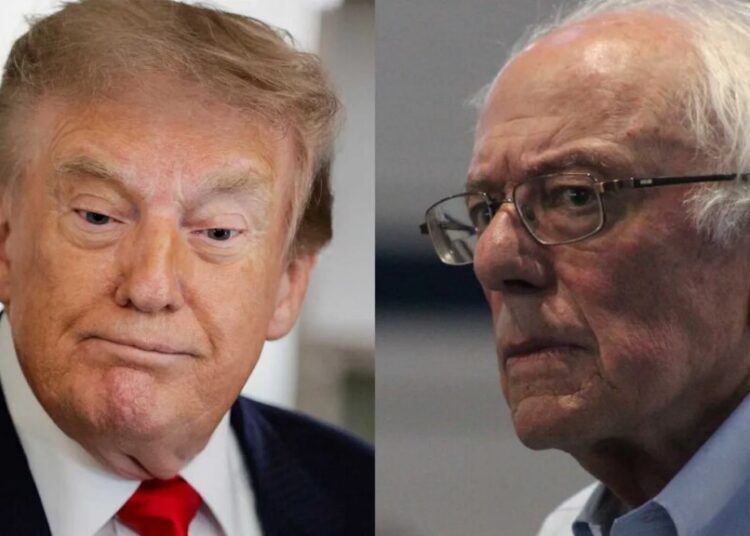
The summit comes as China positions itself as a global power player projecting stability in contrast to President Donald Trump’s economically damaging war against Iran and erratic tariff policies.
Just last month, Xi hosted Trump and Russia’s Vladimir Putin for back-to-back summits in Beijing, and leaders from 17 countries, from Canada to Pakistan to Myanmar, have trekked to Beijing so far this year.
Xi and Kim are looking to affirm their relationship at a moment of significant geopolitical shifts, as the two link arms against a Western-led global order.
China also wants to keep Pyongyang close as North Korea strengthens its military cooperation with Russia. North Korea will likely turn to Beijing, its biggest economic lifeline, for new investments and economic agreements.
The meeting reflects a notable political feat for Kim, the dictator of one of the world’s poorest countries who was once a diplomatic pariah with little leverage.
After a pandemic shutdown that appeared to threaten Kim’s regime, he has turned around his fortunes thanks to Moscow’s recent economic, military and diplomatic support, which has come in return for Kim’s deployment of troops to fight in Ukraine.
The timing of the summit, on the heels of Xi’s meeting with Trump last month, raises questions about whether China is seeking to mediate a diplomatic stalemate between Washington and Pyongyang — as Xi attempted during his last trip there in June 2019. That trip came shortly after the collapse of Trump-Kim denuclearization negotiations in Hanoi the previous February.
Trump, in his second term, has offered to meet Kim again.
Kim has not shut the door entirely, but said he would only restart talks with Washington if the United States ends its “hostile” policies and accepts Pyongyang’s nuclear status — a tall order, given the long-standing U.S. policy of demanding that North Korea forgo nuclear weapons.
North Korea’s nuclear and weapons program has grown significantly since that Hanoi meeting.
Just this week, North Korea unveiled what appeared to be a new uranium enrichment facility, showing Kim inspecting centrifuges at a third known site.
North Korea is believed to have produced enough weapons-grade material for about 90 nuclear warheads and may have assembled about 50 so far, according to a 2024 report by the Federation of American Scientists.
North Korea also has aggressively pursued a weapons modernization plan in the past five years, building a diverse arsenal of nuclear-capable weapons designed to carry warheads as close as Seoul and as far as the East Coast of the United States.
Beijing is wary of North Korea’s nuclear program, which will loom large during their meeting. But in recent years, China — as a permanent member of the United Nations Security Council — has tacitly supported Pyongyang’s nuclear and weapons armament, siding often with Russia to chip away at U.N. sanctions on North Korea’s ballistic missile program.
China and Russia have both helped sustain the Kim regime since its founding, yet North Korea has tried not to depend too much on one over the other.
Recently, North Korea has strengthened relations with countries beyond the two, including Belarus, a key Russian ally, and socialist nations in Southeast Asia, such as Laos and Vietnam.
Japan’s defense buildup is also likely to be on the agenda. Both China and North Korea have been critical of Tokyo’s efforts in recent years to strengthen its national defense in the face of Beijing’s rising military aggression and Pyongyang’s weapons program.
Japan’s actions, including its decision to lift a post-World War II ban on selling lethal weapons abroad, have made North Korea a useful partner again to China — especially as China’s relationship with Japan deteriorated because of a diplomatic spat over Taiwan.
Japan, for its part, has been strengthening its relationship with South Korea to navigate Chinese aggression and a Trump administration that has questioned the value of allies.
Xi’s visit will commemorate the 65th anniversary of the two countries’ 1961 friendship treaty, said Mao Ning, a Chinese foreign ministry spokeswoman.
The two leaders last met in Beijing in September, at a massive military parade marking the 80th anniversary of China’s defeat of imperial Japan and the end of World War II.
There, Kim and Putin flanked Xi as a message that China is rising to challenge the U.S. global leadership — and that North Korea is on China’s side in the effort.
Huiyee Chiew in Taipei contributed to this report.
The post Xi to visit North Korea, showing China’s importance to a nuclear-armed neighbor appeared first on Washington Post.