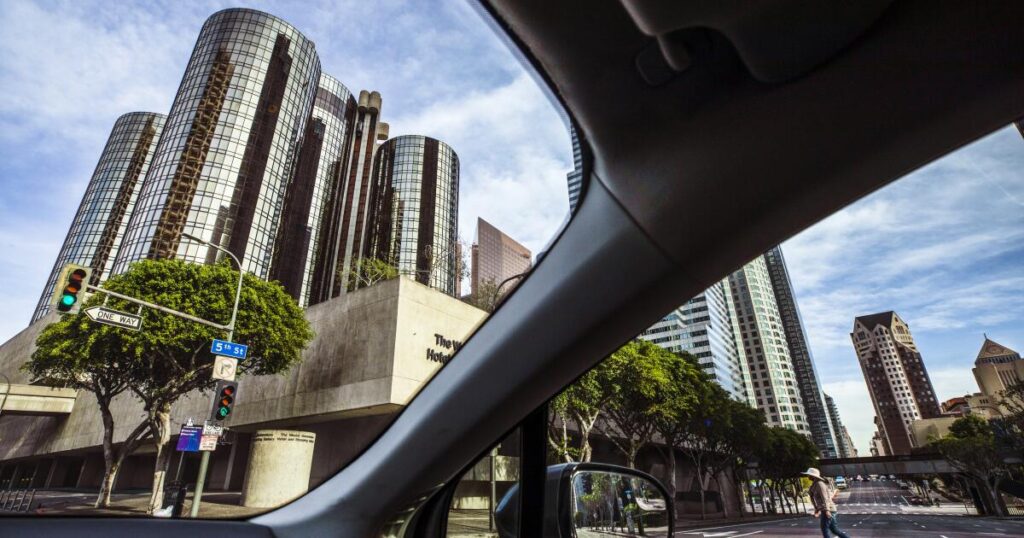
Los Angeles voters were giving thumbs down to a measure that would raise the city’s hotel bed tax ahead of the 2028 Olympics, while also extending the tax to short-term rentals booked through companies like Airbnb and Expedia.
Votes were still being counted Wednesday, but preliminary results from Tuesday’s primary had Measure TT falling short of the majority needed for passage. If approved, Measure TT would raise the tax rate for hotel rooms from 14% to 16% until the end of 2028, staying at 15% thereafter.
With a flood of visitors expected for the 2027 Super Bowl and 2028 Summer Olympics, city officials have projected that passage of TC would generate $44 million annually through 2028 and $22 million annually after that.
“The Olympics are an opportunity to add some jet fuel to our visitor-serving community,” Councilmember Tim McOsker said earlier this year, when the council voted to place the measure on the ballot.
Business groups said the tax increase would negatively impact the hotel industry, which is already reeling from a lack of demand and the threat of incoming increased minimum wages.
Central City Assn. president and chief executive Nella McOsker, the council member’s daughter, opposed the measure on behalf of the L.A. advocacy organization.
“At a time when you’re seeing these declines in demand and losing on tax revenue year over year to the magnitude of $20 million, it just seems like a wrong time to impose more burdens on that shrinking base,” she told The Times in May.
On a related issue, voters appeared poised to approve a separate ballot measure that would require online travel companies and other intermediaries to pay the city’s hotel tax based on the markup price they charge to customers, and not the discount price they paid for the room.
There were significantly more “yes” votes than “no” votes for Measure TC in preliminary returns. If approved, the measure could raise $5 million per year for sidewalk and street repairs, parks and other necessary services, according to city estimates.
City officials have sought to characterize the measure as closing a loophole that gave travel companies like Hotels.com and Trivago a discounted bed tax rate.
Voters were also favoring Measure CB by a wide margin in preliminary returns. It would require cannabis businesses operating without a business license to pay the same tax on gross receipts that legal businesses pay, including 10% on cannabis sales, 5% on medical cannabis sales and 2% on manufacturing, cultivation or other commercialization.
In order to operate legally, cannabis businesses must be licensed with the state and city and follow a list of regulations depending on whether they sell, cultivate, manufacture, test or deliver cannabis.
City officials said they were less interested in actually collecting the taxes from unlicensed businesses, which would be difficult, and more in using it as a tool to go after them in court.
Supporters at City Hall, including Councilmember Katy Yaroslavsky, had called the ballot measure a “loophole” fix that would allow the city to take delinquent businesses to court for taxes and shut them down.
Operators of legally sanctioned cannabis retailers have long said that their tax burden is too high, allowing illegal businesses to outpace them by selling product for less. Some opposed the measure, though, arguing it legitimized illegal businesses and could give the city a reason to keep them around.
The post L.A. voters turning down measure to raise hotel bed tax ahead of Olympics appeared first on Los Angeles Times.