Anthony Banbury is a former United Nations undersecretary general who led the U.N. Mission for Ebola Emergency Response.
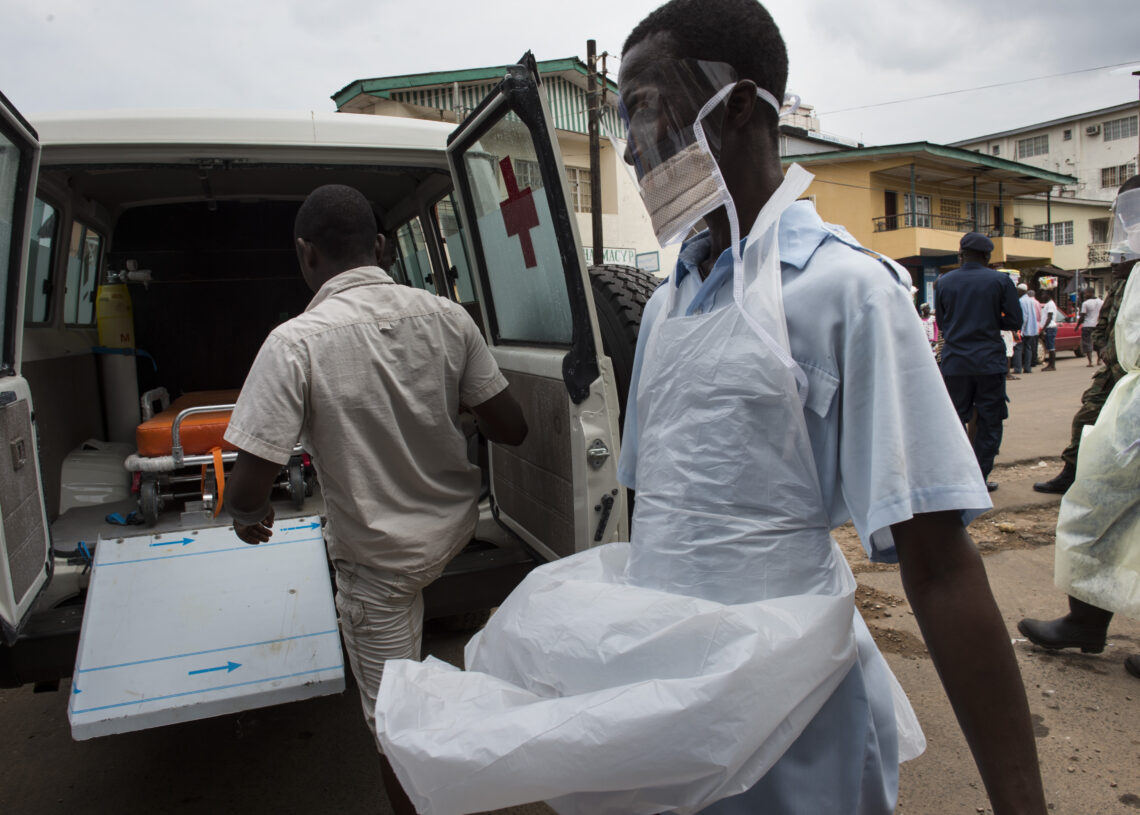
The Ebola crisis in Africa will spin out of control without a significant shift in the international response. More people will get infected, and 30 to 50 percent of those who contract the virus will die. Frontline aid workers, mostly Congolese, are risking their lives to stem the crisis, but they lack resources and are overwhelmed by the rising tide of cases.
The number of Ebola cases reported by the World Health Organization has gone up and down, which is understandable given the significant lack of lab-testing facilities in the affected region. It is likely, however, that the reported numbers are an undercount, not because of any effort to hide the true numbers but because the virus is spreading in ways no one fully understands.
On Tuesday, the WHO reported that in the Democratic Republic of Congo there were 321 confirmed cases of Ebola, 116 suspected cases and 48 deaths. On May 29, the WHO said more than 900 people were suspected of having Ebola in the country with more than 220 fatalities. WHO officials say case totals shift as people get tested.
New cases will probably grow rapidly — and indefinitely. Fortunately, some of the lessons from the 2014-16 Ebola crisis in West Africa — when more than 28,000 people were infected and more than 11,000 died in the largest outbreak of the disease ever — are being applied in the current outbreak.
The WHO became aware that Ebola was spreading in Guinea in March 2014 but did not declare a “Public Health Emergency of International Concern” until nearly five months later. This time, it took the WHO just two days to declare the same health emergency after Ebola was confirmed in Congo on May 15. Additionally, at this relatively early stage of the response, there’s a greater understanding of the critical role that local leaders and communities must play in stemming the virus.
Unfortunately, some of the biggest mistakes made by the international community in 2014 are being repeated today, and if those are not rectified, the new outbreak will be more dangerous and deadly. Here are the most important measures the international community should take immediately.
First, a single actor needs to lead the entire Ebola response. Congolese health workers, international nongovernmental organizations and the WHO are doing great work, but their efforts are spread out and need to be brought under one umbrella. It is like going to war with scattered, independent military units but no central headquarters directing the overall effort. This recognition in September 2014, deep into that Ebola crisis, led U.N. Secretary General Ban Ki-moon to establish the U.N. Mission for Ebola Emergency Response (UNMEER), whose main function was to provide that leadership. The Security Council resolution endorsing the secretary general’s decision received the most co-sponsors of any council resolution in U.N. history at the time.
Second, the outbreak has evolved beyond a public health emergency into a multidimensional crisis. In addition to doctors, nurses and health workers, the crisis response needs experts in command and control, security, logistics, public communication, procurement and information technology. Health professionals should be allowed to focus on the health aspects of the outbreak, while crisis response experts should lead these other areas.
Third, an integrated and comprehensive strategy is required to end the crisis. When UNMEER landed in West Africa at the end of September 2014, noble work was being done, but there was no plan to end the outbreak. In less than three weeks, UNMEER developed clear goals that called for 70 percent of new cases to be isolated and 70 percent of Ebola deaths to receive a safe burial within 60 days. The next objective was to reach 100 percent in both categories in 90 days. The group then developed an operational plan — integrating the contributions of all the main actors — to reach those targets. By the end of November, after seven months of exponential growth in cases, those 70 percent targets were reached, and new cases finally started falling.
Lastly, many more resources — human, technical, financial and logistic — need to be urgently deployed. The 2014 plan called for mass-resource deployment during the first 30 days. The mission response team did not know its ultimate needs yet but understood that a shortage of resources would slow the response and lead to more deaths. The team threw everything it could acquire at the crisis.
The people, governments and health care workers of Guinea, Liberia and Sierra Leone should get the greatest credit for ending the 2014 West Africa Ebola outbreak. But without massive international assistance, their efforts would not have produced the same results. To end the current crisis, those on the front lines of the Ebola response need a similar level of help.
The post Ebola is spreading in ways no one fully grasps. Use what I know. appeared first on Washington Post.