Lawrence O. Gostin is a distinguished professor at Georgetown University Law Center and directs the World Health Organization Collaborating Center on National and Global Health Law. Sam F. Halabi is a professor at Georgetown University’s Department of Health Management and Policy.
Amid the ongoing health emergencies of Ebola and hantavirus, the world’s governments convened last month for the World Health Assembly. The United States, of course, was absent. But while most Americans assume the U.S. has officially severed ties with the World Health Organization, the reality is quite different: It is still a member.
For the U.S.’s withdrawal to be finalized, the assembly — the WHO’s governing body — must formally accept it, a step it has pointedly refused to take. That may have little practical meaning for the management of outbreaks today; the U.S. has still ceded its leadership role regardless of its membership status. Nevertheless, the WHO’s decision to leave the door open for the U.S. to return is a prudent posture for the future of global health.
The assembly’s refusal to acknowledge the U.S.’s exit is rooted in the fundamental architecture of international law. When nations conceived the WHO at the 1945 San Francisco Conference, they explicitly agreed that states should not have the power to walk away, underscoring a collective “highest duty” to cooperate for global health and peace. Mirroring the Charter of the United Nations, the WHO was built around the foundational vision of universality, establishing its constitution as a treaty guaranteeing the universal human right to the highest attainable standard of physical and mental health.
The assembly recently demonstrated how deftly it handles attempts to break this bond. In an analysis released on Jan. 20, the WHO executive board reaffirmed that because the organization’s constitution lacks a withdrawal clause, the only definitive scenario allowing an exit is if a state objects to a newly adopted constitutional amendment. No such amendment has occurred.
The assembly managed Argentina’s situation with diplomatic finesse: It acknowledged the notice but declared it undesirable to take “any further action.” The clear legal implication is that Argentina remains a full member, even if its near-term cooperation has functionally dropped to zero.
The U.S., a founding member of both the U.N. and the WHO, occupies a unique legal position. While it has benefited immensely from these institutions — enjoying a privileged veto power on the U.N. Security Council and long exerting outsize influence in Geneva — it is technically the only country in the world with a recognized right to withdraw from the WHO.
The U.S. engineered this as part of the joint congressional resolution to join the WHO, which President Harry S. Truman signed in 1948. The document included two explicit conditions for a future exit: a one-year notice and paying its financial obligations in full for the current fiscal year. The newly formed assembly accepted those terms.
Following his inauguration, President Donald Trump triggered that one-year notice and subsequently signed an executive order to formally finalize the withdrawal. The administration, however, has flatly refused to pay its assessed dues for the 2024 and 2025 fiscal years, accumulating roughly $280 million in unpaid dues. As such, the WHO determined that the U.S. cannot legally complete its divorce until these financial debts are satisfied. That is true under both U.S. and international law.
Consequently, international authorities have met the U.S. exit strategy with a deafening silence. At its January 2026 meeting, the WHO executive board completely bypassed issuing a decision or resolution regarding the U.S. Last month, the assembly refused to even recognize receipt of the U.S. withdrawal letter. Earlier, the assembly’s Committee B (which governs financial and legal decisions) approved by consensus and without objection that if the U.S. does not pay its financial obligations by 2027, the assembly will invoke Article 7 of the WHO’s constitution to suspend voting privileges for members in arrears.
While critics have accused the WHO’s secretariat and its Office of the Legal Counsel of overstepping their executive boundaries by advising the board on these matters, the secretariat has a clear duty to provide its constitutional interpretations. Ultimately, the final power rests with the member states at the assembly, who chose not to act.
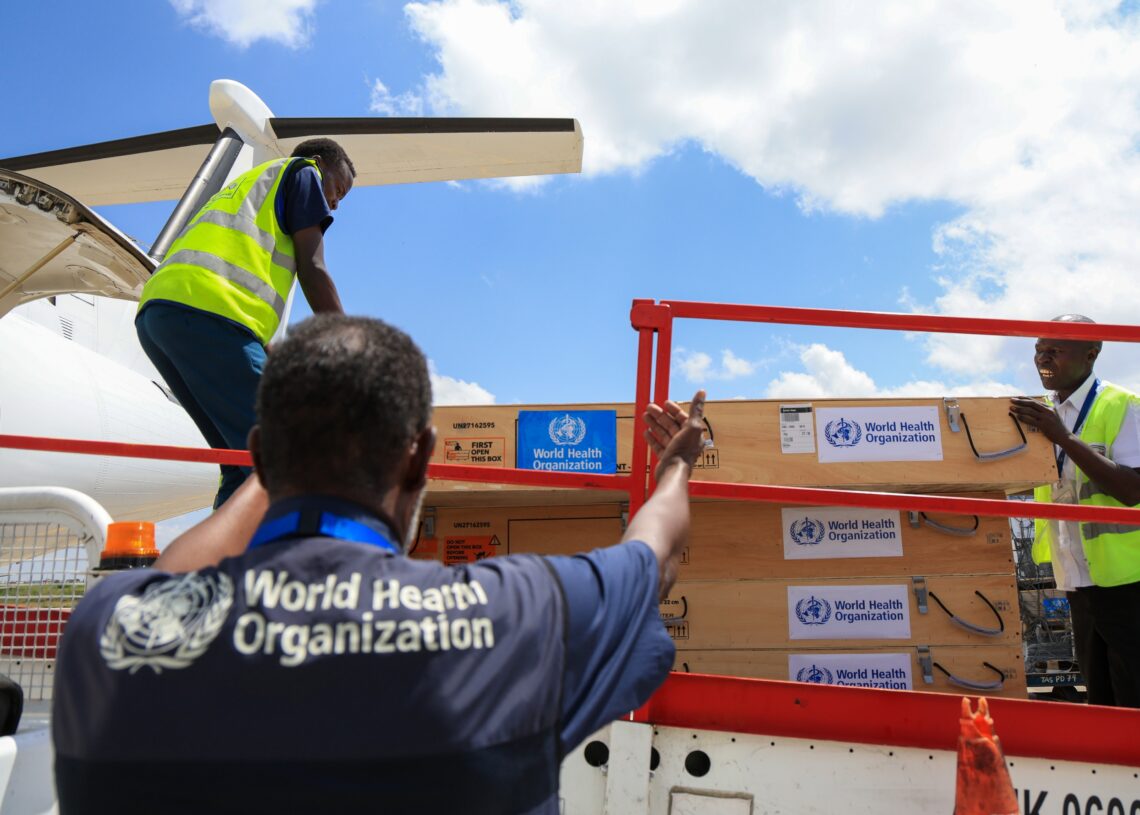
The WHO’s interpretation of international law is not just legally sound; it is exceptionally wise — especially for the U.S. Ongoing public health crises illustrate what the U.S. loses by isolating itself from global health cooperation. It is the WHO that is leading the response to the global health emergencies of hantavirus and Ebola.
When a future administration inevitably decides to return to the community of nations, there will be no arduous process to rejoin. The assembly can simply restore U.S. voting rights upon payment of back dues, likely without requiring cumulative payments for the period spent away. Keeping the door unlocked is a triumph for the principle of universality, world health and, ultimately, the long-term strategic interests of the U.S.
The post Trump wanted to abandon this ‘highest duty.’ The WHO said no. appeared first on Washington Post.