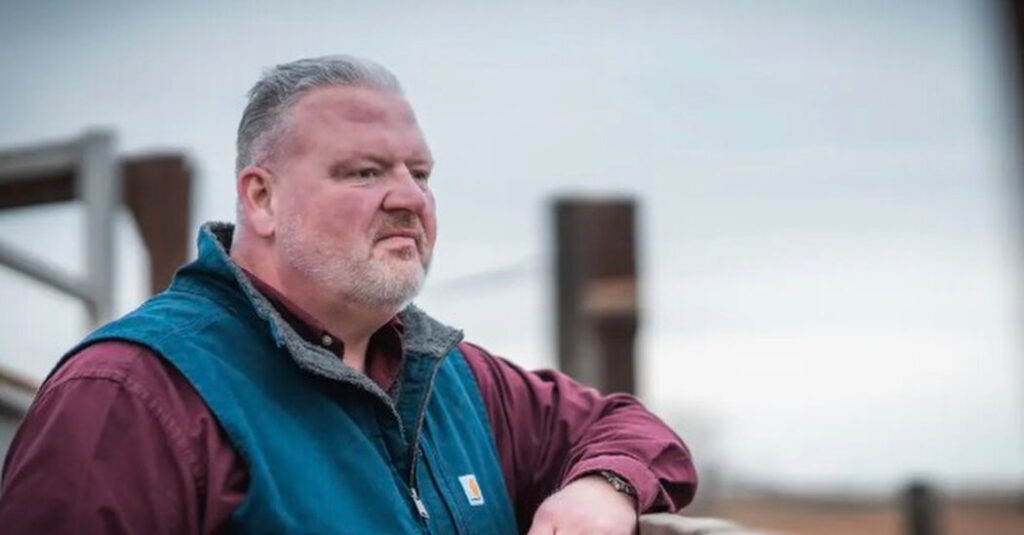
Gov. Larry Rhoden and Toby Doeden, a businessman, advanced to a runoff election for South Dakota’s Republican nomination for governor, The Associated Press said on Wednesday.
Facing a large and competitive field that also included Representative Dusty Johnson and Jon Hansen, the speaker of the South Dakota House of Representatives, none of the candidates cleared the 35 percent threshold necessary to avoid a runoff. With the vast majority of ballots counted, Mr. Doeden was running ahead of his competitors.
The runoff between the two Republicans will be held on July 28, and the winner of that race will emerge as the overwhelming favorite in the general election in November.
For a race that includes an incumbent governor, South Dakota Republicans have had an unusually crowded and cantankerous primary.
Mr. Doeden, who has a number of business ventures, has noted his status as a political outsider and sought to point out parallels that he said he sees between his life story and President Trump’s. On his campaign website, he pledged to be “the fiercest ally to President Trump in the nation.” He also called for reducing and eventually eliminating the state’s property tax.
“I will be the most pro-business governor this state has ever seen,” Mr. Doeden said in a recent South Dakota Public Broadcasting debate.
Mr. Rhoden is running without some of the traditional advantages of the incumbency, having ascended to the governorship only last year, when former Gov. Kristi Noem resigned to join Mr. Trump’s cabinet. Ms. Noem, who was the first woman to serve as South Dakota’s governor, was fired as secretary of homeland security in March after facing bipartisan criticism.
Mr. Rhoden, a rancher who spent six years as lieutenant governor, tried to forge his own political brand over the past year and a half. He toured the state, announced the return of Fourth of July fireworks at Mount Rushmore and took on some of the state’s most pressing issues, including a long-stalled plan to build a new prison.
“Being governor isn’t about being a smooth talker, it’s about delivering results,” Mr. Rhoden said in that debate. “And I’ve proven my ability to do that.”
With the exception of a tight race for governor in 2018, South Dakota Democrats have shown few signs of electoral strength in recent years. No Democrat has held the governorship since the 1970s. Dan Ahlers, a former state legislator, will run on the Democratic Party’s ticket in November.
With only a handful of Democrats in the State Legislature, the dividing lines in South Dakota politics are often drawn within the Republican coalition.
While the candidates for governor agreed on many issues, they diverged at times, including on land usage and taxes. The candidates also presented contrasting styles and experiences.
Mr. Johnson won South Dakota’s only U.S. House seat in the 2018 election, and he has won re-election every two years by overwhelming margins. On the campaign trail, he talked about his experience in Washington and his alignment with Mr. Trump on border security and tax policy. He promised to make the state’s education system his top priority as governor.
Mr. Hansen described how his Christian faith shaped his policy views, and often noted his opposition to eminent domain for carbon pipelines, an issue that split the Republican establishment.
Mitch Smith is a Chicago-based national correspondent for The Times, covering the Midwest and Great Plains.
The post Wide Republican Field for South Dakota Governor Narrows to Runoff appeared first on New York Times.