KEEPER OF MY KIN: Memoir of an Immigrant Daughter, by Ada Ferrer
Ada Ferrer was 10 months old when, on April 29, 1963, four years after the Cuban Revolution, her life changed abruptly. Her family’s restaurant in Havana had closed as food became scarce and Ferrer’s father, an army stenographer under the dictatorship of Fulgencio Batista, had already decamped to New York.
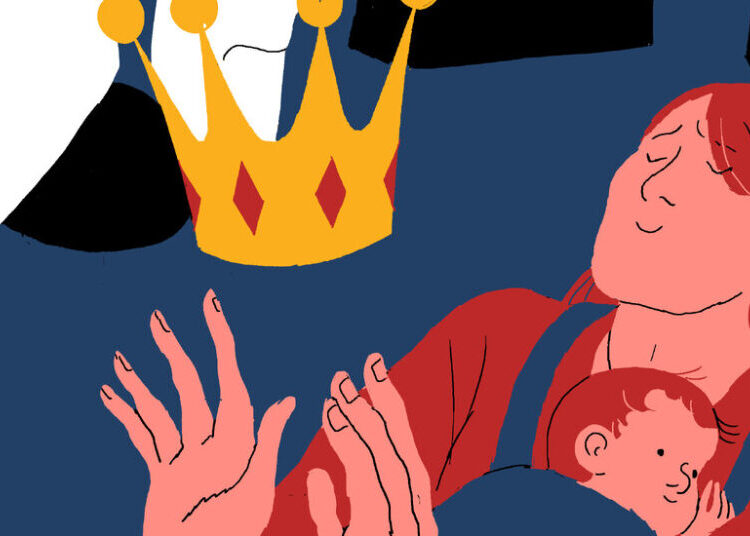
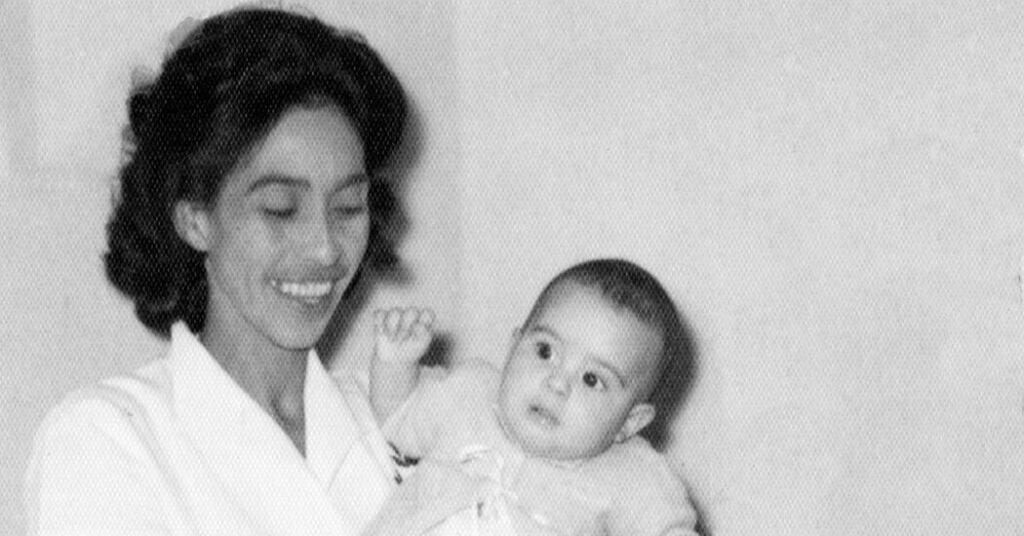
That morning, Ferrer’s mother, in stiletto heels and with her infant daughter on her hip, boarded a flight to Mexico City. She would leave behind her country and her family, most painfully her beloved 9-year-old son, Poly.
The episode serves as an origin story for Ferrer, whose family was one of thousands of Cuban households split apart in the early 1960s; it was mentioned in the prologue of her previous book, “Cuba,” a Pulitzer Prize-winning account of the island’s long entanglement with the United States. That rupture — of migration and family separation — and its aftermath have fueled her academic career. In “Cuba,” Ferrer, a professor of history at Princeton, called it “a heavy inheritance.” “For a history so sweeping in scope,” she wrote, “this is also a deeply personal book.”
The inverse could be said of Ferrer’s new memoir, “Keeper of My Kin,” a stirring family narrative that is narrowly focused but expansive in its resonance. It moves from the tobacco farms of 19th-century Cuba to Havana, Miami and, eventually, West New York, N.J., where Ferrer’s family relocated in the late 1960s after fleeing Castro’s revolution. This is a chronicle of how individual lives are upended by “history with a big H,” as Ferrer puts it, the very force that became her life’s obsession.
At the book’s thorny, emotional core are Ferrer’s mother, Adela, and her half brother, Poly, who is moored in Cuba as the family settles down in the United States. (His father, a member of Castro’s revolutionary police, refuses to let him leave the country.) Ferrer reconstructs their relationship from a trove of correspondence she found in her parents’ home after their deaths.
As a child, Poly exists in a limbo he strains to comprehend. “I think he will let me go,” he writes in a heart-wrenching letter to Adela a year after their separation, “and then we will be together and happy.” As years pass, he fails to meet the revolution’s academic benchmarks, is shuffled into various state-run boarding schools and never progresses beyond the fifth grade. His misery — “Even when I’m determined to follow a path,” he writes to Adela in 1974, “everything falls apart” — becomes a foil for the upward mobility of Ferrer and her younger sister, Aixa, as they come of age in the Cuban enclave of West New York. Ferrer imagines her mother reading Poly’s increasingly recriminating messages, consumed by remorse over having deserted her son.
The book branches out like a genealogical tree, in chapters on Ferrer’s parents, half siblings and other family members. Ferrer’s father, Ramón, it turns out, also abandoned a son in Cuba, her other half brother. In one memorable section, Ramón, now retired, begins corresponding with that son, from whom he has been estranged for decades. In another, Ramón drafts hopeful letters to Fidel Castro, seeking to establish a dialogue.
Ferrer’s narrative offers a human warmth in the form of jokes and jolts of emotion couched in rich historical context, with asides on topics including Castro’s cuarteles en escuelas (barracks into schools) initiative and a Florida military base, originally built to deflect missiles from Cuba, that was repurposed as an immigration detention center where a family member was held.
She approaches the mountains of journals, letters and documents left behind by her parents with the same rigor she applies to files in Cuba’s national archives. The revelations she finds — about Poly, about her parents — are divulged as if they were being processed on the page, with palpable surprise, delight and, at times, grief.
Throughout her childhood, Ferrer writes, Cuba and Poly were a constant absence. The two almost become shorthand for each other, mired in a mutual stasis. On the island, Poly “felt suspended, deferred, as if his real life — the one that mattered — had not yet started.” When he finally does achieve his long-anticipated reunion during the Mariel boatlift of 1980, the collective euphoria is short-lived. What follows are years of recriminations from Poly, who spirals into violence, criminal behavior and other tragedies.
Ferrer is not a witness to many of these events as she embarks on her academic career and begins making frequent research trips to Cuba. Still, her writing conveys a sense of bitterness and guilt. At her lowest points, she admits, she wished Poly were dead. In other moments, she muses about whether her success was built on his suffering.
In recent years, migration memoirs including Albert Samaha’s “Concepcion” and Roberto Lovato’s “Unforgetting” have mined family histories alongside larger legacies of violence and imperialism, complicating their authors’ relationship to the United States. In “Keeper of My Kin,” Ferrer acknowledges that ambivalence as she sits by her ailing father during his final days and thanks him for his decision to leave Cuba. “I have never quite felt one with this country,” Ferrer writes, “but I know with absolute certainty that I have made a life here that would have been inaccessible to me.”
It is impossible to read her memoir now without thinking of the island’s increasingly dire humanitarian situation, as the Trump administration cuts off oil shipments and regularly threatens regime change. Earlier this month, Ferrer published a letter to the Cuban president, Miguel Díaz-Canel, continuing her father’s tradition of writing to the country’s leader. Cuba’s ongoing implosion, she stressed, requires an urgent national dialogue.
The letter may not move the needle or stop the cresting wave of U.S. intervention, but it reflects a familiar sentiment.
“Cuba’s a total disaster!” her father told her in 2016. “But it’s my disaster.”
KEEPER OF MY KIN: Memoir of an Immigrant Daughter | By Ada Ferrer | Scribner | 369 pp. | $30
The post Her Parents Fled the Cuban Revolution. Two Children Got Left Behind. appeared first on New York Times.