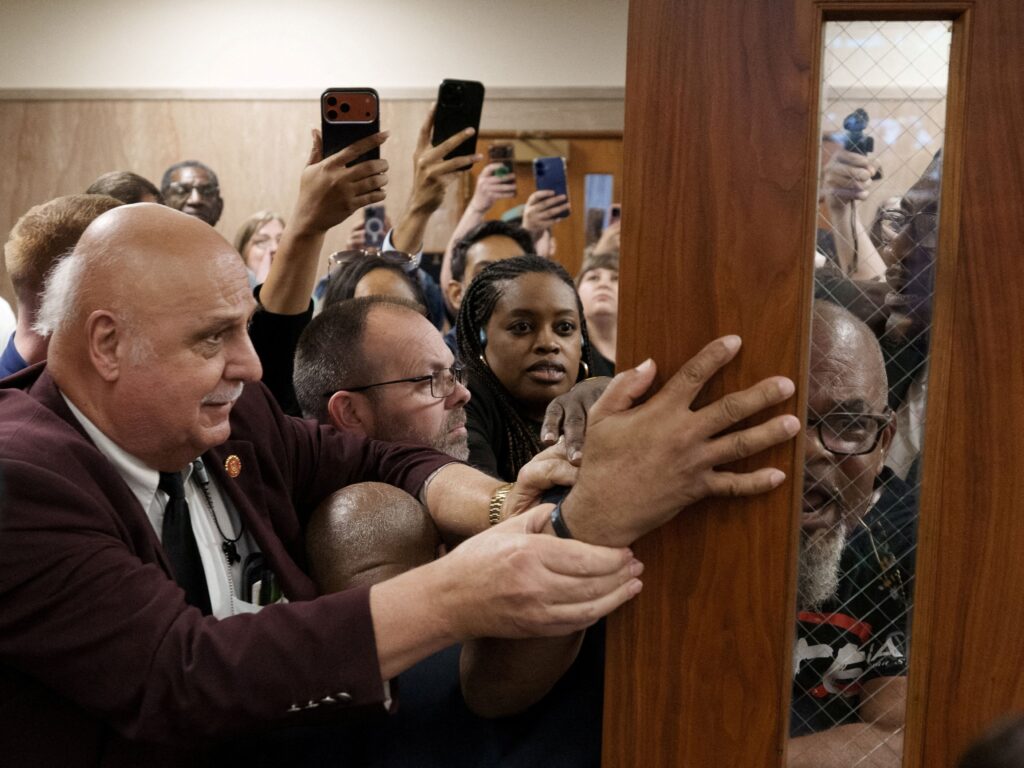
Two years ago, the Supreme Court blocked Louisiana from dismantling a newly drawn congressional map. The 2020 Census found that the state’s population was one-third Black, and lower federal courts ruled that fair redistricting could not reasonably avoid the creation of a second majority-Black congressional district. Opponents challenged this decision, but the Supreme Court allowed it to stand, arguing that undoing the map so close to the November 2024 election would cause voter confusion and create election administration hardships — a doctrine known as the Purcell principle.
Last month, however, the court determined that this second district was an unconstitutional racial gerrymander and gave the state’s legislature the green light to redraw its map ahead of this year’s midterm elections, even though primary votes had already been cast.
These actions might suggest a fickle court — one that protects equal representation in one instance and then undermines it the next. Instead, they reveal a court that believes in removing federal oversight and intervention in voting rights.
This jurisprudence reflects a pattern of do-nothingness — and it has been building for more than a decade. In 2013, the Supreme Court determined in Shelby County v. Holder that the preclearance formula determining which states must seek federal approval before changing election laws was unconstitutional, effectively hollowing out two sections of the Voting Rights Act. In 2019’s Rucho v. Common Cause, it ruled that federal courts cannot adjudicate allegations of partisan gerrymandering. And in 2021’s Brnovich v. Democratic National Committee, the court further narrowed federal protections, making it harder to overcome discriminatory voting laws. Each case relieved the court from proactive protection of voters and democracy, in favor of doing little to nothing, while the states and political parties rearranged the republic.
The Purcell principle offers further evidence. Established by the Supreme Court in Purcell v. Gonzalez in 2006, the doctrine serves as the court’s rationale for inaction, stating that federal judges should not decide contentious voting issues too close to elections. “Late judicial tinkering with election laws can lead to disruption and to unanticipated and unfair consequences,” Justice Brett M. Kavanaugh explained in 2022’s Merrill v. Milligan. Kavanaugh said that while states may “toy with” their own laws, the federal government should not. Sometimes that inaction results in protecting a hard-won remedy, as in the drawing of a second Black district in Louisiana two years ago. And sometimes it results in leaving a state’s discriminatory laws and practices in place. But what it always does is ensure the federal government has no role in the outcome.
Twenty years ago, Congress strengthened and reauthorized the Voting Rights Act, a clear statement from the most democratic branch of government. But just three months later, Purcell was decided. Since then, the court has decided it should have no role in challenging unfair laws when elections approach; no role in deciding which states’ voting laws should be subject to federal approval; no role when parties gerrymander the states to win every seat; and no role in disentangling impermissible racial discrimination from permissible partisanship. On voting rights, what’s left for the Supreme Court to do? Not much. And that seems to be the aim.
The federal government has taken this tack before, at the nation’s centennial. In the two decades leading up to 1876, the United States abolished slavery, established birthright citizenship and enfranchised formerly enslaved Black men — all accomplished with the federal government’s protection of these newly extended voting rights. But in the 1876 presidential election, the parties struck a deal over disputed electoral college votes to put Republican Rutherford B. Hayes in the White House in exchange for greatly weakened federal protection of civil rights in the South under his administration. His inauguration the following year is proof of the deal, what historians call the Compromise of 1877, which brought the promising Reconstruction era to an end — aided by a federal government with a do-nothing philosophy on voting rights protections.
The court risks repeating the same mistake today. While the rationale is different, the end result is no less antidemocratic. Multiple states are in a race to redraw their congressional districts to the exclusive advantage of the political party in power — with midterms less than six months away. In the South, the result could be partisan congressional maps controlled by the party opposed to strong federal protection of voting rights — a goal of long-ago segregationists now accomplished, whether by happenstance or otherwise, by partisanship and inaction.
Congress, of course, should act. It could pass legislation banning partisan gerrymandering, restoring federal protections against discriminatory redistricting and reaffirming a national commitment to democracy. It has acted before — in 2006’s voting rights reauthorization that extended the law’s protections for 25 years, until 2031. But it behaves as though it has adopted the Purcell principle for itself, refusing to consider questions of voting rights when elections are close — and the next election is always too close.
The court’s jurisprudence has effectively ended protections long afforded by the Voting Rights Act — five years ahead of schedule and as the nation prepares for its 250th anniversary.
The post The Supreme Court is following a do-nothing doctrine appeared first on Washington Post.