Liz Plank, a podcaster in Los Angeles, started her year in the doldrums. Her spirit, she felt, was being weighed down by a breakup with her longtime best friend and roommate, compounded further by the punishing news cycle.
But her mood began to improve when she went to bed in her “whimsy pajamas”: a cream ruffled tank top and shorts. More “whimsical” activity followed.
“I started having a really cute coffee ritual in the morning,” Plank, 39, said. “I got this really cute coffee machine, made little sprinkles and all these things that were just for me.”
“And it really did transform my mood,” she added.
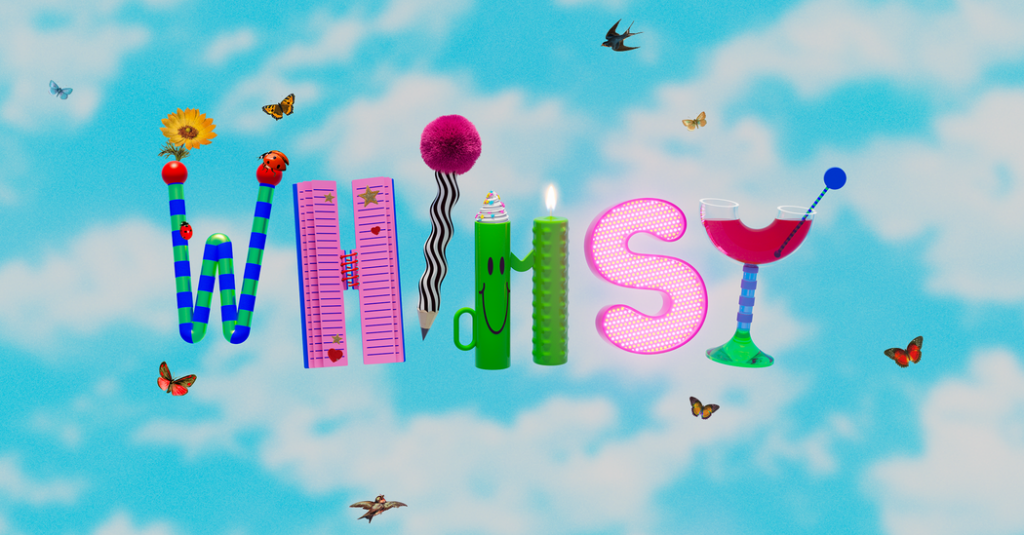
“Whimsy” is having a moment, thanks to Gen Z-ers and some millennials who have recast the word to characterize a lifestyle that blends playfulness, spontaneity and being present.
Etsy, a marketplace known for whimsy-adjacent products like handmade and vintage items, said that searches for “whimsical jewelry,” “whimsical décor” and “whimsy-related items” were each up by at least 50 percent from last year.
“We’re seeing shoppers turn to whimsy as a form of everyday escapism, seeking out pieces that feel personal, playful and a little unexpected to make everyday life more extraordinary,” said Dayna Isom Johnson, Etsy’s trend expert.
And it’s not just products. For example, sending postcards and doing activities one’s 10-year-old self might have enjoyed are considered “whimsy hobbies.” There is a whimsy lexicon — those who use it might say “saunter,” for example, instead of “walk.” At a glance, the style is a few steps away from being twee.
But whimsy enthusiasts see it as a response to compounding anxieties over a series of stressors, including a challenging economy, multiple wars and a volatile presidency. For some, embracing this brand of quirkiness amid the uncertainty offers a sense of control.
“We really can’t control what our leaders are doing,” Plank said, adding, “but you can control what kind of mug you’re going to choose, what cute outfit you’re going wear and what beautiful thing you can do in your morning.”
For years, young people have been drawn to buzzy terms and moods to contend with the societal climate. Gen X-ers who came of age in the Reagan era dealt with cascading social and political issues, including the AIDS epidemic and the nuclear threat of the Cold War. The latchkey children living through a period of increased divorce rates used irony and sarcasm to cope with feelings of disillusionment. “For Gen X, irony wasn’t just humor but armor,” Alexandra Jacobs recently wrote in T: The New York Times Style Magazine.
Younger generations haven’t completely turned away from irony. Though there are earnest social movements that have also taken hold, like the “Black Boy Joy” movement, which promoted images of Black men and boys exuding happiness to counter negative stereotypes.
In a few ways, whimsy appears to fit the current moment. Dr. Nassir Ghaemi, a psychiatry professor at Harvard Medical School who has written about Generation X, pointed out that millennials and Gen Z face a more intense deluge of information than the mostly internet-free society of the 1980s. He believes that whimsy also presented an out from the more performative aspects of social media.
“These online experiences have been going on now long enough that Generation Z and millennials have figured out that this is happening, that a lot of these online interactions are inauthentic,” Ghaemi said. “Now they have to figure out a new way of more authentically engaging with each other. They realize that one way of doing that is to get offline.”
The whimsy craze’s emphasis on offline activities parallels a movement by young people who are leaving behind smartphones and screens.
The focus on the desire to turn away from the trappings of adulthood is also conveyed by the very makeup of the word. “Whimsy,” a likely derivative of the 16th-century noun “whim-wham,” ends with what linguists say is often used as a diminutive suffix, which conveys a sense of childishness or affection. Laurel MacKenzie, the director of undergraduate linguistic studies at New York University, said many languages have these suffixes to make words “sound small or cute,” like the “e” sound at the end of “doggy.”
Like many ideas flirting with mainstream acceptance, the rise of whimsy has brought along some skeptics, including grammarians who are irritated to see a noun pressed into service as an adjective in phrases like “She is more whimsy.” Others are weary of the performative aspect of the trend.
Jordan Williams, an English lecturer at the University of North Carolina at Greensboro, said that as someone who had experience with cosplays and makeup, “whimsy” has long been part of her vocabulary. In March, she posted a video on TikTok explaining that while she believed authentic whimsy still exists, the trend is more of a marketing opportunity.
“You’ve got to buy the top five things off Amazon to find whimsy, baby, that’s not whimsy,” Simone, 28, said. “That’s capitalism.”
Sean Anthony Bryant, 34, who lives in New York and works in tech, has embraced whimsy as a feeling and as a product. He conceded that he probably would not have described himself as whimsical a few years ago, but he said his fondness for being in the park and his willingness to dance in public were partly why he reconsidered.
One morning, Bryant became peeved when he saw someone on social media “being really negative.” He made a TikTok telling viewers that since “the world is on fire,” they should consider doing something whimsical, like building a fort. The clip has since been viewed more than four million times.
With some encouragement from friends, Bryant started selling T-shirts and caps that read “Be More Whimsy.”
Is selling whimsical clothes whimsy? Bryant says it can be.
“We all have our own ways of staying whimsy,” he said.
The post ‘Whimsy,’ a New Trend, May Be a Life Raft for Zillennials appeared first on New York Times.