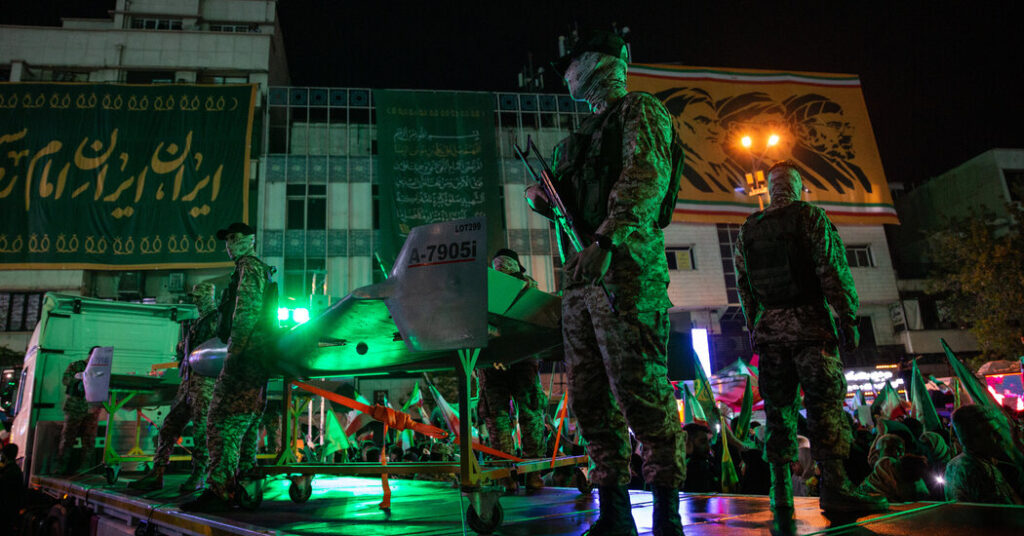
Iran’s Revolutionary Guards warned on Wednesday that any new attack on the country would provoke them to spread the war beyond the Middle East, raising the stakes of diplomatic efforts to end the conflict.
In a statement reported by Iranian state media, the Islamic Revolutionary Guard Corps, a powerful military force that answers directly to the country’s supreme leader, said that if “aggression against Iran is repeated,” it would deliver blows “in places you cannot even imagine.”
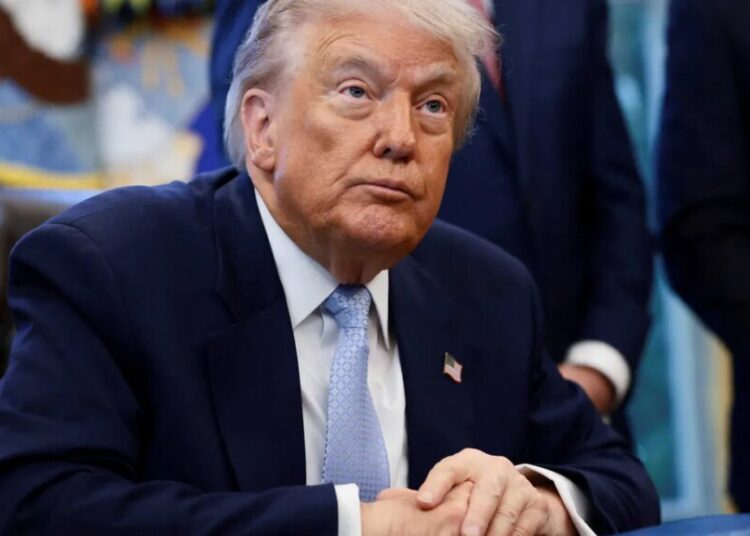
President Trump said this week that he had postponed a “very major attack” against Iran after the leaders of Saudi Arabia, the United Arab Emirates and Qatar had asked for more time to pursue an agreement over Iran’s nuclear program. There was a “very good chance” that a deal could be reached, he said, but he was vague when asked how long Tehran had to return to the negotiating table, saying only “a limited period of time.”
The dueling messages underscore the fragile state of diplomacy between the two countries, while the Guards’ threat echoed growing fears in Washington that Iran or allied groups could seek to strike Western interests outside the region.
A criminal complaint that was unsealed in the United States last week accused an Iraqi man — described as a senior commander in Kataib Hezbollah, an Iran-backed militia in Iraq — of helping to plan attacks in the United States, Europe and Canada since the start of the war.
Negotiations to end the conflict have stalled over Iran’s nuclear program and the Strait of Hormuz, a critical transit point for oil and gas. Iran has effectively closed the waterway since the early days of the war, rattling global energy markets.
The standoff has put growing strain on a monthlong cease-fire that mediators are scrambling to keep alive. Pakistan has been involved in those efforts and its interior minister, Mohsin Naqvi, arrived in Tehran on Wednesday for his second visit to the country in a week, according to IRIB, Iran’s state broadcaster.
In recent days, Mr. Trump and Vice President JD Vance have both talked up the possibility of a deal, even as Washington and Tehran have continued to trade threats.
Mr. Vance said at a White House briefing on Tuesday that “a lot of progress” was being made in the talks, adding that Washington believed “the Iranians want to make a deal.” But Tehran’s latest proposal appeared to include demands that Washington has previously rejected, such as reparations for war damage and guarantees for Iran’s right to enrich uranium.
“There’s an option B, and the option B is that we could restart the military campaign,” Mr. Vance told reporters. “But that’s not what the president wants, and I don’t think it’s what the Iranians want either.”
The Guards on Wednesday also sought to portray Iran’s response to the U.S.-Israel military offensive as restrained. The Americans and Israelis had attacked with “the full capabilities” of their militaries, the statement said, but Iran “did not deploy all the capacities of the Islamic Revolution against them.”
If Iran were attacked again, analysts said, it could seek to exert control over the Bab al-Mandeb Strait, a narrow waterway linking the Red Sea to the Gulf of Aden through which about a tenth of global maritime trade passes. The strait runs alongside territory in Yemen held by the Houthis, an Iran-backed militia that has previously fired on ships traversing the Red Sea.
Iran could also intensify its attacks on the Gulf Arab states and their energy infrastructure. Striking Gulf oil fields, refineries and ports has been one of the most potent ways for Iran to inflict pain on the global economy and put pressure on Mr. Trump.
“The threat of Iranian retaliation against major oil producers remains one of the very few factors restraining U.S. behavior toward Iran,” said Ali Alfoneh, a senior fellow at the Arab Gulf States Institute, a Washington-based think tank.
There are concerns among U.S. military officials that Iran remains a resilient adversary able to impose heavy costs on the wider region and the global economy despite months of strikes.
Tehran has used the cease-fire to dig out bombed ballistic missile sites, move mobile launchers and adjust its tactics for dealing with a resumption of strikes, according to a U.S. military official who spoke on condition of anonymity to discuss operational matters.
Sanam Mahoozi and Yeganeh Torbati reporting.
Euan Ward is a Times reporter covering Lebanon and Syria. He is based in Beirut.
The post Iran Threatens to Strike Beyond the Middle East if the U.S. Resumes Attacks appeared first on New York Times.