On weekends in May, the cars usually spill out of the dirt parking lot at Villa del Sol Sweet Cherry Farms and along both sides of the two-lane road. Yes, they grow cherries in Southern California — in the Leona Valley, in the high desert west of Palmdale. For a few weeks, hundreds of families flock there during the U-pick season. Not this year.
“Sad news,” orchard owner Gary Shafer said on an outgoing voicemail he left for would-be pickers. “We had such a warm winter this last year that we did not get a cherry crop this year. It’s the first time in 23 years.”
In Los Angeles County, average temperatures in the six months from October through March were 4 degrees warmer than the 30-year average, and the warmest on record in 131 years. The winter brought unprecedented warmth across the western United States.
Research shows climate change is bringing warmer and shorter winters.
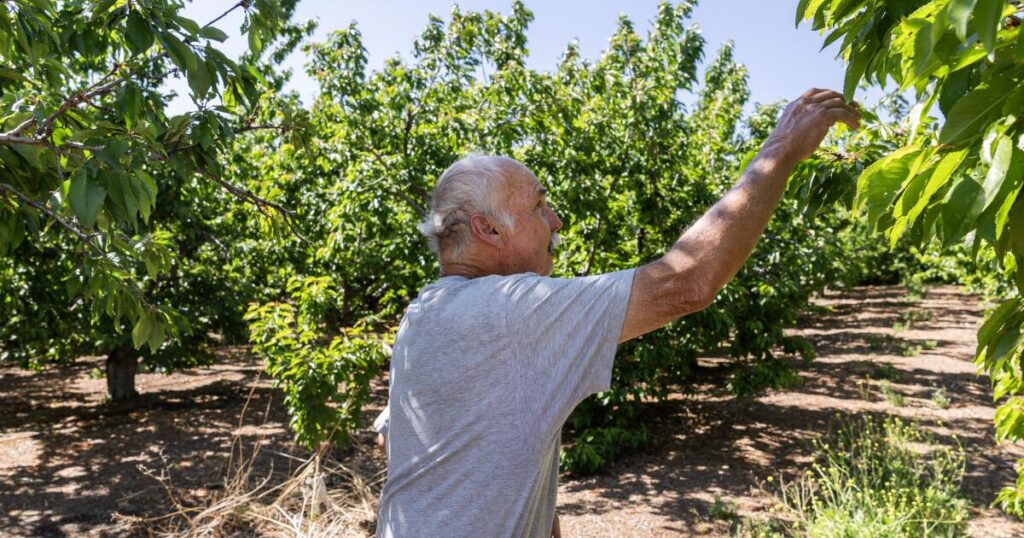
Shafer noticed he could wear a T-shirt while pruning trees instead of the usual hooded sweatshirt and knitted hat. Among the trees, he saw poppies and other wildflowers bloom extremely early, in January.
From his perspective, though, it’s just more of the weather swings he has seen for decades.
“It could be that there’s global warming, but, you know, throughout my 73 years, I’ve seen it up and down, up and down,” he said. “It is what it is.”
He and his wife, Maxi Case, have 3,600 cherry trees on 25 acres at Villa del Sol, which their website says is the largest U-pick cherry orchard in Southern California.
They filled with blossoms as usual this spring, so Shafer rented about 100 beehives and the bees went to work pollinating. But the trees never bore fruit.
Shafer and Case sent an email to their regular customers and also posted a message on their website: “We Have NO CHERRIES Here at Villa del Sol in 2026.”
“As you know, we need many chill hours in the winter and this year the weather was too warm.”
Cherries and other stone fruits, including apricots and plums, require a certain number of cold hours. Depending on the type of cherry, each winter the trees here require between 500 and 700 hours of temperatures between 32 degrees and 44 degrees.
Although much of Southern California is too warm for the fruit, Leona Valley sits at about 3,500 feet elevation, giving it chillier winter nights.
There are a handful of other small cherry orchards in the valley. Their trees didn’t bear fruit either.
The extreme weather wasn’t just an issue for cherries in this part of the state. California’s warmest March on record, followed by April rains, hurt the cherry season in the Central Valley too, reducing the harvest statewide, said Chris Zanobini, executive director of the California Cherry Board.
People also flock to U-pick orchards in Cherry Valley, in Riverside County. But this year Guldseth Cherry Orchard similarly announced on its website that “we have NO cherries for 2026.”
Each year, as families wander through the Leona Valley orchards with red buckets, it’s not unusual to hear Spanish, Persian, Korean and Japanese as well as English. Southern Californians compare notes on their favorite cherry dishes.
Workers bend the branches down with a hook-shaped tool made of PVC pipe, helping people reach handfuls of cherries.
Fallen fruit squishes under shoes as people walk back to the scales with their buckets full of red Bing and Brooks cherries, and yellow Rainiers. People say the flavor of these cherries is super intense.
Shafer, who started the orchard in 1999, said it’s gotten so popular that he stopped advertising about 15 years ago. “It’s taken on a life of its own.”
Leona Valley will still hold its 53rd annual Cherry Parade and Festival on June 6, an event that began as a way to attract visitors to the U-pick farms. There will be horseback riders, floats and mariachis, and vendors will serve deep fried cherry burritos and cherry lemonade.
At his roadside stand, Shafer still plans to sell honey from the bees that pollinated his trees.
He’s 72 and does much of the farm work himself, pruning, repairing water lines and applying fertilizer.
“We’ve been fertilizing and watering them pretty heavy,” he said. “The trees look happier today than they have in a long time.”
That gives him hope for next year.
The post For the first time, a warm winter just wiped out SoCal’s little-known cherry harvest appeared first on Los Angeles Times.