To the Editor:
Re “I Tried to Become My Mother and Ended Up Becoming Myself,” by Molly Jong-Fast (Opinion guest essay, May 10):
There is good news for Ms. Jong-Fast. Forgiveness is not about receiving proof of delivery, as though it is sent by certified mail. Forgiveness is yours to feel and do, and you can do it any time. And love, should you still wish to express it to your mother, is felt even by bodies that are “all flesh and no mind.”
Forgiving who she was, and accepting who she is now, are the ways to reach her. From my 30 years of reaching and connecting with people with dementia, this I know: Love can be felt — even by someone you call a “ghost.” And she will be able to feel it too.
You are both quite reachable, touchable and lovable — all the way to the end.
Anne Basting Decatur, Ga. The writer is the author of “Creative Care: A Revolutionary Approach to Dementia and Elder Care.”
To the Editor:
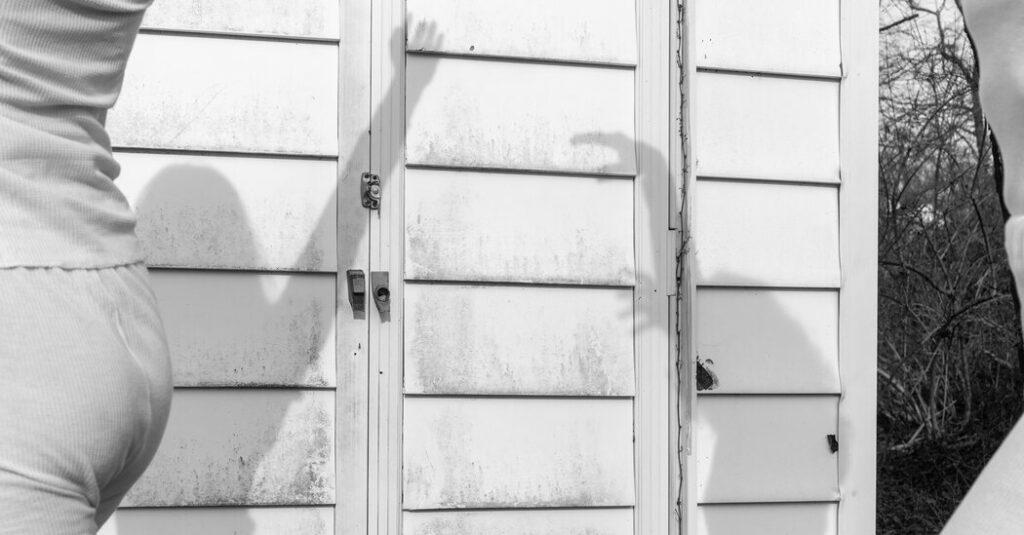
Reading Molly Jong-Fast’s essay about her mother, the writer Erica Jong, led me to reflect on my relationships with both my mom and my daughter. My mother went only so far as middle school, whereas I am the first generation in my family to earn two master’s degrees.
When I had my own children, I decided to provide them with the education enrichment I had lacked. I brought them to art museums, enrolled them in piano and violin lessons, traveled the world with them and tried to cultivate a love for books. However, my daughter dislikes art museums and doesn’t appreciate her 10 years of music education.
It feels like a pendulum: No matter what we do, it eventually swings back to the moving average. Struggling parents often raise thriving kids, and extraordinary parents have ordinary kids.
But that is fine. I told my daughter that as long as she is happy, I am happy.
Hailing Guan Oak Park, Calif.
Trump in China
To the Editor:
Re “Trump Butters Up Xi, Who Stands His Ground” (news analysis, front page, May 15):
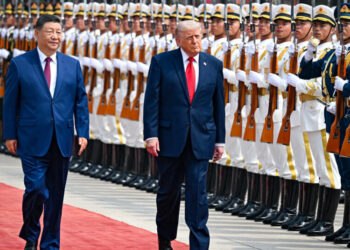
President Trump’s China visit exemplifies in microcosm his approach to governing: meaningless pomp and circumstance, vague diplomatic pronouncements signifying nothing, unseemly meddling by billionaire chief executives, nepotism and the palpable diminishment of America’s influence and prestige on the global stage.
Further, it is entirely fitting that before leaving for his overseas trip, Mr. Trump went out of his way to state that he doesn’t care about the financial concerns of the American people when he is talking about Iran.
This is a president who views those whom he serves with utter disdain, a feeling that grows more mutual with each passing day.
Mark Godes Chelsea, Mass.
A Gift to Big Tobacco: Approving Flavored Vapes
To the Editor:
Re “Trump’s Clout Gives Big Win to Big Tobacco” (front page, May 14):
Over decades and across several presidential administrations from both parties, the United States has made enormous progress in reducing cigarette smoking. It is one of the few areas in which we are truly among the world leaders.
Currently, only about 10 percent of adult Americans are regular smokers, among the lowest rates in high-income countries. This has taken a concerted effort from our political and legal sectors and our public health agencies, benefiting Americans with longer, healthier lives and lower health care expenditures for the many types of chronic disease associated with tobacco use.
The approval of flavored vapes, sure to be irresistible to children and teenagers, cannot be justified on public health grounds. No one should be vaping for any reason other than as a way to stop smoking, and tobacco and menthol-flavored vapes, already available, mimic the experience of tobacco for daily smokers.
Nicotine is not a harmless substance, and nonsmokers should be absolutely discouraged from vaping.
There are mountains of evidence that demonstrate that whatever the interests of the tobacco companies are, they are not in the public’s health. Appeasing them will lead to only one thing: making America unhealthy again.
Neil W. Schluger Valhalla, N.Y. The writer, a pulmonologist, is the dean of the School of Medicine at New York Medical College.
The post Mothers and Daughters: Two Stories appeared first on New York Times.