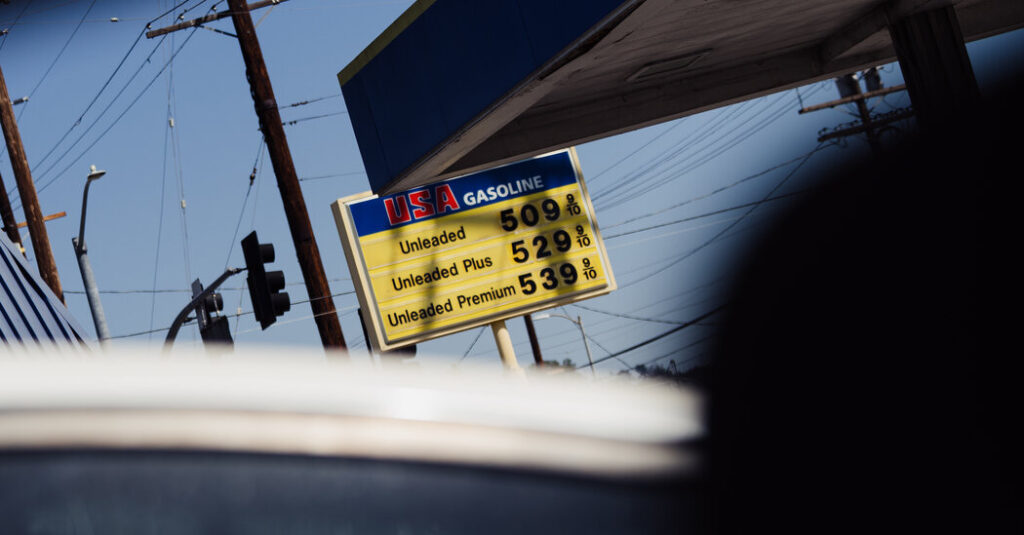
The cruelty of high fuel prices isn’t just about the cost, but also about the unequal burden it places on American households. Energy costs have been walloping the working class since the United States and Israel attacked Iran on Feb. 28. And things could get a lot worse this summer, with prices rising ever higher the longer the Strait of Hormuz remains closed to shipping.
My research team at Brown University built a website to track the rising, real-time energy costs of the war with Iran. By mid-May, higher prices for just two energy products — gasoline and diesel fuel — added nearly $40 billion in costs to American consumers. That’s more than the Pentagon’s cost estimate of its military operations, now approaching $29 billion.
Before the attack, the average price for a gallon of gasoline in the United States was $2.98. Since then, the average price has soared to about $4.50 a gallon. That average smooths over a lot of regional variation. In California, prices have climbed past $6 per gallon. Colorado had an increase of more than $1.50 per gallon since February, lifting prices from below the national average to above it.
The rise in diesel fuel prices, critical to commerce, has been even sharper. Diesel is up by more than 50 percent. Even if you don’t purchase diesel directly, you’re paying a premium for other daily goods, because many of them are transported using trucks, locomotives and other engines that run on diesel fuel. If you buy a package online, you’re paying for diesel indirectly. Farmers are feeling it, too. There’s no escape in the air, either, with FedEx and UPS imposing surcharges as a result of rising jet fuel prices.
On average, each U.S. household has paid an extra $295 because of higher gasoline and diesel fuel prices since the war began. That’s more than a week’s worth of groceries for the average household. The burden falls hardest on poorer people, who are using less fuel than richer households, but whose costs make up a far larger portion of their budgets.
According to our analysis, Americans in the bottom 18 percent have had to spend at least half a week’s income to pay off the higher price of fuel since the end of February. As a result, they are cutting back on the gas they use, while households with incomes above $125,000 barely reduced their real gas consumption.
Fuel prices are likely to remain elevated for months, even if the fighting stops. Oil tanker traffic through the Strait of Hormuz will remain low until Iran grants passage, either explicitly through an agreement or simply in practice, without acknowledgment. But even if the strait opens again, many insurers will be wary of allowing ships to transit it — just as the insurers were after the Houthis previously threatened shipping in the Red Sea.
Moreover, Iran might continue to charge a toll or tax on tankers for moving through the strait, which would get passed on to refiners. And don’t forget the physical damage already inflicted on the oil production equipment and processing facilities in the Persian Gulf, some of which will take years to repair or reconstruct. All these supply constraints push prices up.
Without a resolution soon, experts expect the fuel crisis to get much worse. Energy producers have been shielding the markets from the full impact of the conflict by drawing down their inventories, in hopes of refilling storage tanks when supply constraints ease. But global inventories will reach critically low levels by the end of May, just as the summer driving season ramps up. That could drive oil prices higher — up to $200 per barrel, according to some analysts.
Suppose that gasoline prices rise to $5 per gallon across the United States. That would mean an extra $513 per household from Memorial Day to Labor Day, compared with what consumers were paying before the war began, bringing the total gas bill for a typical household to $1,558 over the course of the summer.
If gasoline prices top $6 per gallon on average — a real possibility if oil goes to $200 per barrel — that would mean an extra $825 per household. Just for gasoline. Other fuels, such as diesel and jet fuel, will skyrocket. Those prices will, in turn, affect the prices of everything else, from groceries to air travel. Tomato prices are already up nearly 40 percent.
Extra energy costs are bound to have a political effect. High gasoline prices are visible, posted on thousands of roadside signs nationwide. Americans saw them rising soon after President Trump ordered the attack on Iran. That makes it difficult for Mr. Trump to avoid blame.
And it could spell trouble for the Republicans in the November midterm elections. No one should doubt Mr. Trump’s uncanny ability to shift the conversation away from potentially damaging topics, but even he may struggle with the anger voters feel every they time they fill their tanks.
They’re not being unreasonable. Americans can and should hold Mr. Trump accountable for the mess he has created in the Persian Gulf. Despite claiming to be the party of national security, the Republicans have proved to be poor shepherds of the national interest. In the case of Iran, their missteps are having direct, visible consequences for Americans’ pocketbooks.
Jeff D. Colgan is the Richard Holbrooke professor in Brown University’s political science department and the director of the Climate Solutions Lab at the Watson School for Public and International Affairs at Brown. He focuses on international order, especially as related to energy and the environment.
The Times is committed to publishing a diversity of letters to the editor. We’d like to hear what you think about this or any of our articles. Here are some tips. And here’s our email: [email protected].
Follow the New York Times Opinion section on Facebook, Instagram, TikTok, Bluesky, WhatsApp and Threads.
The post Trump’s War Is Punishing the Poor, Starting at the Gas Pump appeared first on New York Times.