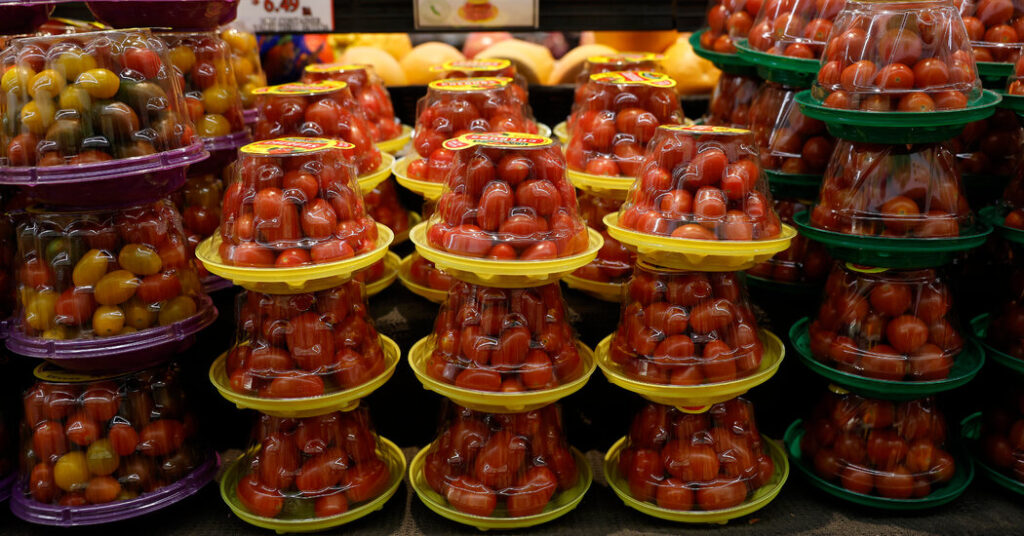
The price of tomatoes — tart bursts of flavor in salads and sandwiches — surged nearly 40 percent in April from a year ago on a combination of bad weather, high tariffs and climbing transportation costs.
Overall, food prices in grocery stores rose 2.9 percent in April from a year ago and were up 0.7 percent from March, according to the Consumer Price Index.
Fresh fruits and vegetables — perishable items that faced higher shipping and trucking costs as fuel prices surged in the past month — soared 6.5 percent in April from a year ago.
While prices for bananas and citrus fruits also climbed, the real culprit for much of the steep rise was tomatoes.
By some estimates, more than 70 percent of the fresh tomatoes consumed in the United States come from Mexico, where unseasonably wet weather and disease resulted in below-normal yields. And freezes in key growing areas of Florida early in the year also affected the tomato crop.
Tariffs on Mexico have also pumped up prices. After the Trump administration ended an agreement last year that allowed tomatoes to be imported into the U.S. from Mexico for free, tariffs on tomatoes jumped to about 17 percent.
And when the conflict with Iran started to send fuel prices higher, grocery analysts warned that fresh fruit and vegetables that are either shipped or trucked into the U.S. would be among the first to feel the impact of the fuel surcharges.
Julie Creswell is a business reporter covering the food industry for The Times, writing about all aspects of food, including farming, food inflation, supply-chain disruptions and climate change.
The post Tomato Prices Soar as War, Tariffs and Weather Affect a Popular Crop appeared first on New York Times.