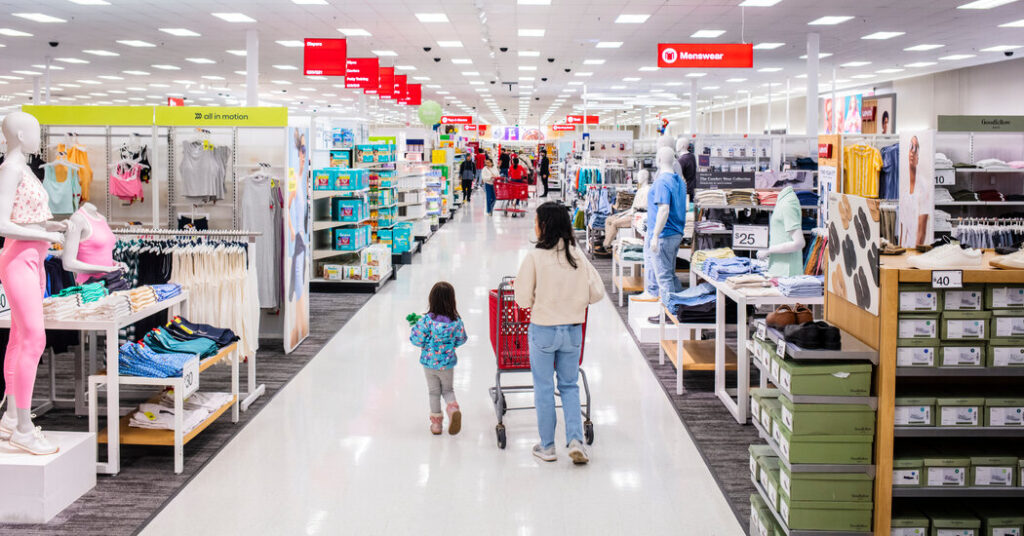
The Target store in Paramus, N.J., in a shopping mall next to a wax hair removal center and a Wetzel’s Pretzels, has been transformed into one of the most pristine in the company’s chain.
In recent months, workers installed new track lighting and built sleek displays for baby products and apparel at the store, which is almost 20 miles from Manhattan. They rearranged the grocery section to be more expansive and remade beauty aisles to be more welcoming. Even the backrooms have been renovated to make it easier for employees to cart items like paper towels and cereal boxes to customers’ cars for pickup.
It’s a scenario playing out across the United States: The nation’s biggest retailers are pouring billions of dollars back into their stores, even as more sales move online, in an effort to lure more shoppers and raise employee efficiency at brick-and-mortar locations.
“Target’s new chapter is all about growth, and stores are central to our strategy,” Michael Fiddelke, the company’s chief executive, said in an email. “By investing in new stores and remodels, we’re elevating the Target experience.”
Nearby, Target’s rivals have begun similar updates as each tries to gain a competitive advantage. Walmart, the world’s largest retailer, has committed to remodeling 12 stores this year in New Jersey, with upgraded layouts and services. Dollar General plans to renovate some of its shops in the Northeast with an open format and more fresh food.
In total, America’s largest retailers are expected to spend at least $20 billion to remodel more than 12,000 stores this decade.
Retail executives said the payoffs are worth the investment. Shoppers demand well-organized stores and fully stocked shelves so they can find what they want quickly. For those looking to discover new clothes or cosmetics, they expect elegant displays like those found at fashion boutiques, even if the store also sells garden shears and laundry detergent.
Though e-commerce sales have grown quickly for many years, they still only account for about 18 percent of all retail sales, according to the Commerce Department.
Attractive stores are needed to encourage people to shop online. “The in-store experience is still important for shaping the e-commerce brand,” said David Marcotte, an analyst at Kantar Retail IQ, a research firm. “Remodels are almost always the best way to go.”
There’s a financial benefit for retailers renovating a store. Last year, the One Big Beautiful Bill Act passed by Congress included tax incentives for businesses making capital investments. It allowed businesses to deduct the full cost of improvements immediately, rather than over time, saving money and improving cash flow.
“Retailers have a window to invest in improvements in their stores and benefit from this bonus,” said Mark Mathews, the chief economist of the National Retail Federation, an industry trade group.
There is much room for improvement across retail store networks as they try to modernize. The surge in pickup orders during Covid, for instance, has pushed retailers to revamp operations and reorient their parking lots and interior packing areas.
Order pickers used to peruse the aisles with a customer’s shopping list in hand, then walk out the front door to take the items to cars waiting in the parking lot. Now, retailers have built specialized zones in stores where the orders are sorted, with immediate access to separate drive-up parking spots. Employees save time organizing and distributing the goods.
Walmart has performed well in recent years as it revamped its image from a cheap discounter to a purveyor of trendy home goods, clothing, groceries and other essentials. It began a major remodeling process in 2023, announcing a $9 billion renovation project that spanned 1,400 stores across the country. Those efforts have continued, with plans to remodel 650 more of the company’s immense supercenters and smaller neighborhood locations.
The Walmart supercenter in North Bergen, N.J., was one of the earliest prototypes. The staff relocated the high-traffic areas, like the pharmacy and cosmetics, away from the perpetually busy grocery aisles to reduce gridlock. They added new refrigeration units and digital price tags, which allow the home office in Bentonville, Ark., to change the price of goods overnight to save workers hours of time they used to spend manually switching the price of every item.
“When you think about the billions of dollars that we’ve made the investment in, it is to absolutely empower our associates — to position the customer to get the speed and the quality that they need,” Cedric Clark, the executive vice president of store operations for Walmart U.S., said in April after the company announced that it would remodel additional stores.
It can take up to six months to remodel a Walmart, and sometimes a store will have to close for a period of time for workers to make major changes all at once, such as installing a new set of checkout counters with conveyor belts. Walmart declined to share how much it typically spends to revamp a single store.
America’s dollar and convenience stores are also getting face lifts. At Walmart’s competitors that have smaller stores, the process can be less intensive but equally beneficial, executives said.
Dollar General, which has posted strong results in recent quarters as shoppers contend with inflation and economic volatility, is working to remodel more than 4,000 of its more than 20,000 U.S. stores. The business has reimagined its traditional store format with a fresh layout in response to demand from shoppers who wanted to peruse the aisles more, Todd Vasos, the company’s chief executive, told investors in March.
“This new format is designed to be more open and inviting, resulting in greater browsing and treasure hunt shopping as customers are exposed to more categories as they navigate the store,” Mr. Vasos said.
Older Dollar General stores that have not been updated in seven or more years are getting full overhauls, Mr. Vasos said. For newer locations, there is an incremental program providing changes to physical fixtures and merchandising that can affect as much as 80 percent of a store.
Dollar General said it would spend up to $1.6 billion in the first year of its renovation project. Company executives said they expected sales at fully renovated shops to jump by about 6 percent.
7-Eleven, the convenience store chain, said in April that it would remodel 7,000 stores in North America — more than half of its network — by 2030 as part of a turnaround plan. The retailer’s parent company, Seven & i Holdings, said that it expected sales to fall more than 9 percent this fiscal year, with poor performance in North America.
The company said that it needed to upgrade its stores — by improving the interior and adding more food options — to fend off competitors.
“Consumer behavior is shifting,” 7-Eleven said in a slide deck presented to investors. The company said it must have “reliably clean, inviting and friendly stores” to succeed.
With its own remodels underway, the stakes are particularly high for Target, which is trying to regain momentum after three years of slumping sales. The retailer, once known for its “cheap chic” goods, has fallen behind on its merchandise offerings and store displays. Sales at existing Target stores fell 2.5 percent in the most recent quarter.
Mr. Fiddelke, who took the top job at Target in February, told investors that shoppers will experience more changes at Target’s 2,000 stores this year than they have seen in a decade. Some of the stores have not been significantly upgraded in up to 15 years, he said.
The moves are part of a $5 billion capital investment plan at Target, which has committed to hiring more store workers and increasing the number of hours employees can work to improve the in-store service. Management is also reallocating space for new merchandise.
Company executives are counting on these investments to aid their turnaround effort in the long run. Major stores such as one in downtown Minneapolis, where Target is based, can cost as much as $10 million to redesign and refit. Target said store sales typically rise in the low- to mid-single digits after a remodel.
“It’s not just that first and second year,” Laurie Mahowald, a senior vice president of properties at Target, said. “It makes that store more relevant for years to come.”
Kim Bhasin is a business reporter covering the retail industry for The Times.
The post Retailers Are Making Expensive Bets That Shoppers Still Want to Go to Stores appeared first on New York Times.