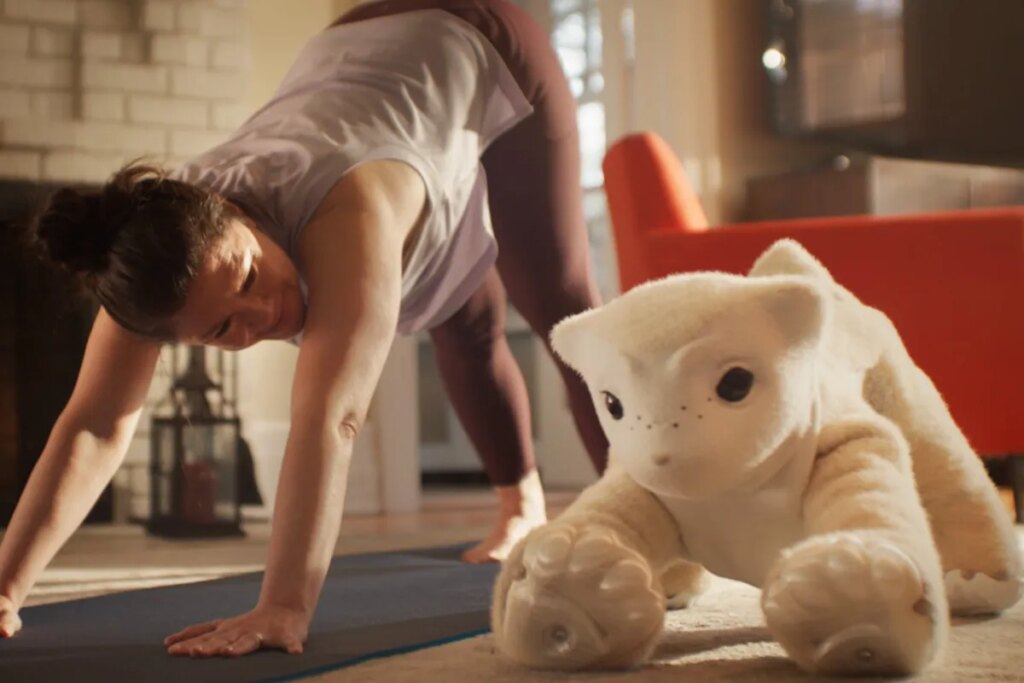
Colin Angle, the inventor of the iconic Roomba automated vacuum, is back with another robot that hangs around the house. This time it’s not a roaming vacuum cleaner, though, but a furry — and eerily lifelike, if not creepy — companion called a “Familiar.” With a name of such supernatural connotations, and with its uncanny appearance, it’s hard not to see it as a demonic mockery of an actual flesh and blood pet, superficially cute as it may be.
Naturally, it’s powered by AI. In an interview with The Verge, Angle described the robot as a “physically embodied AI system” that uses an on-device generative AI model to interact with its owner and develop a “distinct personality.” And he made it very clear that the goal of deploying the AI was to foster genuine companions.
“The next era of robotics is not just about dexterity or humanoid form — it’s about machines that can build and sustain human connection,” Angle told The Verge.
Angle co-founded iRobot, the company that builds the autonomous robot vacuum cleaners, in 1990. In 2024, he stepped down as CEO after a deal to sell the company to Amazon fell through. Since then, Angle cofounded Familiar Machines & Magic, which plans to start selling Familiars next year at the earliest, Angle said. Deviating from much of the AI and robotics industry, the company decided from its inception that it wouldn’t pursue humanoid robots.
Given all the controversies swirling around AI companions drawing people into forming unhealthy relations and even experiencing psychotic episodes that can culminate in suicide, it’s certainly a bold area for Angle and his new company to stake their futures on. AI-powered stuffed animals aimed at children were caught peddling advice on where to find pills, how to light matches, and discussed sexual fetishes.
Angle seems aware of the risks of anthropomorphizing a talking AI. His Familiars will communicate solely with meowing, purring noises, and expressive body language. “By design,” he joked in the interview, “it will avoid giving factual advice about things that maybe it shouldn’t be giving factual advice about.”
Still, the end game is companionship. The company hopes to use AI to create a robot that can learn from its owners, remember patterns, and adapt to their routines, Angle said. “If this is a toy, we’ve failed,” Angle told The Verge. “If this is a creature that you want in your world, then we’ve knocked it out of the park. It’s kind of one way or the other.”
While imitating a pet probably has less potential to foster emotionally harmful relationships as with anthropomorphic chatbots, Angle is still steering into controversial territory with his Familiars. Their success is predicated on the robots being lifelike, an illusion that is easier to maintain over text conversations than with physically embodied AI. There’s a high bar that needs to be cleared here while skirting numerous safety-related and ethical questions, plus the even greater question of whether a market for these things exists. Angle says a Familiar will cost “around the same as pet ownership,” which is vague.
Nonetheless, he claims interest in the companions is “higher than what we saw with Roomba.”
More on robots: Passengers Groan as Robot Passenger Causes Hour-Long Delay at Oakland Airport
The post Man Who Invented Roomba Moves Into Household Demon Market appeared first on Futurism.