Political figures who took leading roles in trying to overturn the 2020 presidential election appear on track to win the Republican Party’s nomination for governor in several of the country’s biggest battleground states, including Arizona, Pennsylvania and Wisconsin.
Their prominence shows how President Donald Trump’s baseless claims that the election was stolen have become an article of faith within the Republican Party, more than five years after he lost to Joe Biden. And it means victories in this year’s midterm elections would give Trump supporters who were central to his efforts to overturn the election key oversight roles in the 2028 presidential election, for which states hold main authority.
The GOP fields for governor include activists who took vocal, and sometimes official, actions in support of Trump’s efforts to claim victory in 2020, a sheriff who recently seized ballots in California, and members of Congress who voted to reverse the 2020 results and backed a lawsuit seeking to do the same.
Only a few of the candidates explicitly raise doubts about the validity of the 2020 election on their campaign websites. At least 30 have embraced overhauling election policies. Some promise to fight voter fraud and cheating, while others reference what they call “election integrity” policies such as mandatory voter ID and limitations on mail-in ballots, a Washington Post analysis of 145 Republican gubernatorial candidate websites shows.
Democracy advocates and Democratic Party leaders say they are alarmed by the denialism but say the issue is likely to take a back seat to other voter concerns such as affordability. Democrats are making a concerted effort to connect denial of the 2020 outcome to broader themes such as corruption, economic anxiety and insider dealing.
“This is an important issue. But it’s not the only issue, and it shouldn’t necessarily be the lead thing,” said Kentucky Gov. Andy Beshear, chair of the Democratic Governors Association, a group preparing to make Republicans’ history of election denialism a key issue in 2026. “Almost everyone in this economy is struggling because of [Trump] and these folks that are running, these election deniers, were willing to do anything for this president. So, their past attempts to steal an election were to steal it for a guy that’s made life tougher. They’re certainly not going to stand up to him to try to make life easier.”
The races are underway as Trump and his administration seek changes in how the midterm elections will be run and continue to relitigate how the 2020 election was conducted. Trump last month signed an executive order — subsequently challenged in court — seeking to limit who can vote by mail. The Justice Department has seized 2020 ballots in Georgia and taken possession of a trove of 2020 election data in Arizona.
The Post contacted Republican candidates who questioned the 2020 election results in seven states to ask how their views on that election would inform their possible terms as governor. None agreed to be interviewed, other than Mike Lindell, the MyPillow founder and Minnesota candidate who has spent years promoting false claims about stolen elections.
“We can’t use computers in our elections,” said Lindell, who has long advocated hand-counting paper ballots. He disputed the notion that focusing on elections was bad politics, saying he has a broad-based platform aimed at reducing taxes, streamlining regulations, helping the homeless and identifying fraud in benefits programs.
Others considered stronger general-election candidates have been more circumspect about their views and previous actions as they campaign to win over general-election voters.
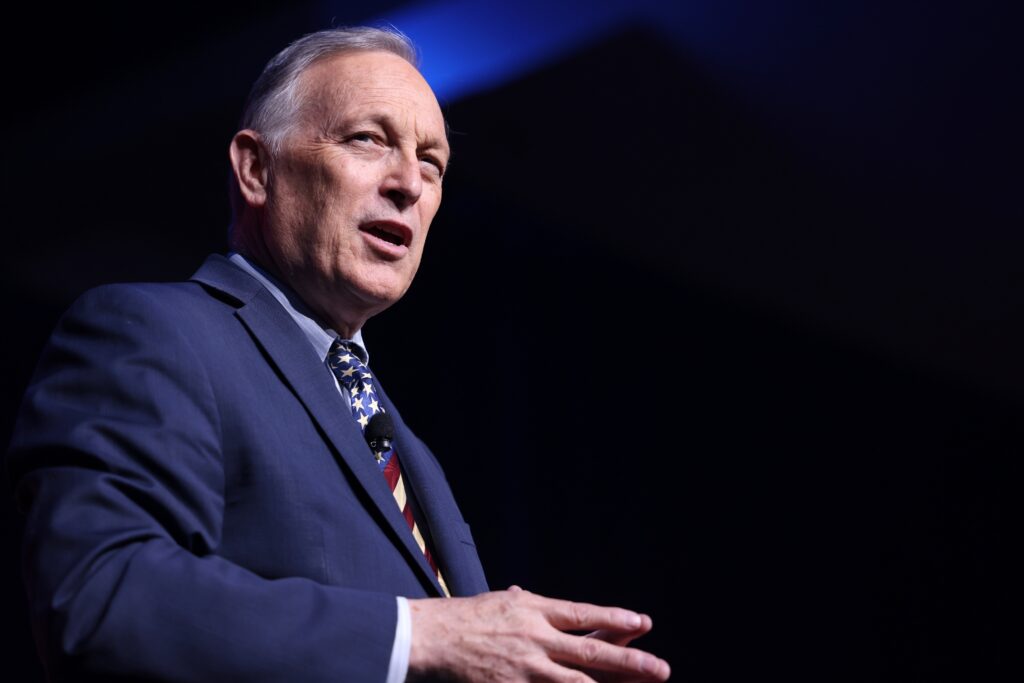
In Arizona, Rep. Andy Biggs, the overwhelming favorite to win the Republican nomination for governor, was central to the Republican effort in 2020 to block certification of the election results. Biggs, who is running with Trump’s endorsement, joined a friend-of-the-court brief in the Texas lawsuit aimed at voiding the election results in Pennsylvania, Georgia, Michigan and Wisconsin — all states Trump won in 2016 and that Biden carried four years later.
A spokesperson for Biggs said the congressman’s focus “from day one” of the campaign has been to “make the consistent case to voters that Arizonans cannot afford” Gov. Katie Hobbs (D), and less so the 2020 election. Biggs, in an interview with a radio show in Phoenix last week, declined to say whether Biden legitimately won the 2020 election.
Top candidates in Georgia, Pennsylvania and Wisconsin also played integral roles in Trump’s 2020 efforts to sow doubt about his loss.
Georgia Lt. Gov. Burt Jones, a Republican presidential elector in the state in 2020, signed an official-looking certificate that claimed Trump won in Georgia and pushed for a special session aimed at making it a reality. Jones is in a competitive race to win the Republican gubernatorial nomination in Georgia.
Stacy Garrity, Pennsylvania’s Republican treasurer, who has Trump’s endorsement for the gubernatorial nomination, told a crowd gathered at the state capitol on Jan. 5, 2021, that “the election from this November is tarnished forever.” At a campaign event with Trump in 2022, she said, “We know that he won.”
And in Wisconsin, Rep. Tom Tiffany, another Trump-backed candidate favored to win the GOP nomination for governor, voted to overturn Biden’s wins in Pennsylvania and Arizona and said he would have done the same for Wisconsin if such a vote had been held.
Tiffany, like Biggs, joined the unsuccessful Supreme Court filing that sought to reverse the results in swing states. In the fall 2025, Tiffany appeared at a GOP event with Michael Flynn, who briefly served as Trump’s first national security adviser and has spent years amplifying election conspiracy theories.
Michigan has two election skeptics vying for votes. One of them, Rep. John James (R), asked a crowd last month if they believed Democratic state officials “screwed Trump in 2020” and promised on his website to take citizens off the voter rolls. And state Senate Minority Leader Aric Nesbitt told the Midland Daily News he believed Trump won the state in 2020.
Republicans usually have a tough time in deep-blue California, but there is a chance the state’s unusual primary system could leave two Republicans as the only candidates in the gubernatorial general election. One of the two leading Republicans, Chad Bianco, the sheriff of Riverside County, has drawn attention by seizing about 650,000 ballots that were cast in a November 2025 election to redraw the state’s congressional map.
Bianco was acting on a complaint from a local group and said in an interview last month that he would consider seizing ballots again after the June primary if he receives a similar complaint.
In recent months, Republicans nationwide have rallied behind the Save America Act, which would require Americans to provide proof of citizenship when registering to vote. The House has passed the measure with the backing of Biggs, James and Tiffany, but it remains stalled in the Senate.
Support for measures like that will help inoculate Republicans who have questioned the 2020 election, said Jason Cabel Roe, a Republican strategist in Michigan. But he said some of the candidates’ comments about the 2020 election aren’t helpful.
“It’s silly because they know better,” said Roe, the former executive director of the Michigan Republican Party. “But, you know, it’s still what the base wants to hear.”
He said he didn’t expect the issue to gain much traction in the election, especially as Democrats focus on the economy and the price of gas.
“There’s enough muddying of what everybody’s feelings are about election integrity at this point — and maybe even a little exhaustion with relitigating an election that was six years ago — that I just don’t know that it really matters to voters,” Roe said.
An NBC News poll conducted in March found that inflation and the cost of living were the top issues on voters’ minds in 2026, with threats to democracy coming in second.
Elections focused on arguments about protecting democracy can present Democrats with a quagmire, as well. In 2024, Democrats sought to counter Trump’s rise by focusing on his role in undermining the election and the need to protect democratic norms. Those arguments largely proved unpersuasive with voters far more focused on issues like prices, leading Trump to win a second term with unified power in Congress.
Brian Lemek, president of Defend The Vote, a group focused on expanding access to voting, said Democrats can focus on both the economy and democracy, but not in a way that sounds out of touch with voters’ basic economic needs, as they did in 2024.
“Democrats learned a really valuable lesson that you need to be out there seeing and hearing from the voters what they want and what they need at a very human level,” Lemek said. “Democracy protection is a huge priority for us, and this election denialism is a real problem. … But rather than focusing on institutional democracy, we need to connect corruption and democracy to the lives of voters and kitchen table issues to win this thing for Democrats.”
The post Republicans who denied 2020 election results could be governors next year appeared first on Washington Post.