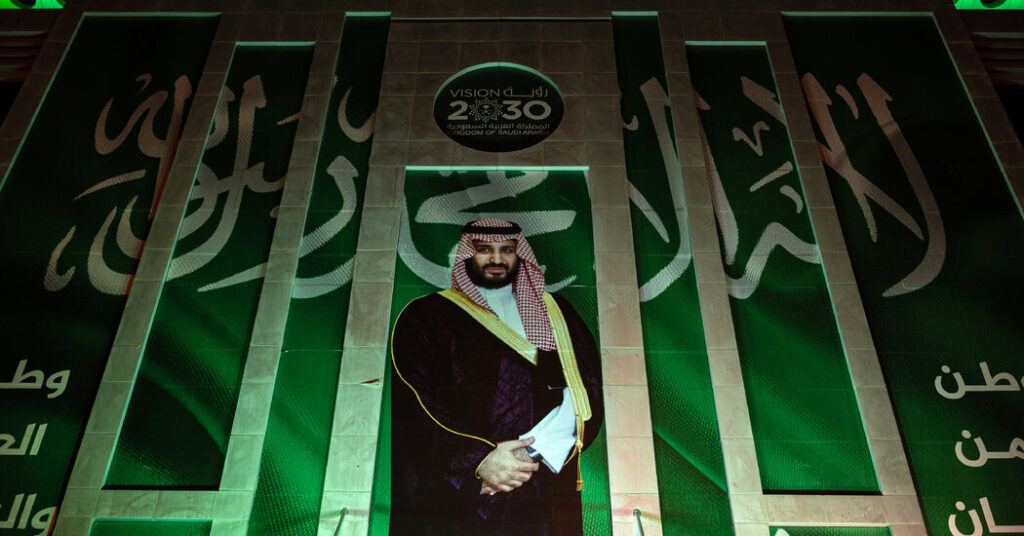
Saudi Arabia embarked on a nation-changing project over the past decade under a young prince in a rush to reimagine his kingdom. The kingdom announced ambitious ventures in sports, entertainment and other areas — all in a bid to diversify its economy from its heavy reliance on oil exports and to remake its image from a conservative, insular nation to a dynamic country playing on the world stage.
But in recent years, the global ambitions of Crown Prince Mohammed bin Salman have clashed with financial reality, as the state faces mounting expenses and lower oil revenue, exacerbated by the continuing war in the Middle East. Several major projects have recently been scaled back, mothballed or scrapped.
On Thursday the country’s $1 trillion sovereign wealth fund announced the latest casualty: a multibillion-dollar effort that had, when it started just four years ago, threatened to upend global golf and become a key symbol of Saudi Arabia’s determination to be a major player in sports.
When launching in 2022, the upstart competition, LIV Golf, tore apart the sport’s traditional structures by luring some of the games biggest names with the biggest checks in the sport’s history. It also pulled in — and remunerated — figures like President Trump and led to costly legal battles and congressional hearings.
Now, just four years later, Saudi Arabia’s Public Investment Fund had said it will cease funding the competition at the end of the year, raising questions about Saudi plans in sports and beyond. In the fund’s most recent announcement about its strategy for the next five years, its main focus was domestic investment. Big-time sports was notably omitted from its list of priorities.
Sports and entertainment have been a central component of Prince Mohammed’s broader vision that called for futuristic new cities, vacation hubs and theme parks built across the arid kingdom. Some of the most ambitious ideas have been quietly scaled back, revised or put on hiatus after officials decided that they were not commercially viable when the government faces financial strains.
For sports, the end of an era of free Saudi spending will be bitter: A gusher of money from the kingdom has been underpinning the sporting economy in ways rarely seen before. Saudi investment has filled the coffers of several major sports organizations, teams and talents, with salaries, hosting fees and sponsorship agreements some of the highest in sports.
“The substantial investment required by LIV Golf over a longer term is no longer consistent with the current phase of PIF’s investment strategy,” the Public Investment Fund said in a statement that also made reference to its “invest priorities and current macro dynamics.”
The fund’s governor, Yasir al-Rumayyan, who had been LIV’s chairman, and will now leave the board, said this month that PIF would slow down some of its biggest projects as it focuses on “increasing the efficiency of investments.”
The decision follows mounting financial pressures, including the cost of Saudi Arabia’s pledges to host the World Expo in 2030 and the men’s soccer World Cup in 2034. The U.S.-Israeli war with Iran, which stymied oil exports through the Strait of Hormuz and brought a slew of missiles and drone attacks on the kingdom, has not helped.
PIF said the fund will not divest other sports interests. Those include Newcastle United, a team in the Premier League, the world’s richest domestic soccer competition, and DAZN, an unprofitable sports streaming business. Other Saudi entities have also withdrawn or canceled plans to stage sporting ventures, including high-profile events in snooker and tennis.
“PIF remains committed to deploying capital internationally in line with its investment strategy, including its substantial current and future investments in various sports as a priority sector,” the fund added.
Sports thrust Saudi Arabia into the headlines as it went on a yearslong tear, collecting events and top athletes for sums of money unmatched anywhere else. Some of soccer’s biggest players, like Cristiano Ronaldo and Lionel Messi, were enticed to either move to play there or act as pitchmen with contracts that included promotional commitments.
Critics lashed out at sports organizations over the kingdom’s human rights record. FIFA, soccer’s governing body, has faced regular attacks over handing Saudi Arabia hosting rights to the 2034 World Cup, the biggest event in sports, with a suddenly altered bidding process.
It was the golf investment that attracted the most significant investment. Mr. al-Rumayyan, a keen golfer, emerged as the frontman for the project, which enraged golf traditionalists as it lured top golfers away from top tours in the United States and Europe with reported paychecks of more than as $400 million, a figure that dwarfs the career earnings of even the best players.
LIV’s largess also extended to the owners of venues around the world, a group that includes President Trump, who has collected fees as the circuit has visited courses he owns in New Jersey, Florida and Washington, where a LIV event was slated to take place next month. Mr. Trump championed the new tour from the outset, being present at its events and acting as a broker of sorts when LIV’s battle with golf’s traditional powers was at its worst.
The formation of LIV led to a yearlong bitter public and legal battle with the established tours that eventually closed with an agreement to someday partner. The partnership never materialized, leaving the future of the insurgent tour in doubt.
Without funding from its Saudi benefactors, it is unclear how the LIV tour will continue operating if it doesn’t secure new investors.
The circuit has required continuing funding from benefactors as its operations have lost hundreds of millions of dollars every year since its inception. In 2024, the most recent year for which its accounts are available, it lost almost $600 million on sales of less than $90 million.
A few hours before PIF confirmed its intention to walk away from its golf project, LIV announced new board appointments and said it was working on “securing long-term financial partners to support its transition from a foundational launch phase to a diversified, multi-partner investment model.”
Tariq Panja is a global sports correspondent, focusing on stories where money, geopolitics and crime intersect with the sports world.
The post What the End of Saudi Arabia’s Big-Spending Era Means for the Kingdom and Beyond appeared first on New York Times.