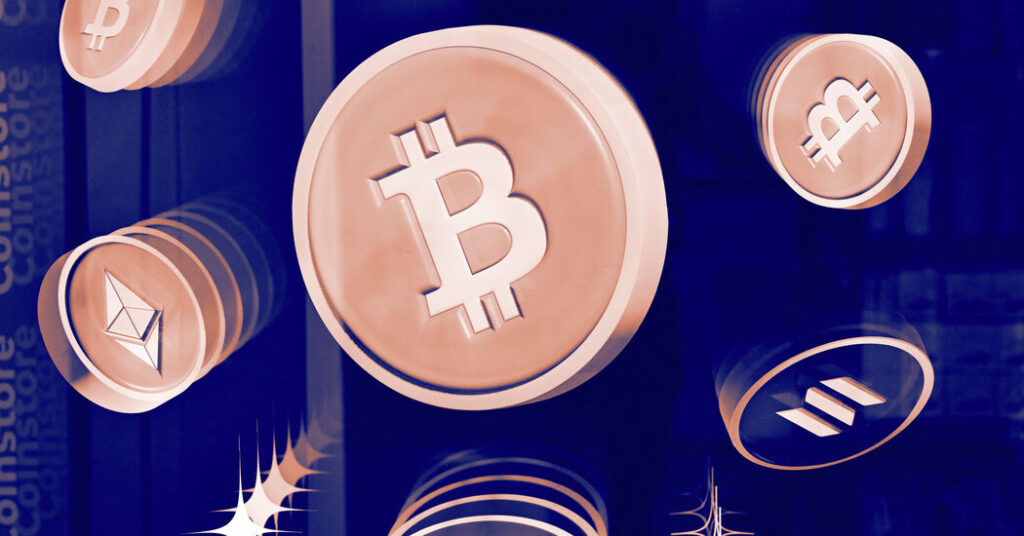
On this week’s episode, I’m trying to answer a question that’s haunted my investment strategy for years: What is cryptocurrency actually for?
It’s up, it’s down. Sometimes it’s a centerpiece of Trumpian economic policy. Sometimes it’s ransom money for crossing the Strait of Hormuz. Sometimes it’s going to replace the dollar or help the middle class afford retirement.
Sometimes it’s just a vibe.
For my guest this week, Anthony Pompliano, there’s very little that crypto can’t do. Or at least the O.G. cryptocurrency, Bitcoin, which he’s permanently bullish on.
We talked about crypto’s reputation as a shady enterprise, whether Bitcoin is a bet against the American empire, and whether its volatility is a weakness or for me to buy and hold.
Below is an edited transcript of an episode of “Interesting Times.” We recommend listening to it in its original form for the full effect. You can do so using the player above or on the NYTimes app, Apple, Spotify, Amazon Music, YouTube, iHeartRadio or wherever you get your podcasts.
Ross Douthat: Anthony Pompliano, welcome to “Interesting Times.”
Anthony Pompliano: Thanks for having me. Super excited.
Douthat: Let me do a tiny bit of stage setting about crypto and where we are right now. 2025, it’s fair to say, was a bull market year for cryptocurrency, and this year is more of a bear market. The value of Bitcoin dropped from about $120,000 to about $70,000. And it hasn’t recovered yet. It’s still bobbing around there. But at the same time, cryptocurrency is just increasingly embedded in financial and political systems.
Morgan Stanley just said they’re set to become the first Wall Street bank to launch a Bitcoin-tracking, exchange-traded fund — an E.T.F. As we record this, the Islamic Republic of Iran is demanding to be paid in crypto for the right to transit the Strait of Hormuz. So those are some of the things I want to talk about.
But I want to start in an extremely basic way. I often come into these interviews with some pretty strong views or preconceptions. And in the case of crypto, I’m really a genuine agnostic. And I imagine at least some of our viewers and listeners are as well.
So I’m going to ask what seem like incredibly naïve questions to start with, and then we can get more complicated. So, Anthony, what is cryptocurrency and why do we need it?
Pompliano: Well, I usually think about these assets as: It’s all finance — and that’s a very important part.
If you go back and look at history, every single asset in the world was physical. So you had a physical stock certificate, you had physical bonds, and if you bought Apple stock, they literally sent you a physical stock certificate that you would put in a filing cabinet.
Douthat: Right. If you wanted to take down the Nakatomi Tower in “Die Hard,” you were going in to get the safe to get the bearer bonds.
Pompliano: [Chuckles.] Of course. Even the deed to your home was physical.
At some point, there were some very smart people who said: You know what? Maybe actually having these physical things that you need to protect from everything, from theft to fire, et cetera, is not a good idea. Let’s make it a little bit more efficient.
And they created electronic assets. And these electronic assets really revolutionized the financial industry. It allowed for a lot more people to get access. But at the same time, it also allowed for a lot more assets to become available.
So if you think of crypto in general, there’s two different types of assets. There are assets that end up being just like the traditional assets of stocks, bonds, currencies, and commodities. But rather than an electronic form, they’re going to be digital now. You’ll just buy those assets the same way you do today — you won’t even know that there’s a difference. And basically, all of the value is going to accrue to big financial institutions who have better efficiencies and lower cost.
But there are some crypto native assets, things like Bitcoin, where people are having to understand them, learn about them and then evaluate: What is Bitcoin? Do I want this in my portfolio? What does it provide to me that I can’t get in a traditional asset?
If you go and you look at why Bitcoin itself is valuable, there’s basically one big idea that I think an entire generation of people have finally come to peace with, which is that the United States government and governments around the world have to print more money. That is a fundamental structural belief that people now have.
And Covid was a part of that. I think that there were people who started to see the global financial crisis as part of that. But once you realized that —
Douthat: And that’s because the United States government and governments around the world — rich governments, governments in developed countries — just owe a lot of money that they are unlikely to simply raise taxes to pay for, in terms of pensions, entitlements, health care, and so on.
Pompliano: It’s a huge part of it. We spend more than we take in. And so if you look at these kinds of national deficits, the only way that we can do that is we can also print money. The problem for the average American is if we create more money, it makes the dollars that you own less valuable.
Now, if you think of this, the reason there are not people in the street protesting it is because about half the country’s suffering under this, and half the country is benefiting from this. I always say that there’s a lot of folks who get very upset about people who have gotten wealthy and investors and all this kind of stuff. It’s really a knowledge gap more than anything else. The wealth inequality gap in America really just comes down to a knowledge gap.
What I mean by that is there’s about half of the country who understands if you hold cash, it loses value every single year. Instead, if you convert that cash into assets, whether it is stocks, real estate, or cryptocurrency or whatever, over time they will go up because the dollar is going down.
And if you look at some of the stats, it’s pretty compelling. The 50 percent of Americans who hold cash in their bank account — if you go and you look since 2020, the U.S. dollar can only buy about 70 cents worth of goods and services.
That means that you had to drive an immense increase in your wages, in your income, or you had to be an excellent trader — an excellent investor — in the market. But if you just held cash, you’re poorer today than you were in 2020.
So what do you do?
Douthat: So what do you do? You acquire cryptocurrency?
Pompliano: I don’t think that the answer is only cryptocurrency.
Douthat: Right. But explain basically, without making it a universal case. The idea is that cryptocurrency holds value under inflationary conditions in a way that just keeping dollars in a bank account — or as at least one of my friends does, in shoe boxes under their mattress — doesn’t hold value in the same way.
OK. Why? What is Bitcoin? Let’s say that, and then explain why that enables it to hold value.
Pompliano: Bitcoin is ultimately just a currency. So in your life, if you’re in the United States, you use dollars. I always joke that you get paid in dollars, you save in dollars, you pay your taxes in dollars, you invest with dollars, et cetera. Dollars, to you, is the only currency that matters. You probably don’t have dollars and yen and yuan and euros and pesos and all that. You just have one currency.
Bitcoin is the exact same thing. It has a couple of details that were custom built to make Bitcoin valuable, but ultimately it is just a currency. So what does that mean? It’s an asset that you can hold and store value in. It’s an asset that you can use to buy things, and it is an asset that some people will even price goods and services, meaning they will say: Hey, I want to sell this home, or I want to sell this table I built, and I want to get paid in Bitcoin, so it’s one Bitcoin — instead of saying it is $70,000.
The reason that’s important is we are entering this digital world where people now are trying to figure out what has value in the analog or electronic world, and then what has value in the digital world. So Bitcoin in particular is basically a currency that is backed by a network of computers that are outside of the system.
So if you go and you look at gold — that’s a great example. Gold is valuable basically for two reasons. It has sound money principles, which means that no one can create more, and no one is able to actually pull it into the system.
Douthat: True. Just to stipulate, it seems that a third source of value for gold is that it has physical existence and is associated in people’s minds with beauty, jewelry, wealth and so on. There is a component there that has a very physicalized reality. Right?
Pompliano: Yes and no. There’s a lot of metals in the world. The reason gold has value is because it’s very scarce. It’s not 100 percent finite. We keep finding more gold deposits, we keep digging more up out of the ground. Why was gold the one that everyone wants to wear around their neck? It’s a sign of wealth, it’s a sign of luxury. Ultimately it’s really good at storing that value because it is so good from a sound money principle standpoint.
Now, the reason I say sound money principles are so important is, ultimately, that is what Bitcoin is built on. With Bitcoin, we know that there will only ever be 21 million. Bitcoin is an asset that no one can create more of, and it is outside the system.
So if you were to think about putting Bitcoin and gold side by side with each other, Bitcoin is superior in every single way. It is more divisible, it is more portable. It is much, much more secure. It is more censorship resistant. The only area where gold has any degree of superiority to Bitcoin is how long it has been around.
There’s a lot of people who say: Hey, look, gold’s been around for thousands of years. It’s not going to go away. Whereas something like Bitcoin has been around for about 15 years or so.
And so the question becomes: Is this a fad? Is this something that’s just a fleeting idea? Or does this have long-term staying power over centuries similar to gold?
I obviously believe that it has its staying power, but we’re going to find out.
Douthat: I want to go a little deeper into the debates about Bitcoin’s relationship to inflation in a minute, but I just want to try out a couple of other use cases and theories of cryptocurrency, which are linked to that basic idea.
How much of the argument for crypto as an asset just has to do with a certain kind of frictionless transaction to ordinary people? Is there a way in which there’s a promise here that the ordinary person escapes transaction fees, delays in transmission, these kinds of things? Is that part of the story?
Pompliano: I think it depends on who you are. One of the things about a product that ends up being valuable in the world is it needs to be valuable to different people for different reasons.
So, in the United States, most people are not worried about not being able to go to an A.T.M. and pull out cash. They’re not worried about the government censoring their transactions. They’re not worried about those types of very authoritarian-type actions against their money. There’s a lot of countries in the world where people are very worried about that.
In the United States, I think that most people are looking at Bitcoin for one of three reasons. One, they’re speculating. They believe it’s going to go up in value, and that is very attractive to them. No different than any other financial asset.
Two is, they’re very worried about inflation. They believe that Bitcoin is one of many solutions that could potentially insulate them.
Or three, they like the fact that it’s outside the government. They like the fact that it’s outside of the financial system, and they feel like if there is some sort of doomsday scenario, they’re able to hold this asset, they’re able to control it, and have self-sovereignty. And they feel like that has value that may not just be economic, but also could be from a resilient standpoint.
Those are U.S.-centric viewpoints, problems, etc. You can go around the world, though — and I’ve gone and spoken to thousands of people around the world about this. Many people don’t care what the economic speculation potential is. What they really care about is: Hey, I live in a country that is engaged in a war and I want to leave. I can’t bring my house, I can’t bring my gold, I can’t bring these assets. I need to get it out of the country. How do I do that? Bitcoin becomes very interesting.
You mentioned Iran. One of the things that I think is very interesting happened recently on the same day that Iran asked to be paid the toll in the Strait of Hormuz in Bitcoin, which basically means that there’s a bunch of countries that don’t trust each other and so they’re saying: Hey, I want to get paid in an asset that is not dependent on the monetary policy of any other country — so it’s this neutral, decentralized kind of nonsovereign asset.
There’s a lot of people in the Western world who would say those people in Iran who are asking to get paid in Bitcoin are maybe not really the best spokespersons for Bitcoin. We don’t want to be saying: Hey, the Iranians like Bitcoin, so this is a great invention.
Douthat: Right.
Pompliano: On the same day, though, Morgan Stanley launched their Bitcoin E.T.F. And so if you look at those two as polar opposites, you have what many people would consider United States adversaries, funders of terrorists, etc., who are saying: Hey, Bitcoin is valuable to us — and then you have one of the oldest investment banks on Wall Street trying to package it up and sell it to their clients as well.
That’s what we talk about when Bitcoin is different things to different people. One is a speculative use case, and one is, frankly, a use case out of necessity in a geopolitical situation where countries don’t trust each other.
Douthat: But aren’t those two uses connected to each other? In the sense that, and correct me if I’m wrong, but the basic idea behind a crypto-based E.T.F. would be that by investing in this E.T.F., you are investing in the future value of cryptocurrency.
The future value of cryptocurrency will go up by a lot the more rogue actors in the world, including not just rogue states like Iran, but also smugglers, drug dealers, whatever parade of horribles you want to use — the more they’re using crypto, the more they’re using Bitcoin, the more valuable Morgan Stanley’s E.T.F. becomes, right?
Pompliano: Well, what’s interesting is the counterfactual is that the currency of choice for drug dealers, criminals, smugglers, terrorists around the world is the U.S. dollar. And what we have found in the data is that the number of bad actors that are using Bitcoin is very small.
The reason Bitcoin continues to appreciate is not because of that adoption by those bad actors, but instead, the monetary policy is designed in a way where it continues to become more and more valuable over time because it’s a fixed supply asset.
So when you start to view it from that perspective, now you get into a scarcity conversation. Such as: What is the market price of an asset if lots of capital wants to move into it?
And that begs the question: Well, why would they want to do that?
This is where the nonsovereign kind of neutral asset becomes really important.
Douthat: You said earlier that gold is valuable because it’s scarce — we can debate whether its beauty matters, too. But you can’t make more of it.
OK, you can’t make more Bitcoin. You can make more of other cryptocurrencies that are based on networks of computers outside the system. And there is a proliferation of —
Pompliano: Scams.
Douthat: Well, are they? So when I bought Bitcoin as a speculative asset probably four or five years ago, briefly, when a lot of naïve investors bought some Bitcoin. And at the time, I had someone who presented themselves as slightly wiser than me and said: Well, if you’re buying Bitcoin, you need to buy Ethereum too — Ethereum is a rival cryptocurrency to Bitcoin. And there are multiple, multiple rivals.
Explain why, if this is a good system for locking in value as a hedge against inflation, why isn’t that just undermined by the ability of other cryptocurrencies to come along and compete with Bitcoin, like gold 2.0 and 3.0 and so on in the physical world?
Pompliano: I think that Bitcoin is the only asset that is trying to do this inflation hedge, this kind of chaos uncertainty hedge — the Bitcoin we’re talking about. These other assets basically have taken the idea of Bitcoin — a blockchain, the decentralization, etc. — and they basically have created other blockchains to try to do different things.
And I always say it’s the difference between comparing the U.S. dollar, a barrel of oil, and Amazon stock. They’re all assets, but they all exist in some sort of electronic form in the traditional financial system. But you don’t confuse dollars and barrels of oil. They have fundamentally different use cases.
Douthat: Just because I invested in it, what is the difference between Bitcoin and Ethereum?
Pompliano: Bitcoin’s entire purpose is to be electronic currency, to be a digital store value that you can use to either protect your economic value or you can use to purchase things from other people. So think of it no different than the U.S. dollar — it’s just a digital version of that.
Ethereum wanted to do a bunch of things where they wanted to take that idea and then make it so that it was programmable — we want to go and we want to build things on top of it — but Bitcoin isn’t built for that. It was very difficult to do that.
And so there’s this gentleman, Vitalik Buterin, who said: Hey, I’m going to actually take this idea and I’m going to change it. I’m going to make evolutions to it, and I’m going to go create another blockchain, and this one’s going to be able to do this kind of computational work that Bitcoin can’t do.
Usually when something gets created, the first mover does not stay the first mover. If you think of search engines or social networks or this stuff, it’s usually somebody who’s able to learn from some of the first attempts and then go in and build this. Bitcoin has been able to stay as the No. 1 because it has a network effect, but also because it is going after this problem of: How do I buy something in the digital world that will protect my economic value?
And I think that that difference is really, really important.
Douthat: But why doesn’t someone then just try and do the Bitcoin thing?
Pompliano: They’ve tried.
Douthat: But then, if they’ve tried and it hasn’t worked, isn’t that just evidence that it is a psychological first mover effect? It was just that Bitcoin got there first, and so everyone is psychologically locked into it, so even if another cryptocurrency comes along that has exactly the same qualities as Bitcoin and should hold value just as well, it doesn’t because no one wants to speculate in it because, you know, it’s not Bitcoin.
Pompliano: Well, I think that there’s a couple of different iterations as you evaluate Bitcoin. There’s the technical components, there’s definitely the network effect, and then there is the psychological, or you can think of this as a global brand.
If you look at going back about 40 years or so before Bitcoin was created, there were multiple attempts to create a digital currency. There was a group called the cypherpunks and they were very into creating some digital currency that they could use that’s outside the system, kind of what Bitcoin eventually became. And attempt after attempt after attempt, what they realized was there were technical impurities or technical issues with those attempts.
Bitcoin was the first one that finally, I think people generally agreed, had solved all of the technical challenges to this point. Now, just because you are technically superior does not mean you’re actually going to get adoption. I think Bitcoin’s maybe most important aspect is that it was created and put into the world at a time when no one cared about crypto.
Those early years of Bitcoin were incredibly important because you had organic growth of people who really bought into what is Bitcoin. They weren’t being paid to be there. In many cases, they were actually losing money because they were spending computational power or they’re wasting their time or whatever. But as this idea of Bitcoin started to grow and adoption grew, you had this kind of very big groundswell.
When technology products get enough of a network effect, they are very, very hard to break. And I think that Bitcoin, because it is money and the ability for me to send it to you, you to send it to me, me to hold it, the mining — all this stuff creates this network effect in which I never foresee a world where there will be another asset that can overtake Bitcoin in this use case.
Pretty much, the world’s got one shot. If Bitcoin is successful, amazing. If it is not successful, I do not think that we will get a digital currency that is outside the system. And I think that’s why I’m so focused on: Hey, I would love for this to be successful.
Douthat: All right, so let’s talk about where we are now. We’ve been going through and elaborating on the ways in which Bitcoin has succeeded. It is something that corporations are investing in. It is something that governments are using. It’s a real part of the landscape.
At the same time, it has behaved much more like a speculative asset than a safe store of investment that has a stability that the U.S. dollar lacks. I mentioned earlier the fact that you can go in a very brief span of time from one Bitcoin being worth $120,000 to one Bitcoin being worth $70,000 — that doesn’t sound like a great deal as an alternative to the slow depreciation of the dollar. It sounds like something that you invest in if you are interested in playing around with volatility and hoping to get returns.
If Bitcoin is supposed to play the stabilizing role, why is it instead leaping and dancing and swinging wildly and, most recently, collapsing?
Pompliano: Because Bitcoin’s alive, and the other assets are dead. Stability is the single biggest lie in financial markets. Even if you don’t like Bitcoin or want to learn about Bitcoin, I do think that there’s an entire generation — I call it the volatility generation — who understand that you need volatility in your portfolio in order to protect yourself.
I’ll give you a couple of examples. If you go talk to a financial adviser in the United States of America and you tell them you want to have a very safe portfolio, they will take your money and they will pretty much put it in cash and Treasuries. Those are the only two assets in financial markets that are designed to lose money. By definition, they are not safe.
And now what you’re starting to see is — Forget individuals for a second. Let’s look at pension funds in America. Most pension funds in America are underfunded. They do not have the money to pay. Social Security does not have the money to pay.
And why is that? Well, they all pursued what we were told was a safe, stable approach. They put the money in Treasuries, they put the money in bonds or fixed income — in these different instruments. And now, decades later, we’re learning that, actually, that was a horrible decision. We did not keep up with the pace of inflation. We do not have the money to pay these promises. What do we do?
The reason I say that Bitcoin is alive or volatile assets are alive and the other ones are dead, is because if you as an investor go and put majority of your money in those assets and you wait, you are going to end up like 50 percent of the country, which is that you fall further and further behind and you end up on the wrong side of this K-shaped economy.
Instead, look at which assets are volatile. We know Bitcoin is. We know that certain technology stocks are. Just go through this list of all these volatile assets — they are the best performing assets in an investor’s portfolio over long periods of time at this point.
And so ultimately —
Douthat: But that seems like a different argument to me —
Pompliano: In what way?
Douthat: Than the argument that Bitcoin has a stability of value that the dollar, under inflationary conditions, lacks. If Bitcoin is behaving like a tech stock, then it is by definition a non-stable asset now.
As you say, yeah, obviously, non-stable assets can be good, but they come with a risk premium. If you invest in Tesla and you aspire to have Elon Musk’s wealth go to infinity and pull you along with him, that’s great. But you’re also accepting a high level of downside risk.
It seems like the initial case that you made to me for Bitcoin is that it shouldn’t have that kind of downside risk to the same degree.
Pompliano: I think the argument that I’m saying is the entire financial system is engineered around assets that have 100 percent downside, zero upside. Dollars have no upside, all downside. Bonds have no upside, all downside. Those are 100 percent risk assets.
Douthat: Right.
Pompliano: These other assets — yes, of course there is, if Tesla doesn’t work or something like that. But you’re getting paid for that risk that you’re taking because Tesla can appreciate.
Now Bitcoin is very unique in that the reason people think Bitcoin is volatile is not because Bitcoin itself is volatile. One Bitcoin equals one Bitcoin. Always has, always will. It’s actually the exchange rates where people start to look at the volatility.
But Bitcoin is the same Bitcoin that it’s always been. And if you were to go back and look over three, five, 10 years, anyone who was given the choice of putting their money in dollars, in real estate, or in Bitcoin, you were much better off buying assets of real estate, Bitcoin, gold, etc., than you were putting it in dollars or Treasuries.
Douthat: I agree with that. But what’s not clear to me is why I’m better off putting assets in Bitcoin as opposed to buying an index fund of the S&P. It just seems more like people are going back and forth between treating it like gold and treating it like a tech stock. And when the market is going up, they put money in Tesla and they buy a lot more Bitcoin.
That just seems like a fundamentally different kind of behavior, and one that explains why, at least up until now, the pattern is that Bitcoin has not generally spiked in times of inflation — it’s spiked in times of stock market enthusiasm.
Would you agree?
Pompliano: No. I would disagree.
Douthat: OK. Tell me why that’s wrong.
Pompliano: Before we get to the stock market enthusiasm and inflation, I would say that I always get very nervous whenever the market assigns a consensus view that is very black and white.
If we go back to 2020 — A lot of people forget: We had Covid. Everyone gets locked in their home, and the government basically steps in. And it was very scary, I think, for a lot of investors. The market had sold off significantly. Bitcoin went down 50 percent in a day. There were all these problems.
When the government stepped in and they basically brought these monetary bazookas and said: Hey, we’re going to print trillions of dollars — the Bitcoin community was probably the single loudest group on the internet that said you cannot print trillions of dollars without getting high inflation.
Douthat: Right.
Pompliano: Now, there were two people in the world who kicked off what I call the “Bitcoin bull run” in the finance world. That was Paul Tudor Jones and Stanley Druckenmiller.
They came out in 2020, went on national television, and said: I’m buying an inflation hedge basket — I think the words that Paul Tudor Jones said is: And I like Bitcoin because I think it’s going to be the fastest horse.
Of course, that spread like wildfire online. The Bitcoiners were like: Oh, we went and we got real people. They like our asset now.
What it did is it removed the career risk for people all across Wall Street, because, hey, I probably can’t get fired if I’m doing what Paul Tudor Jones and Stanley Druckenmiller did.
Bitcoin went from about $10,000 in August of 2020, to $60,000 in March of 2021. Inflation did not move. Inflation was at about 2 percent. We only got to, I think it was 5 percent inflation in June of 2021.
So people say: Well, why did that happen? The key thing that most people don’t realize about financial markets is they are forward looking. People do not wait for high inflation to come, and then say: Oh, let me go buy an inflation hedge asset.
They say: I think inflation is coming — and they go and buy the asset in preparation of that.
Bitcoin moving was actually an alarm system telling us that high inflation is coming, and it ended up being right. Inflation ended up going over 9 percent, according to the government numbers — probably much higher.
And so Bitcoin continued with that. Stocks went up, real estate went up — everything kind of carried with that inflation. But Bitcoin was the first asset to say: Hey, this is going up.
The reason that becomes really interesting is if you fast forward to 2025, last year, Bitcoin was the asset that peaked at a new all-time high, then began to aggressively sell off. I think a lot of people say: Why is Bitcoin going down? Gold is going up, stocks are going up. Why is Bitcoin going down?
Well, now we can look at the data and realize that we started to get these massive deflationary forces swallowing the U.S. economy — tariffs, deportations, A.I., robotics, etc. Those deflationary forces became a huge headwind, not only for inflation itself, but also for asset prices.
Once again, Bitcoin was the first to sell off as a kind of alarm system.And so when you start to see this, what you realize is Bitcoin’s price is probably the most pure truth teller in financial markets. It’s available 24/7. It’s available in every country to anyone with an internet connection. And it is the most sensitive to changing economic conditions.
So when Bitcoin runs a lot, you should immediately ask yourself: Why is it running? What is coming that the market is telling me?
When it sells off a lot, same question: What is it telling me as to why this is happening?
Douthat: So what does that mean then for the ordinary investor? Because it sounds like if that account is correct, then it seems like Bitcoin might be an extremely useful asset for people who are comfortable making big trades, comfortable with the idea that you have this thing that’s going to run up and tell you that inflation is coming, and then collapse when you have a deflationary moment.
But if you’re someone who is not a big investor, who has their finances and presumably has a long-term time horizon, and is trying to save for basic expenses and save for college and so on, that seems like a tougher market to be in.
Is there value in Bitcoin for the ordinary investor? Or is it just an instrument for larger players in the market?
Pompliano: I believe that Bitcoin is a digital savings account. That’s probably the best way to think about how this fits into an ordinary American’s life. If you think, in your traditional financial environment, you have a checking account for day-to-day expenses, you have a savings account for medium to long-term capital that you keep, and then you have a brokerage account and you go and you buy stocks and try to outperform the market and drive a higher return.
In the digital world, we have now recreated a checking account, a savings account, and brokerage account. The checking account is stable coins. They’re just U.S. dollars that are now represented in a digital form. No different than Bitcoin is a digital version of gold.
Most people who use stable coins, they just see that they’re using dollars. They don’t even know there’s a difference on the back end.
Douthat: And the advantage there is that it’s frictionless. You can’t be debanked, right?
Pompliano: It’s cheaper, it’s faster, there’s a little bit more self sovereignty to it. There’s also some things that you can do from a cross-border standpoint that is a little bit more efficient, etc.
Again, just think of that as your digital checking account. If you want to go to the store and buy something, you can do it with stable coins. If you want to just hold cash, you can do that with stable coins. And you just take the ——
Douthat: Right, but you have no inflation protection? You just go with the dollar?
Pompliano: Correct.
Douthat: OK.
Pompliano: Now, your savings account — historically, what did they have you do? You put dollars in your savings account and it went down in value. That’s not very good. Bitcoin becomes that digital savings account.
Douthat: Isn’t it, again, more of a part of a sort of brokerage portfolio? I use my savings account to be prepared to do something, like if I have to buy a new car or we have some big purchase in the home or my bonus is not what I hoped it would be because I interviewed that crypto guy — whatever. If that savings account dropped from $120,000 to $70,000 in six months, I’d be pretty upset in a way that I wouldn’t if my portfolio did the same drop, because that’s understood as a long-term and more speculative enterprise, right?
I just feel like there’s a tension. I’m persuaded, or at least partially persuaded, by the crypto bull case as a long-term part of a portfolio that’s trying to balance things out in an inflationary environment. I think the signaling argument you made is good. But the savings account argument, I’m not sold on.
Pompliano: Well, savings — I don’t think most people are using their savings account for a one-week, three-week, six-month time period. Most people are looking at their savings as money they hope they never have to touch over a long period of time.
Let’s say you’re a student and you think that you’re going to make a big purchase in three months. You should not take dollars and put it in Bitcoin, obviously. It can go up a lot, it could go down a lot, it could go sideways, etc. I don’t think anyone is advocating for that.
Actually, what you hear most Bitcoiners say is you should dollar cost average into Bitcoin, and then you should hope to never touch that for the rest of your life. It is a true savings account.
The example I always use is, if you go to the country of India, the culture there is that the family acquires gold, whether it is in jewelry form or physical bars, and then they basically pass that gold down generation after generation after generation. And you’re kind of the black sheep of the family if you sell the family gold. If you’re the third or fourth generation and you sell the family gold, your great-grandfather rolls over in his grave. That type of thing.
If you look at America, look at the great families that have been building wealth over the last 50, 60 years. They did it with real estate. Somebody at some point started to buy real estate and they passed it down generation to generation to generation. I now believe that Bitcoin is, for the next generation, that new thing.
I always talk about how home affordability in America is horrendous. If you are a young person and you want to store value over your lifetime, the generation before you, or two generations before you, they bought a home. Well, you actually do not have enough money for the down payment, you cannot afford the mortgage payments, and you literally cannot afford the home.
Bitcoin provides this savings account because ultimately, if you are able to dollar cost average into it and leave it there over a very long period of time, it is one of the best performing assets in the world, if not the best performing asset.
Douthat: But do you think — well, put it this way. From that argument, it seems like — I guess this is just what you’re arguing — Bitcoin is just in a completely different class than almost everything else in the cryptocurrency terrain?
Pompliano: I think it’s completely different. Yeah.
Because look, most of the other stuff, it’s no different than the stock market: They all have different bells and whistles. They all have different promises. They’re serving different customers. They have a different monetization strategy. They’re all trying to differentiate each other. And they’re basically trying to sell, whether it’s the public coin holders or the market on: Hey, here’s our differentiated product, and this is why we’re going to accrue value over time.
The beauty of Bitcoin is that it doesn’t change.
Douthat: Well, not that it doesn’t change. The value of it changes. The system underlying it doesn’t change.
Pompliano: Correct. So one core component of my worldview is that we are entering something I call the age of automation. Bitcoin is a prime example of this.
Bitcoin is the very first currency in the world where we have automated the central bank. If you think of the Federal Reserve, you, me, and millions of people around the world hold our breath when Jerome Powell steps up to the podium. Are they going to cut rates or are they not? What’s the cost of capital going to be for the next 30 days?
In 2009, Bitcoin laid out what the monetary policy for the next 100-plus years is, and has done exactly what it said it was going to do every single day.
The reason that becomes really interesting is because now we have an automated central bank that is immune to increases in demand. If the gold price goes up, we start trying to dig up more gold because it’s more valuable. If Bitcoin’s demand goes up, nothing changes in the system.
Douthat: But the built-in assumption is that the value of Bitcoin is connected to an inflationary future. And I think the case for an inflationary future is a reasonable one, given, as we said at the outset, all of the money that governments owe. But there are deflationary futures that you could imagine. There’s a deflationary future linked to population decline, which it’s going to be a big problem around the world.
Pompliano: But Bitcoin will be successful in —
Douthat: Under deflationary conditions?
Pompliano: Because why is deflation happening? It’s because we get an abundance of certain things. For example, an abundance of intelligence, an abundance of robotics. Those things drive deflation.
Douthat: Right. There’s a world where A.I. yields deflation. Yes.
Pompliano: In that world, where do you store value? If everything is abundant, if, with a snap of your finger, you can create companies and economic products and all these things, where do you store value? Scarcity.
As we head into the A.I. future that I think a lot of people are now starting to recognize, you cannot have analog assets that end up being as valuable, because we’re starting to realize that a lot of those things are not going to last. We now have digital versions of them that are destroying what we previously thought were hard assets or productive companies, etc.
It’s very unique, and I think this is why people have such a hard time understanding Bitcoin. Usually, you do not have an asset that can benefit from inflation and deflation.
But look at the Iran war. If I had told you before the war kicked off that the war’s going to happen, we’re going to bomb this country — what do you expect to happen? Most people would say that oil’s going to spike, stocks will rally, bonds will rally, and gold will rally, because we’re going to have to print a bunch of money. Inflation is coming — all these things.
The war kicked off, and what happened? Oil spiked. So people would’ve been right on that. Stocks, bonds, and gold all sold off. Bitcoin did not.
Why is that? Again, it is a scarce digital, nonsovereign, neutral asset. And in times of uncertainty, in times of chaos, that’s what you want as an investor in the digital world.
Douthat: In times of chaos. But that’s different from times of deflation. So there’s a couple —
Pompliano: But that is chaos. Deflation is chaos. We’re living through it right now.
Douthat: I want to come back to chaos and global politics in a minute. One point on deflation, which is, again, my literal-minded, real world brain. It seems to me that under conditions of deflation, what holds value are valuable assets that have value in and of themselves for being scarce.
Meaning something like beachfront property. In the A.I. future where you can build a factory in a day — whatever utopian scenario you want to spin — it’s just a lot harder to create the Hamptons or the coast of Maine from scratch.
But those things have value, not just because they’re scarce, but because people want them. People want to be in the Hamptons. People want to be on the coast of Maine, at least in the summer.
But people don’t want Bitcoin for its own sake. It’s not beautiful — I mean, it’s beautiful to you, but it’s not gold. People want Bitcoin because it is a hedge against inflation. That’s what they want.
It’s not like, oh, you own Bitcoin and ——
Pompliano: But take your argument that you just used.
Douthat: Yeah.
Pompliano: Hamptons. Maine. It’s very hard to make more.
Douthat: Yes.
Pompliano: But we’ve done it. We’re literally sitting in Manhattan. We’ve created more land. Not a lot, but we’re created more.
Douthat: Yeah, you can. And people will. Nova Scotia will be ——
Pompliano: The one thing in the world that cannot be created more of is Bitcoin. So the exact argument you’re making, I completely agree, but that is why Bitcoin ——
Bitcoin is the hottest product in the world for rich people right now.Let’s use BlackRock as an example. BlackRock has transformed themselves from a traditional finance company to a Bitcoin company over the last three years.
The reason that’s important is they’re not going and telling a bunch of hedge funds: Hey, come and buy this exclusively — they are also distributing this product to everyday Americans who are buying this asset.
So it feeds back into this idea of, in a deflationary environment, what do you need if everything becomes abundant? You need scarcity.
So if you were to create a two-by-two chart of assets that are scarce and digital, there’s only one, and that is Bitcoin.So people are coming to Bitcoin for different reasons. The sell-off of Bitcoin is a bunch of people saying: I was holding this for inflation. Inflation’s not coming.
Douthat: But if you’re right — if you’re right — then it should be the case that over time, Bitcoin becomes less volatile. It would have its ups and downs, but as people realized that it’s good for inflation and good for deflation, and the only thing that’s bad for it maybe is stability, then the volatility should diminish, right?
Pompliano: All we need for Bitcoin to fail in the world is actually to have a static world. That is the worst case for Bitcoin because that means that we don’t have inflation and we don’t have deflation.
Douthat: OK, now let’s talk about the institutions that are invested in, if not a static world, at least a stable world, which is governments. What are the politics of Bitcoin? How should governments be approaching the asset?
Pompliano: Bitcoin did to politics what it’s done to hundreds of millions of people around the world: It eventually made them cry “uncle.”
Bitcoin has never changed. It did not matter if governments were going to ban it, not ban it, were going to embrace it, hold it, buy it, sell it, tax people. Bitcoin did not care. It just continued to produce block after block after block of transactions.
Politicians changed their mind on Bitcoin. Why did they do that? Because they realized that their constituents wanted this. And I have this fundamental belief that although sometimes it is not as clear, there’s not always a bright picture, the will of the people is eventually heard.
Sometimes it takes a long time for that to happen. But ultimately, in the United States, we now have Republicans and Democrats who agree that this stuff is good.
The politics of Bitcoin now is that almost every single politician recognizes: This thing’s not going away, and if I don’t support it, I may not be in this seat in the next election.
Douthat: So if it doesn’t really matter for Bitcoin what governments do, is the kind of regulation that Congress is considering for crypto good or bad?
Pompliano: I don’t think it really matters. I think that these assets are going to be successful regardless. And if you look, they went from zero to $3 trillion without any of the rules there.
Really, what these rules are designed for is they’re not rules for crypto — they’re rules for everyone on how they can interact with crypto. They’re rules for the banks. What can the banks do? What can they not do? What can the politicians do or not do? What can other types of companies or organizations do with crypto?
But crypto itself is not really changing. And if you look, a lot of the debate is about yield on stable coins. It’s not so much about “is there yield on stable coins?” as much as it is “who should be allowed to offer yield on stable coins?” Banks can offer yield. But if you are not a bank and you try to do that, then they want to come after you and say: Hey, it’s a security and there’s all these rules and regulations, etc.
So the crypto companies are fighting very hard to say: Why do the banks get a monopoly on doing this? It is better for the consumer if we can offer them yield.
It’s a competition in the market between companies. So to me, again, it doesn’t matter. The product will be adopted by the end consumer. The difference, based on the legislation, is just: Where are they going to get it from?
Douthat: But what does it mean to actually build policy? What are the wise policy choices?
Pompliano: Why do we need any policy?
Douthat: Well, if you’re giving advice to ordinary investors, you can give advice to government officials as well.
Is there an ideal regulatory framework for Bitcoin? No. It doesn’t need one. Right?
Pompliano: It doesn’t need one. I always remind people, look, the laws still apply. If you commit fraud, then you committed fraud. You should get in trouble. If you steal from somebody, that’s theft and you should get in trouble for that stuff. So it’s not that there’s no rules, but I don’t think that there’s any policy that has been created around Bitcoin that anyone says is different today than it was 15 years ago.
Now, there will be some regulators who say: Hey, we classified the asset not as a security, but as a commodity — but that’s not a policy around Bitcoin. That’s more about how these regulatory bodies look at who gets to look at the markets and look at the players and have people come in and answer to them. But there is no Bitcoin policy.
And then sure, some people may say: Oh, we have a strategic Bitcoin reserve ——
Douthat: So that would be one example.
Pompliano: To me, that’s not a Bitcoin policy. That’s a government policy — like a balance sheet policy.
Douthat: Well, it’s a policy of how governments should approach Bitcoin. So, should governments treat Bitcoin basically as a store of value that enhances the balance sheets of governments over the long term? That’s basically what your argument implies, right?
Pompliano: If it’s good for individuals, then it’s good for organizations. Organizations are just made up of individuals. Whether it’s a government, a corporation, etc., if you have an asset that continues to appreciate, not depreciate, purchasing power over a long period of time, if you have a balance sheet, if you have economic value that you want to protect — again, Bitcoin is not the only asset that you can go and look at, right? There’s real estate, there’s gold.
The United States government’s actually pretty diversified. We own a lot of these different things. We have a lot of gold. We obviously have a lot of buildings — that type of stuff.
Douthat: They say we have a lot of gold, but I haven’t been inside Fort Knox. There’s some debate about whether it’s still there.
Pompliano: [Chuckles.] I don’t know. It’s like the moon landing, depending on who you ask. Right? Different approach.
Douthat: Well, we’re moon landing believers. There’s a lot of paranoia on this show, but not about that.
But, OK. So it’s an asset that governments should use to diversify their own portfolios. What do you make of the Trump administration’s general crypto approach?
Pompliano: Before we answer that question, the other thing I would say is I think that you’re seeing governments around the world say: Wait a second, it’s not just a store of value.
There’s been a number of Gulf states who have done partnerships with publicly traded mining businesses. They want to monetize their energy. They realize that it is more efficient and more profitable to monetize the energy by mining Bitcoin rather than transporting it somewhere. Iran obviously wants to get paid in Bitcoin.
We’ve seen a lot of countries — there’s nefarious use cases. North Korea and many others are actually trying to hack to fund things. So I think that store of value is the easy one that we are usually all attracted to.
In the United States, I think you’re watching a very unique situation. You have an administration that, frankly, across almost the entire cabinet, they were outcasts who had tons of pressure — legal, regulatory, etc. — so they have this personal experience in a way that most Americans don’t have frankly.
I personally have dealt with numerous financial institutions to various degrees, whether refusing bank accounts, shutting down brokerage accounts, changing the rules, doing all these things. I’ve had many companies I’ve invested in who have been debanked, etc.
I don’t think people quite understand what it means to have a bank say you cannot have a bank account. It is an experience that, in the American way of life, is so foreign to us. We’re used to not getting refused service at institutions that we almost think of as public goods, in terms of the access to the banking system.
When you put somebody through that, in terms of the president or the cabinet, and they come from that perspective, they naturally are going to look for things that are outside of the system.
Douthat: But their approach — and we’re talking both about Trump administration policy and also about Trump family business — has not been what I think is the approach that you’ve argued for throughout this conversation, which is to focus on Bitcoin as a unique asset among cryptocurrencies.
The Trump administration and the Trump family have sort of spread their crypto interests around and encompassed everything, all the way to meme coins that frankly just look like speculation, pump-and-dump schemes, and so on. So they’re all over the map.
When you look at that, do you think this is good for the part of crypto that you really believe in? Or do you think that the effect of the Trump era is for most people to just think of crypto as a kind of Las Vegas casino game? What do you think the effect is?
Pompliano: My understanding of what they’ve done — and I’m going to talk more broadly about the entire administration, but obviously the Trump family as well — they’re involved in Bitcoin, they’re involved in stable coins, and then they’re involved in the meme coins.
So let’s start with Bitcoin. They basically created a strategic Bitcoin reserve. And I think Eric and Don Jr. are involved in a company, American Bitcoin, where they mine Bitcoin. So they’ve got, I think, a very deep understanding and belief in Bitcoin.
Douthat: Right. And you think that’s very smart?
Pompliano: I think generally that’s a good idea. And there’s always the murky waters of whenever politicians are doing anything, everyone gets all up in arms. But forget for a second that it’s them. That’s a very smart strategy that has a lot of value at the end of that road.
The second thing is the stable coin. The critiques that I hear of World Liberty Financial — I don’t hear anyone critiquing what they’re doing in terms of the technology, the stable coins, the fact that the market wants these things, the success of it, etc. So those two things to me are no-brainer type stuff.
The third one —
Douthat: Except for the question of whether there is inherent corruption involved in —
Pompliano: Technology-wise, I don’t think there’s any question. Maybe business development-wise, that’s where I see the critiques.
In the meme coin thing, I think there’s two things, as I’ve looked into how I think about this. Warren Buffett is the original finance influencer. The Berkshire Hathaway stock price has value. Ninety-five percent of that value is because they own great businesses with cash flow and productive assets — all the things that I think people understand. Maybe 5 percent is because Buffett was in charge. And the reason we know that is because when he stepped down, it sold off 5 percent. So there was a Buffett premium — I call Buffett meme — that’s assigned to Berkshire Hathaway.
The Trump meme coin was basically, well, 0 percent company and 100 percent meme.
So that transition — people can argue whether that’s a good or bad thing, but I think it’s actually been happening now for a number of decades. We’ve just been moving more and more toward this premium around personalities and brand, etc., on top of companies that are changing.
Douthat: Well, it seems like a bad thing for people who think it’s a great idea to just buy something whose only value is in the meme. If you buy a Melania or a DJT or whatever meme coin, it’s purely an investment in vibes around Donald Trump.
Pompliano: So, let’s go to the second way that I look at this. I know some of the people who are involved in all of this. Basically, my understanding is that there’s a licensing deal where Trump licenses his name on all kinds of products. He been doing it on hotels ——
Douthat: Yep, for a long time.
Pompliano: You probably even know more than I know about all of that. But this was a digital product that they could go and do.
Now, from that standpoint, what is unique about this digital product is that, whereas if they were selling calendars or something like that — where it would be like, OK, he’s selling stuff, we’ll see what happens — there’s a ticker attached to the digital product that has a market price.
And that market price can go up a lot and go down a lot. And people are putting their money in. And they are buying because they think it’s going to go up a lot or they think it’s going to go down. That’s very unique. We’ve never really seen that in the past.
Now, compare that to maybe a couple of other things that happened in society. Recently, a Pokémon card sold for $16 million. And when people first see that, they say: That’s insane. How is a Pokemon card worth $16 million?
Again, I think it goes back to, as a society, we are moving toward this volatility type generation. People are seeking these things out.
Douthat: I think that’s right. I think you can absolutely see Trump meme coins as, like, Beanie Babies for people who love Donald Trump.
Pompliano: But in a weird way. It’s got a ticker.
Douthat: Yeah, but one, it’s unwise to invest in Beanie Babies, I think, as someone who lived through that era and owned a lot. I was not a Beanie Baby investor. I bought them legitimately — or my family did — because I had a baby sister who liked them. But we wanted them for the actual value. Little stuffed animals, right?
Pompliano: Yeah, but you didn’t think you were going to go resell them on eBay or anything.
Douthat: I did not. But they retained that value in a way that D.J.T. meme coin, if Trump’s brand goes to zero, would not. So I think it’s unwise for people to invest in those things.
Two, when I’ve observed the crypto world over the last year and a half, it just seems to me that it’s not just the DJT meme coin that’s bound up in Trump’s political fortunes — it’s the entire world of crypto.
And I think it includes Bitcoin, too. I think the Bitcoin rise and crash is not just about the fundamental market forces that you’re describing. It’s also that people are like: Trump’s doing well. Trump is all in on crypto. And, oh wait, Trump’s approval ratings are going down. Oh wait, bad things are happening in the administration. I’m going to sell my D.J.T. meme coin, but I’m also going to sell Bitcoin too.
What do you think about that? Do you think that’s what’s going on?
Pompliano: I think it’s harder to prove. It doesn’t mean it’s wrong, it just means it’s really hard to prove.
Bitcoin is very unique in that it’s hyper apolitical. It has been successful under Republican and Democratic presidents and administrations. It has done very well under Donald Trump, and also at times has done very bad under Donald Trump.
Same thing with Joe Biden. When Biden first came into office, it crashed, but I don’t think that had anything to do with Biden. I think it had to do with the Federal Reserve hiking interest rates.
I think that in a weird way, you can think of crypto — many people think of crypto — as politics is influencing crypto. I think the opposite is true. I think crypto is influencing politics.
And I think that’s why you see, if you’re running for president of the United States and you need to go and get votes, what do you do? You start picking groups. I’m going to go to the libertarians. I’m going to get the libertarians to vote for me. I’m going to get the Bitcoin people. I like those Bitcoin folks.
If the president was sitting here right now, I would tell him that one of the funniest things he’s ever said — I don’t know if you remember when Elon Musk brought the Teslas to the White House.
Douthat: I do remember that. Yes.
Pompliano: And Trump said, “Everything is computer.” [Laughs.]
Douthat: Yes. That’s one of the best.
Pompliano: I always remind people, I don’t know how old he is — 78, 79 years old, whatever — I don’t think he’s the one who’s designing the crypto projects, if you think everything is computer.
And so it’s this weird dynamic. We want our leaders to be focused on representing constituents and doing what’s best for our country and for our citizens, and I think that that’s an important piece. Frankly, a lot of this other stuff is distractions.
And I think that’s true of presidents — both, whether it’s Biden or Trump — all the way down to staffers. You look at the congressional stock buying — I think the American people in general don’t like this stuff. But I do think that it’s not because politicians are influencing crypto as much as crypto is influencing the politicians.
Douthat: Isn’t there a way, though, in which the narrative of crypto that you’re describing and the real world use cases mean there is a way in which it’s a bet against America, against the American Empire, as we’ve known it? It seems like there’s just multiple ways this is true.
Number one, to invest in Bitcoin makes sense if you assume, in your own scenario, we’re headed for tons of inflation or tons of deflation. If the dollar was relatively stable and we were in sort of the Goldilocks low inflation zone, then Bitcoin would be less valuable.
Similarly, Bitcoin is useful — even stable coins, as I understand it, which are paid to the dollar, are very useful — as a means of evading the American government’s control of the global financial system. That’s part of why Iran wants to be paid in crypto. You mentioned North Korea. It’s just very easy to see a future where the spread and use of these things becomes part of the breakdown of a system in which the U.S. dollar has this kind of global dominance.
And it seems like that creates weird incentives for U.S. politicians. You’re betting on an asset that is associated with the weakening of U.S. power and that appreciates as the fundamental assets of American power, starting with the dollar, worsen. Right?
Pompliano: So there’s a couple things in here. The first thing is that one of my favorite parts about Bitcoin is it is basically the American values and ethos digitized into money.
So what is the American ethos and values? Basically, it is power to the individual person. It is their ability to have prosperity, security, to a basically “Don’t tread on me”-type mentality. Kind of a libertarian-type small government, etc.
Douthat: Yes.
Pompliano: And so it’s returning power back to the individual. I think that that’s a core American belief.
Douthat: I think that the core people who adopted Bitcoin absolutely came out of that very American libertarian tradition. I knew some of them from the start.
Pompliano: If you think of how the American government works, at the end of the day, Bitcoin is free speech. It is software code. And it is the ability to express that in the market, which is a very kind of core American ethos. So I think that’s one core component.
The second thing is America has more power globally than it’s ever had because of crypto, mainly stable coins. The stable coins have significantly increased American dominance, especially with the dollar, and it has driven that dollar hegemony in a way that traditional fiat currencies just never could do.
I used to believe — and maybe it’s something I’ve changed my mind on — that the dollar and Bitcoin were competing with each other. And so for Bitcoin to win, that meant the dollar had to not win.
Douthat: Yes.
Pompliano: Now what I understand and what I see in the data is that, actually, they are rising together. The loser in the rise of Bitcoin and the dollar are all of the weak fiat currencies.
Because if you come back to: you have a checking account, a savings account and a brokerage account. The dollar goes in your checking account, Bitcoin goes in your savings account, and then you’ll have brokerage opportunities. And the reason this is now possible is because historically, it has been nearly impossible, with immense friction, to switch between currencies and assets.
So if you hold dollars and you’re going to Mexico and you need pesos, you have to go to a money changer. And that money changer — not only do you physically have to go there, they rip you off.
Now I can change between currencies with a tap of my phone. And so you move from a world where people only have one currency, to now, we actually have currencies that are built for different use cases.
I spend my dollars, I save my bitcoin. That’s never been possible in the world until these digital technologies, and that’s what we see people doing now.
Douthat: But that happy relationship, I think by your own account, can’t go on forever.
Pompliano: Why not?
Douthat: Because in the long run, either the dollar weakens and Bitcoin increases, or the dollar doesn’t weaken as much as you expect it to and then Bitcoin doesn’t do as well.
OK, yes, you can have a world where the dollar is inflationary, but not as inflationary as all the other fiat currencies. So over time, crypto dollars — stable coins — mean that the dollar replaces all those other fiat currencies.
And so the dollar wins for a while. But then eventually, there’s a point where the dollar is the currency that’s left, and it’s inflationary and it’s ever more inflationary, and then Bitcoin starts winning and the dollar starts losing. Right?
Pompliano: Starting to sound more and more like a Bitcoiner everyday. [Laughs.]
Douthat: Right, but that is ——
Pompliano: I don’t think that’s the next 20 years. I think that that is over a very long period of time.
Douthat: But that is then a world where Bitcoin does gain at the expense of the dollar and U.S. power and influence.
Pompliano: The one thing that I will say is in that scenario you described, which I actually think is fairly high probability, dollars become more sought after. They’re losing value, but I don’t want my local currency in X, Y, Z country — I want dollars. So I now have access. That’s good for the United States.
Bitcoin is rising as this global store of value. So I have dollars and Bitcoin rising, everything else falling to the side. And that’s actually what we’ve been seeing over the last five years or so. I think that that trend will continue. I think that that is a very astute observation.
At some point, the dollar basically gets inflated away so much that it becomes not valuable. Again, I don’t think that’s 20 years from now, I think that’s pretty far out in the future. I don’t think the U.S. hits like a Zimbabwe-style hyperinflation, but it could happen.
But in that scenario — which the United States, regardless of Bitcoin success or not, is already headed toward because of our lack of fiscal and monetary discipline — what are we going to use? Bitcoin becomes really important for Americans, for our government, for our citizens.
Douthat: Yeah, I guess I’m thinking about one very famous crypto booster, Balaji Srinivasan. When he talks about crypto, it sounds like he’s starting from the place you start, where crypto is an expression of the American spirit and the libertarian impulse. But in his view, it’s a way for that to survive the collapse of America itself. It’s like: America’s going down, but we will have this kind of virtual version of America around the world that anyone can participate in, through crypto.
But you think America is sticking around?
Pompliano: Balaji’s a very good friend of mine. I think very highly of him. He’s probably the single smartest person I know ——
Douthat: You don’t have to flatter him!
Pompliano: No, no. He’s not going to listen. He’s not the biggest fan of The New York Times, so he’s probably not going to listen. [Laugh.]
You’ve heard, right?
Douthat: I’ve heard, yeah.
Pompliano: Which by the way, is good, because I think that ultimately, there’s a competition of thought there.
The part that I think maybe where him and I disagree is that the United States of America, in a weird way, is the strongest it’s ever been, and it’s the weakest it’s ever been.
You talked with Peter Thiel — I saw you did an episode with him — and one of his ideas that I’ve always really liked is that two things can be true at the same time that are usually counterintuitive. So the example that he’ll use sometimes is that you can be both rich and poor at the same time.
How does that happen? You can be cash poor, but if you’re, say, a founder of a start-up, you could be paper rich. Same time, two things are true.
Well, if you think about America, we have the strongest military that’s ever been created in human history. At the same time, we have people who literally can’t afford groceries and gas. We are the richest country in the world, yet some people are struggling. Two things are true at the exact same time. You get in this weird dynamic where, again, I always get very nervous when we say it’s black and white — America is crumbling, or America is succeeding.
If you said to me that I get to wave one magic wand and I get to change one thing about this country that would have the most profound impact on the country, the single thing I would do is I would teach financial education to young people. And the only thing that you need to just sear into their mind is: If you hold cash, you fall behind. If you invest in whatever you want — stocks, bonds, whatever — then you will have a much better shot.
Douthat: But especially in Bitcoin.
All right, I think at the very least, the last part is definitely good advice, and so it’s a good place to end. Anthony Pompliano, thank you so much for joining me.
Pompliano: Thanks for having me.
Thoughts? Email us at [email protected].
This episode of “Interesting Times” was produced by Sophia Alvarez Boyd, Victoria Chamberlin and Emily Holzknecht. It was edited by Jordana Hochman. Mixing and engineering by Pat McCusker and Sophia Lanman. Cinematography by Marina King. Video editing by Arpita Aneja. The supervising editor is Jan Kobal. The postproduction manager is Mike Puretz. Original music by Isaac Jones, Sonia Herrero, Pat McCusker and Aman Sahota. Fact-checking by Kate Sinclair and Mary Marge Locker. Audience strategy by Shannon Busta, Emma Kehlbeck and Andrea Betanzos. The executive producer is Jordana Hochman. The director of Opinion Video is Jonah M. Kessel. The deputy director of Opinion Shows is Alison Bruzek. The director of Opinion Shows is Annie-Rose Strasser. The head of Opinion is Kathleen Kingsbury.
The Times is committed to publishing a diversity of letters to the editor. We’d like to hear what you think about this or any of our articles. Here are some tips. And here’s our email: [email protected].
Follow the New York Times Opinion section on Facebook, Instagram, TikTok, Bluesky, WhatsApp and Threads.
The post A Bitcoin Evangelist Tries to Convert Me appeared first on New York Times.