In a recent video posted on X, health secretary Robert F. Kennedy Jr. said that by following a carnivore diet, he had nearly eliminated a dangerous type of fat from his body.
After an M.R.I. a year ago revealed that his “organs were covered with visceral fat,” he said in the video, a doctor told him that following the carnivore diet could help him eliminate the fat within 90 days.
After a month on the diet, Mr. Kennedy went on, his visceral fat had reduced by 40 percent. Now, he added, he “was down to 1 percentile of visceral fat.” (The Department of Health and Human Services did not respond to a request for clarification on what he meant by this.)
The carnivore diet has become a mainstay of Mr. Kennedy’s Make America Healthy Again movement. Joe Rogan, the influential podcaster, helped popularize the diet after he interviewed an early advocate in 2017. Mr. Kennedy has recently promoted the diet’s health benefits, with claims it has improved his “mental clarity” and helped him lose weight.
“About half of the cabinet is on this same diet right now,” he said in the video posted on X.
We asked experts to explain what visceral fat is, and if it was possible that the carnivore diet could eliminate it.
What is visceral fat?
Visceral fat is a type of fat that is stored deep within the abdomen, around internal organs like the intestines, pancreas and kidneys, said Dr. Samuel Klein, a professor of medicine and nutritional science at WashU Medicine in St. Louis. Having too much visceral fat is associated with greater risks of Type 2 diabetes, cardiovascular disease and impaired metabolic health, he said.
“If you have high visceral fat, you’re in trouble,” Dr. Klein said.
Research suggests that visceral fat is more dangerous than subcutaneous fat — the “pinchable” kind that sits just beneath your skin and tends to accumulate around the hips, butt, belly and thighs, said Dr. Melanie Jay, director of the NYU Langone Comprehensive Program on Obesity Research.
This is why having an “apple-shaped” body, with more fat around your middle section, is usually more dangerous than having a “pear-shaped” body, with more fat around the thighs and hips, she said.
You don’t need to get a full-body M.R.I., as Mr. Kennedy has done, to understand your level of visceral fat. A simpler way to gauge it is to measure your waist circumference, Dr. Jay said.
Your doctor can also check other aspects of your metabolic health, like your blood pressure, blood sugar, blood lipid levels and inflammatory markers in your blood, Dr. Jay said.
If your waist circumference and test results are normal, she said, you probably don’t have a lot of visceral fat.
Can a carnivore diet eradicate visceral fat?
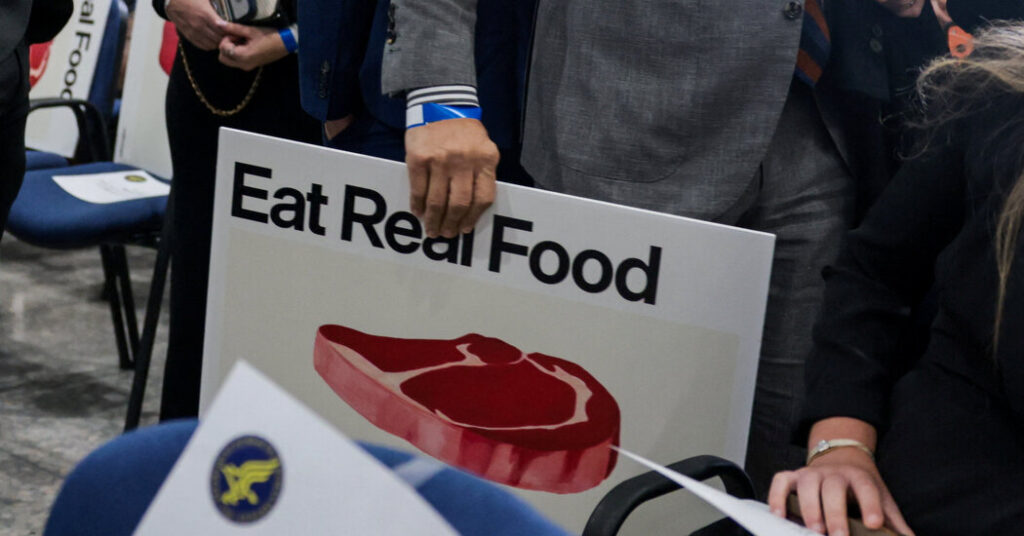
Adherents of the carnivore diet generally eat only animal foods like beef, chicken, pork, fish, eggs and full-fat dairy products. Carbohydrate-rich foods like fruits, vegetables, grains, nuts, seeds and legumes are discouraged, though Mr. Kennedy has said that he eats fermented vegetables like kimchi and sauerkraut.
Because the carnivore diet is so restrictive, some people who follow it lose weight, and weight loss can result in some visceral fat loss, Dr. Klein said. But, he added, there’s no evidence that a carnivore diet (or any diet for that matter) will reduce visceral fat completely within a short period of time, such as 90 days. You wouldn’t want to eliminate all visceral fat anyway, Dr. Klein said — it’s normal to have a little bit.
There’s also no research suggesting that the carnivore diet reduces visceral fat more than other diets, he said. When asked for evidence to support the idea that the carnivore diet helps eliminate visceral fat, H.H.S. did not respond.
There are some concerns with eating mostly meat, Dr. Jay said. Diets high in processed meat and red meat are associated with greater risks of developing Type 2 diabetes and cancer — including colorectal cancer, which is increasing in younger adults.
The carnivore diet is usually high in saturated fats, which can increase your blood levels of LDL (or “bad”) cholesterol, and with it the risk of cardiovascular disease. Eating fruits, vegetables, whole grains, legumes and other plant foods is associated with reduced risks of those health conditions, so avoiding them on the carnivore diet means you’ll miss out on such benefits. You’ll also lack beneficial fiber.
Eating mostly meat can get expensive too, Dr. Jay said — many “people can’t afford to eat a steak multiple times a day.”
For long-term health, including keeping visceral fat levels low, Dr. Jay recommended adopting a balanced diet you can sustain. She usually suggests a Mediterranean-style diet, which emphasizes vegetables, whole grains, legumes, nuts, fish and healthy cooking oils like olive oil and canola oil. This eating pattern is backed by decades of research showing it can reduce the risks of cardiovascular disease, Type 2 diabetes and other chronic diseases.
Exercise, especially cardiovascular exercise, can also help reduce visceral fat, even if you don’t lose weight, Dr. Klein said.
“Secretary Kennedy obviously exercises regularly, so he’s doing himself a real service for his health,” Dr. Klein said.
Maintaining a healthy body weight and limiting foods rich in refined carbohydrates like sodas, white breads and sugary breakfast cereals can help keep visceral fat levels low too, Dr. Klein added. “Those are the things you would recommend for every American,” he said.
Alice Callahan is a Times reporter covering nutrition and health. She has a Ph.D. in nutrition from the University of California, Davis.
The post Kennedy Says the Carnivore Diet Can Eliminate Dangerous Body Fat appeared first on New York Times.