Nathan Agranovsky is a junior at Seminole High School in Sanford, Florida.
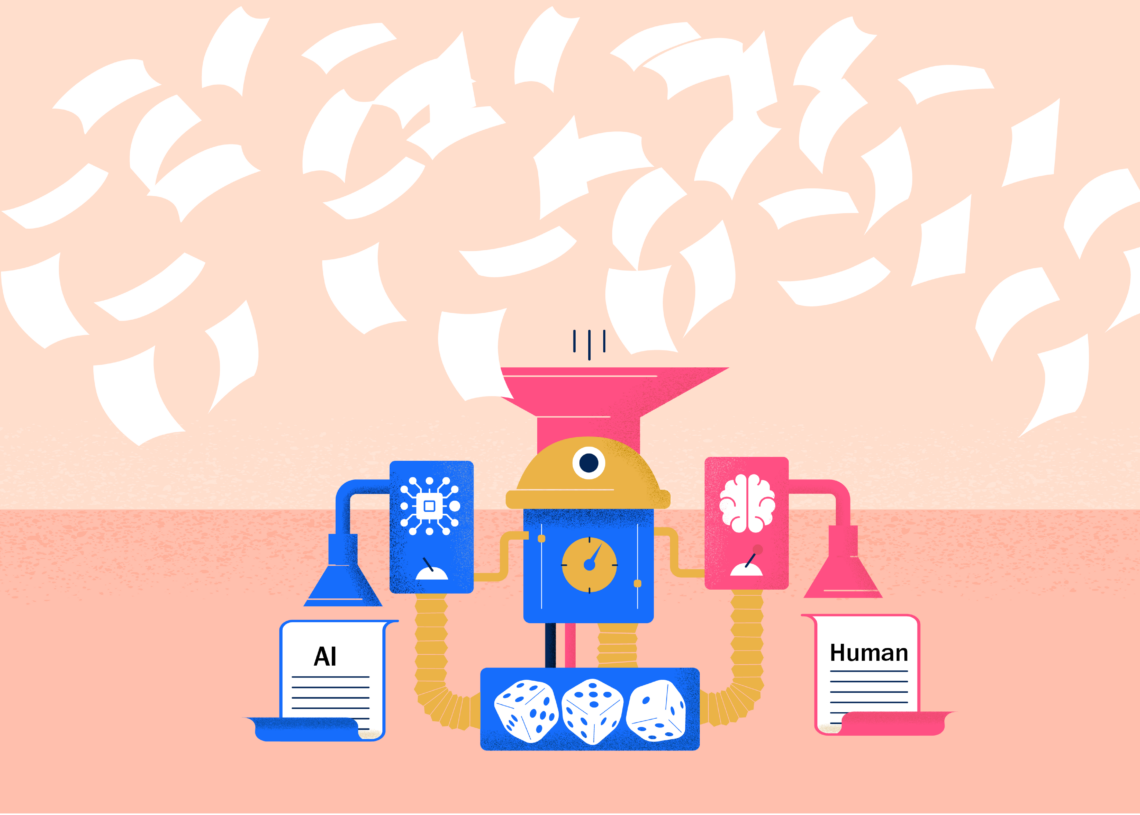
Increasingly, teachers and schools fretting over students using artificial intelligence to complete their assignments are turning to AI detectors to catch would-be cheaters. That may sound like a smart countermeasure to a pernicious tech shortcut. But it’s putting academic success in peril for students like me.
As a high school junior in the rigorous International Baccalaureate program, I am fortunate to be surrounded by students who take their educations seriously. We get our work done, and we get it done right. If students are caught cheating, they risk not receiving their IB diploma — even after two years of grueling college-level work.
Now, you may ask yourself: What should students worry about AI detectors if they’re following the basic rules of academic integrity?
Unfortunately, it’s not that simple. AI detection tools are grossly inaccurate. In explaining its policy discouraging their use, the University of San Diego School of Law noted that “multiple studies have shown that AI detectors were ‘neither accurate nor reliable,’ producing a high number of both false positives and false negatives.”
Turnitin, a popular detector, says it has a false positive rate below 1 percent, but emphasizes that “the final decision on whether any misconduct has occurred rests with the reviewer/instructor.” In 2023 when it launched, a Washington Post product test found a lack of reliability. A 2025 study from researchers at Sam Houston State University that reviewed the efficacy of Turnitin, GPTZero and other AI detectors concluded that “effectiveness significantly decreases in real-world academic settings.”
This semester, I saw this firsthand. After my classmates and I had worked on an assignment for two weeks, my teacher informed us that Turnitin had found that 10 of us submitted work that was either close to or 100 percent AI-generated. This was in a class of 23 students.
My paper wasn’t flagged. But authors of the 10 that were received a stern rebuke: The teacher instructed them to resubmit the assignment with a lower detection score or get a zero. My classmates offered evidence that the work was authentic and that AI detectors are inaccurate, but the instructor stood by Turnitin’s assessment. My fellow students, meanwhile, were left to anxiously wonder how to avoid false accusations of cheating.
I’m sure students everywhere can sympathize with the conundrum educators are facing. I certainly do. Academic cheating is a serious matter that AI has suddenly made diabolically easy to pull off. An infraction can severely damage a student’s academic prospects and, with it, career success. In Advanced Placement courses, “unacceptable use of AI” can result in an instant zero.
Given such consequences, even a 1 percent false-positive rate is too much — what’s remotely acceptable about 1 in 100 students having their future prospects harmed for something they didn’t do? Some schools discourage teachers from using AI detectors. But that still leaves students at the mercy of a teacher’s personal willingness to trust an inaccurate detector, while school districts are forced to reckon with possibility of lawsuits. Rather than allow this moral and legal mess to persist, school districts and universities alike should look to the example set by Yale, MIT, Georgetown and the more than 50 colleges worldwide that have limited their use.
More importantly, the education system — and society as a whole — has a responsibility to properly educate young people about AI and its use. This technology is here to stay, and today’s students are tomorrow’s workforce. They need to be prepared for a world where AI will play a significant role in whatever job they have.
But by treating AI as a threat and teaching students to do the same, schools are failing to fulfill their main goal of preparing students for the future. And if students perceive AI as a threat, they will be left incapable of meeting the demands of the workforce.
That doesn’t mean that students are not going to use AI to complete assignments. Cheating isn’t a new phenomenon, and those who do it should be held accountable when they’re caught. But AI detectors are too unreliable for that, and using them puts honest students at risk of not receiving the credit they deserve for their hard work.
The post Why honest students fear AI detectors appeared first on Washington Post.