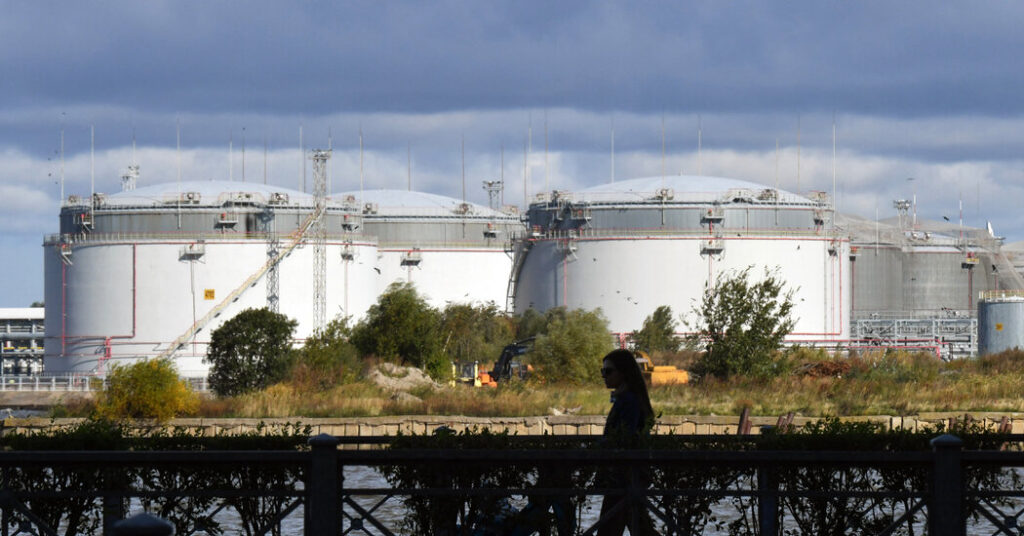
The United States did not extend a sanctions exemption that had allowed the sale of some Russian oil, stepping back from a contentious plan to try and contain global crude prices that was also providing an economic windfall to Moscow.
The White House has been working to bring more oil to world markets since the start of the war in the Middle East, which caused crude prices to surge above $100 a barrel. President Trump over the weekend threatened to prevent Iran from profiting from oil exports by restricting oil tankers from traveling through the Strait of Hormuz. The price of oil has soared by more than 50 percent since the war began in late February.
The Treasury Department last month gave both Russia and Iran one-month reprieves on sanctions that had restricted their oil sales, allowing buyers around the world to legally purchase oil that the United States had blacklisted. The sanctions waiver on Russia expired on Saturday morning, and the temporary license allowing Iran to sell oil expires on April 19.
Oil prices rose again on Monday after Mr. Trump’s vow to impose the blockade to prevent Iran from dictating who can purchase crude.
It remains to be seen whether the administration will allow more Russian and Iranian oil to flow given the pain that higher oil prices are causing American consumers.
Over the weekend, Mr. Trump also downplayed the economic effects of the war, which have been a political liability for him. Asked if oil and gas prices could fall by the midterm elections in November, he said they “could be the same or maybe a little bit higher” — an indication that the economic turmoil of the war could linger for months, even if a lasting peace is reached.
The sanctions relief for Russia has been controversial, pausing years of economic pressure that the United States was deploying in response to Russia’s invasion of Ukraine. Moscow has been sharing military intelligence with Iran as it tries to fend off America and has been benefiting from higher oil prices.
Energy analysts have estimated that Russia has been earning more than $100 million per day in additional oil revenue because of the exemption and that Moscow has taken in at least $12.8 billion in oil taxes so far in April — double the revenue in March.
At the same time, the relief did little to ease oil prices. Much of Russia’s oil is transported on its “shadow fleet” of unmarked tankers and evades international sanctions.
The cease-fire with Iran sent oil prices plunging in the hours after Mr. Trump announced the deal, but very little has changed on the ground. Shipping companies remain wary of sending vessels through the strait, and a substantial portion of the world’s oil is still trapped in the Persian Gulf. Crude prices did fall below $100 per barrel on Friday ahead of talks between the United States and Iran.
President Volodymyr Zelensky of Ukraine last week called for the sanctions to be reimposed, warning that “oil fuels Russia’s war and emboldens it.” Ukraine has also been ramping up its attacks on Russian oil tankers as it looks to limit the windfall from the sanctions waiver and higher oil prices.
In the United States, a group of top Democratic lawmakers urged the Trump administration not to let up on Russia.
“Instead of aiming to limit that Russian windfall, Treasury helped the Kremlin and its evasion network increase their profits,” the senators said in a joint statement on Friday, adding, “It remains far from clear that the extraordinary step of providing sanctions relief to Russia provided any relief for U.S. consumers or eased the global energy crisis.”
Alan Rappeport is an economic policy reporter for The Times, based in Washington. He covers the Treasury Department and writes about taxes, trade and fiscal matters.
The post Trump Administration’s Temporary Reprieve on Russian Oil Expires appeared first on New York Times.