Earlier this year, my daughter, who was in her mid-20s, died suddenly. This was, and remains, devastating to me and to everyone who loved her, especially her mother, her girlfriend and her sibling. She was beautiful, creative and smart, and she had so much potential the world will never get to see. I miss her every day.
My daughter was intensely private her whole life. She wasn’t secretive, but from the time she was a little girl she was independent with her emotional needs, and she rarely told anyone what was going on with her, good or bad. Her best friends have told us that you wouldn’t know how wonderful her job, her relationship or her projects were unless you knew to ask. She was happy and beloved; she was just private.
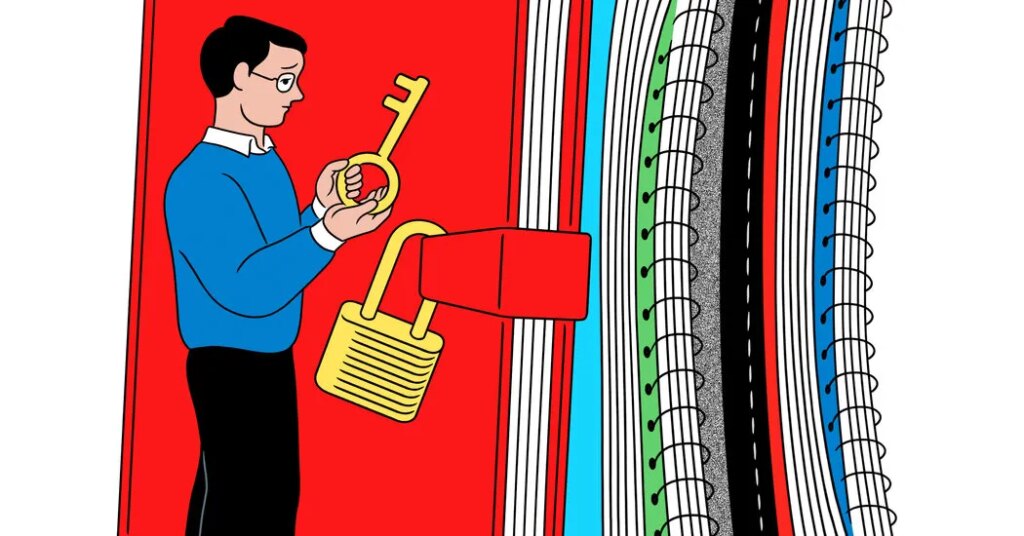
Starting when she was about 10 years old, she wrote in journals every day. She left close to a hundred of them, all full, along with longer pieces on her computer and boxes of letters and notes she never sent.
A quick glance (and that is really all it was) revealed a side of her we caught only in rare glimpses: her rich emotional world, her triumphs and failures, the mundane things she never told anyone. We are desperate to read them. But I can’t think of anything she would hate more. Everyone agrees she would want her precious privacy respected. Still, she is no longer here, and the people who loved her so dearly long for a moment with her.
Would it be wrong to read her journals and other writing? Does my daughter still have a claim to privacy in death, or do the grieving take precedence? Is there a portion we could read, perhaps the journals from when she was very young? And should everyone who loved her get to read her writing, or are some people not entitled to it? — Name Withheld
From the Ethicist:
If, like many of my Ghanaian kin, you think of the dead as hovering nearby, silent witnesses to the world of the living, you may worry about distressing them by doing what they would rather you didn’t. But we may have duties to the dead even if they never know whether we carry them out. That we can’t distress them doesn’t mean we can’t wrong them.
Deference to the wishes of the dead, or to what the living take their wishes to be, can come at a cost. It can be painful to think about Lord Byron’s memoirs, burned to ashes in his publisher’s drawing-room fireplace, or about those dozens of Philip Larkin’s diaries obediently sent through a shredder. If we regret what the destroyers did, we can feel grateful to the defiers. When Natasha Spender, the widow of the poet Stephen Spender, died, her son Matthew came across two packets she had marked “To be destroyed without opening.” Inside one were love letters from Raymond Chandler, which Matthew later drew on in a memoir about his parents. Was he wrong to read the letters? Maybe, though I’m glad he did. He was surely not wrong to preserve them. You can preserve private writings without letting contemporaries read them.
Your daughter’s case differs in obvious ways. She couldn’t have expected to die so anguishingly young and thus left no instructions, and you made no promise to destroy anything. Nor is there the public interest that attaches to a major writer’s papers. Still, you knew her well and are confident she wouldn’t have wanted anyone to read them. That weighs in favor of keeping her journals closed.
There are other considerations, though. Her reticence was presumably bound up with a desire to control what others knew about her, and so how they related to her. While she was alive, a disclosure could have altered those relationships in ways she would have had to live with. That’s no longer so. A person may guard her inner life while she’s there to be known in other ways. That doesn’t necessarily mean she’d want that guard kept up when her pages are what remain of her. Then, too, the dead’s claims to privacy fade with time; we don’t feel that we’re trespassing when we read George Eliot’s journals.
The trouble is that the longing to read her journals will be keenest now, when her claim to privacy is strongest. By the time that claim has faded, the need for consolation will be less acute as well. With the earliest journals, though, time has already attenuated that claim. The girl in those notebooks was, in a sense, someone your daughter left behind. Adults tend to regard their childhood confidences with the indulgence of distance. So it would be pardonable to allow a small circle of those closest to her to read some of what she wrote as a child. Reading her later journals — which could expose the secrets of people who confided in her and have a claim to privacy of their own — can wait.
Readers Respond
The previous question was from a reader who worried about getting pulled into a custody battle between their daughter and son-in-law. They wrote:
I am currently facing what may be the worst dilemma of my life. My daughter and son-in-law are going through a contested divorce. … My dilemma is this: While I love my daughter greatly, I believe she is not the better parent to their children. … At this point in the divorce proceedings, my daughter and her husband are both seeking sole custody of the children. I strongly believe that, in the children’s best interests, the parents should share custody equally. I think that the children would suffer greatly if they were no longer allowed to see their father. I’m torn about what to do if I’m asked to testify in court about which parent I believe is better. I truly believe that it’s their father. But if I express my honest opinion, will my daughter hate me and feel that I’ve abandoned her? Am I risking never seeing her again? And if she is awarded sole custody, might she also prevent me from seeing my grandchildren? What should I do? Should I decline to get involved? — Name Withheld
In his response, the Ethicist noted:
If you haven’t already, you should talk with your daughter about your concerns. You might remind her of the good father you’ve seen him to be and explain why you believe that sharing custody would serve the children’s interests. That’s not to say that, if you’re called to testify, you’ll be asked to make any blanket judgments. You would more likely be questioned about what you’ve observed: how much time each parent spends with the children, how each responds to their needs. You can answer such questions truthfully without venturing any general assessment. … The risk, as you say, is that your daughter will resent you for what you reveal. Given what’s at stake for the children, this seems to me a risk you need to bear. … You needn’t volunteer to take sides in the dispute. But if you’re asked to testify, your responsibility is to give an honest account of what you know, recognizing the limits of your knowledge and leaving the ultimate judgment to the court.
(Reread the full question and answer here.)
⬥
In my view, the letter writer should step back entirely from the divorce and custody conflict. Her comments suggest that she has already formed judgments about her daughter, including the troubling and perhaps patriarchal assumption that her daughter’s being passionate about her career makes her a less devoted parent. There may be countless ways that her daughter is an engaged and loving parent which are not visible to the grandmother. Ultimately, the letter writer would do more good by examining her own assumptions, supporting the family without judgment and staying out of disputes that belong between the parents. — Jeni
⬥
I, too, was a working mother, and while my children were always my first priority, my job kept me away from them for 40 to 50 hours a week. I wanted desperately to work less and spend more time with my children, but my ex-husband failed to contribute financially, so I had to keep working. I am also the better parent. He may have had more hours with them, but I fulfilled their emotional needs more than he ever did. If my mother had concluded that my job made me a bad parent, I would have been heartbroken by her misunderstanding of my life. — Donna
⬥
A similar situation arose between my son and daughter-in-law. He wanted full custody and to deny her visitation. She thought shared custody would be best. I wrote to the attorneys and the child care assessor that shared custody was in the best interests of my grandson. My son has had nothing to do with me since then, but I still believe I made the right decision. My grandson is growing up with both parents active in his life. — Erica
⬥
By all means possible, this grandparent should encourage the idea of joint custody. The children are not getting divorced, and splitting them from either parent punishes them for their parents’ relationship difficulties. Hopefully the letter writer will also encourage family therapy where a third party can assist in normalizing a relationship between the parents that focuses solely on doing what’s best for the children and not trying to seek revenge through them. — Linda
⬥
Letter writer, you should stay out of it! Do not volunteer to testify. In a court custody dispute, especially a heated one, the court may assign a guardian ad litem to do home studies of both the mother’s and father’s home environments, their interaction with their children and their commitment to supporting a strong and continued relationship between the children and the other parent. The best decision for the children will be between the judge and the guardian ad litem. So don’t worry: You are not needed. Your read of the situation may be inaccurate, and you will do serious, long-term harm to your relationship with your daughter. — Jeanne
The post Is It OK to Read My Late Daughter’s Diaries? appeared first on New York Times.