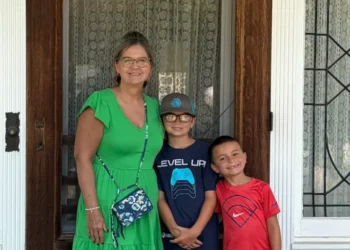
When scientists began forecasting an extreme El Niño climate pattern earlier this year, Tracey Matthews wanted to be ready.
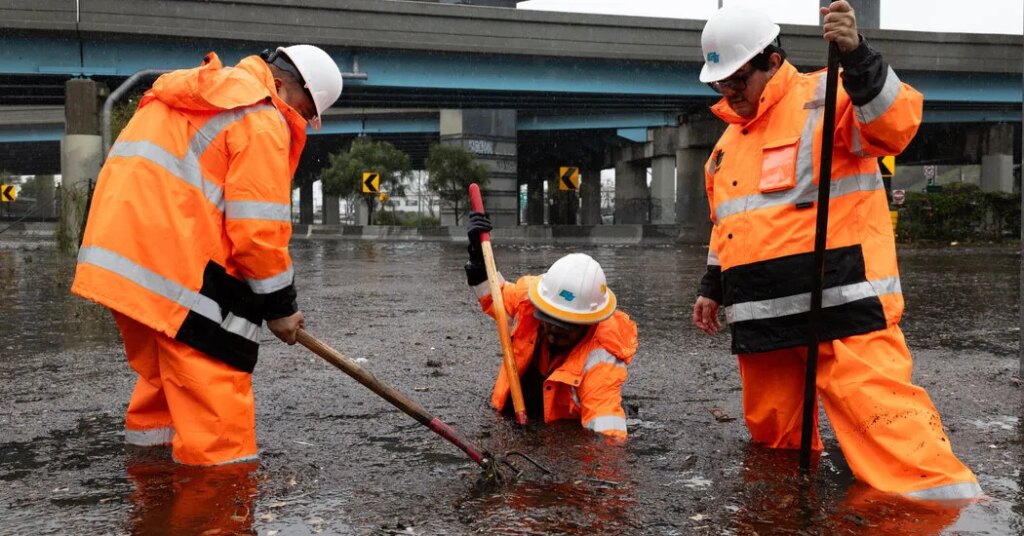
As a risk manager for the city of Anaheim, Calif., she knew the phenomenon could mean severe storms. During a “super” El Niño in late 1997 and early 1998, rain overwhelmed Southern California storm drains, flooded highways and sent homes sliding down muddy slopes.
Recovery could be more difficult this time, Ms. Matthews feared. She heard recent pronouncements by Trump administration officials that states should start handling more disasters without federal help. She saw neighboring Los Angeles struggle to get money from Washington after devastating wildfires in January 2025.
So she bought a different sort of insurance — which could give the city an immediate infusion of cash after a disaster. Had it been in place during past El Niño events, it would have quickly paid out millions, enough to keep city services going and help the community bounce back faster.
As El Niño continues to batter California, a storm coincided with dangerously high tides along the coast through Thanksgiving and more rain was expected next week. Anaheim is among a growing number of communities buying what’s known as parametric insurance.
“It just made sense to provide that extra layer of security,” Ms. Matthews said.
Unlike traditional insurance policies, which require losses and damage to be documented and reviewed before any payout, parametric coverage pays immediately once a calamity hits. The amount is based on predetermined triggers, such as a specific earthquake magnitude or hurricane-force wind speeds.
In California this winter, heavy rainfall and flooding could trigger the policies in cities like Anaheim.
Ms. Matthews signed off on a policy that went into force July 1, well ahead of the series of storms that have recently battered the California coast.
Anaheim spent about $568,000, a fraction of the roughly $4 million it budgets for more traditional insurance to cover more than $2.5 billion in city assets. Any storm that floods about 300 acres or more would trigger a payout of up to $10 million, Ms. Matthews said.
These policies have grown in popularity as a supplement to traditional coverage.
For example, Caribbean nations have received payments from parametric insurance policies based on hurricane wind speeds. Alabama, Florida, Texas and Miami-Dade County, Florida, have purchased similar policies, according to a March Congressional Research Service report.
El Niño is sending interest in flood insurance soaring, insurance industry officials said.
For Anaheim and other cities buying the insurance, payouts depend on data from Floodbase, a technology company that monitors flooding globally. Insurers hire Floodbase to serve as an independent third party to assess when an event triggers a payout. The company models past and potential future events to determine appropriate triggers, and then uses those same models to detect when flooding surpasses those benchmarks without needing the laborious system of damage estimates and claims adjustment that traditional coverage involves.
Insurance companies declined to provide data on sales on the policies. Megan Linkin, head of parametric natural catastrophe insurance for the Americas at Swiss Re Corporate Solutions, said the company’s portfolio of parametric flood policies has grown from a handful to about 100 over the past decade.
Changes to federal disaster policy are also driving up demand.
Cameron Hamilton, the Federal Emergency Management Agency administrator, has said he wants to scale back the organization’s role in disasters. Analyses have also shown that President Trump has issued fewer federal disaster declarations in states that tend to vote for Democrats. Those declarations are important for unlocking federal aid to states.
So state and local governments are grappling with what level of disaster they may be forced to handle on their own, said Carolyn Kousky, executive director of Insurance for Good, a nonprofit group dedicated to reducing disaster risks. That could create new costs and burdens for disaster-struck communities, said Ms. Matthews, the Anaheim risk manager.
“There are consequences to every community in America of doing that,” she said. “Yet this is something that’s flying under the radar of what’s coming.”
To speed the flow of federal disaster aid, a Trump administration FEMA task force proposed basing assistance on the same types of triggers that parametric insurance uses. But enacting such a change would require Congress to act.
The insurance math doesn’t work in every vulnerable community. Keith DeMartini, finance director for the city of Santa Barbara, on California’s central coast, explored buying a parametric policy but determined the potential of a payout wasn’t high enough to justify the cost. In a flood, Santa Barbara will have to rely on a $33 million fund it maintains for disasters, he said, and hope it’s enough.
The El Niño winter could expose the haves and have-nots of disaster preparedness, Ms. Kousky said. She predicted that communities that can afford to buy the extra insurance will fare better.
“They’ll have more dollars for recovery,” she said.
The post As Federal Aid Wanes, Cities Buy Insurance That Pays Out Fast appeared first on New York Times.