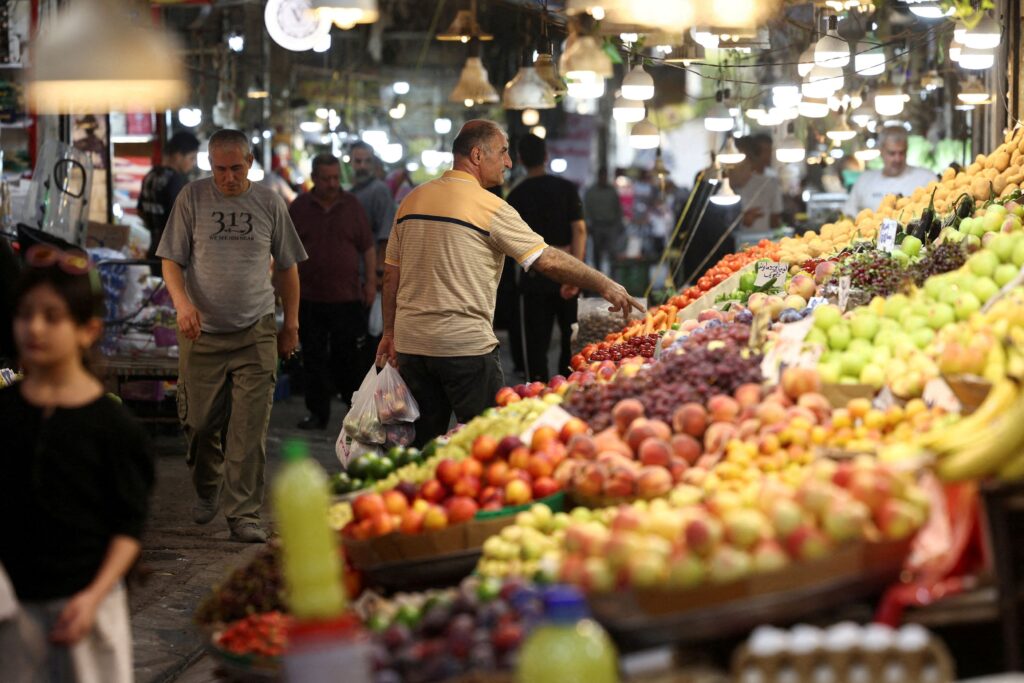
Iran is rationing electricity and scaling back government subsidies on bread and gasoline as the country’s economy continues to suffer under rising U.S. economic pressure. Iranians say the deeply unpopular austerity measures are making life even harder, and analysts say they are an indication of how critical Iran’s economic crisis has become after nearly nine punishing months of war with the United States.
The measures are a dire turn for a government keenly aware that President Donald Trump’s strategy of economic strangulation is meant to stoke popular discontent, less than a year after Iran’s leaders oversaw a deadly mass crackdown on protesters.
Iran will face “difficulties this winter,” President Masoud Pezeshkian said in a message to the nation on Sunday to announce the electricity rationing. He said the blackouts would last up to two hours a day but could be extended once the winter weather sets in.
The electricity cuts follow months of quieter austerity moves by the Iranian government slashing subsidies, including restricting access to aid programs and scrapping plans to raise wages. This month, new limits were imposed on how much subsidized bread people were allowed to buy in at least three provinces, and last month millions of people were removed from the rolls of a massive state food voucher program initially launched in January after protests about the cost of living.
After battling double-digit inflation before and during the war, Iranians say the austerity measures are aggravating economic hardships and compounding anxiety about the future as winter approaches.
“It’s infuriating,” a 40-year-old language teacher from Tehran said of the blackouts. Her family has been forced to adapt to successive hardships, first when her husband lost his job toward the beginning of the war, and in the months since as inflation ate away at what her family could afford on a single salary.
“People are too tired, but they are also kind of numb,” she said, speaking on a video call from Tehran. Like other Iranians interviewed for this story, she spoke on the condition of anonymity for fear of government reprisal.
When the war began, the language teacher said she, like her family and friends, threw all her energy into preparing for the worst and stocking up on supplies, but now she can’t be bothered.
“If there’s no electricity and no gas, I guess we can just go out to the car to keep warm,” she said.
Iran is under economic strain greater than at any other time in recent decades, according to Iranian economist Hadi Kahalzadeh, a research fellow with Brandeis University specializing in the labor market.
The impact of the U.S. blockade on Iranian ports, combined with the damage sustained by the country’s infrastructure during the war, could force the Iranian economy to shrink by 4 to 6 percent this year, according to Kahalzadeh. But some elements of the country’s economy remain resilient, he said.
The Trump administration has turned to economic pressure in its bid to force Iran to capitulate in talks over ending the war and adopting curbs to its nuclear program. After a provisional truce between the United States and Iran fell apart in July, the U.S. reimposed a blockade on Iranian oil exports and since then the measures have deprived Iran of between $3 billion and $4 billion a month in revenue.
But the blockade alone won’t succeed in forcing an economic collapse, Kahalzadeh said. As a large country of more than 90 million people, Iran continues to collect tax revenue and has maintained overland exports to many of the seven countries it shares borders with. “Despite all of the damage from the war, blockade and sanctions, Iran still has some leverage, some capacity to survive,” Kahalzadeh said. But he warned, “this survival will be very costly.”
In the long run, by allowing inflation to continue to increase, Iran is inflicting lasting damage on its workforce. As people lose jobs, if they cannot find other work, their skills atrophy and eventually can be lost completely, Kahalzadeh said.
Iranians reached for interviews with The Washington Post said of all the recent austerity measures, the state’s decision to roll back some fuel subsidies has had the largest negative impact on their daily lives. As in many countries, fuel subsidies are a particularly sensitive issue in Iran. Their removal motivated protests in 2019 and were a motivating factor in the lead up to unrest again last December.
But after the protests met with a brutal government crackdown in January, which killed thousands of people, many Iranians are too fearful to organize. A 26-year-old musician from Tehran who marched against the deteriorating economic situation in December and January said his sense is that the current level of discontent among the Iranian people is greater now than it was then.
“People are scared, but the conditions are unbearable,” he said, predicting that as conditions worsen, people will once again take the risk and mobilize.
Elsewhere in Iranian society, anger is bubbling to the surface. Local news outlets have run accounts of widespread hardship. And in the halls of government, lawmakers are openly criticizing the state’s austerity measures. Reformist Iranian lawmaker Ahmad Bigdeli held a webinar this month in which he delivered a sharp rebuke of government inaction on workers’ wages in the face of deteriorating living conditions for teachers, farmers, the military and law enforcement.
“Workers cannot breathe today,” he said, according to a summary of his remarks on state-affiliated Nour News.
After an announcement that the government would be unable to raise some salaries, labor activist Somayeh Golpour accused the state of revealing “structural injustice” and betraying “public trust” in an essay on state-affiliated Mehr News. And the head of the Iranian Parliament’s economic commission, Shamseddin Hosseini, warned on state media of fuel and heating shortages this winter as a result of damage to the country’s energy infrastructure sustained during the war.
Describing expected shortages as an “energy imbalance,” he warned it should not “come at the cost of closing industrial units and making workers unemployed.”
A 25-year-old small business owner in Tehran said the rollback of fuel subsidies decreased her profits by about a third. Operating out of her car, she distributes eggs from retailers to supermarkets and butchers around the city.
When she thinks back on how much more expensive everything has become in just a few months, she’s surprised that anything in the country manages to keep running, she said. Her buyers are still making purchases and when she does her delivery rounds she still sees people out shopping.
“I don’t know how, but we are still functioning,” she said. These days, she describes how she feels with a Persian proverb: “between earth and sky,” an expression of feeling trapped between two situations without clear direction of what’s next.
But she said, “people from Iran are really different from anywhere else, we can endure more hardship.”
Talebzade reported from Paris.
The post Iranians’ frustrations grow as Tehran, under U.S. pressure, imposes austerity appeared first on Washington Post.