This story appeared in Today, Explained, a daily newsletter that helps you understand the most compelling news and stories of the day. Subscribe here.
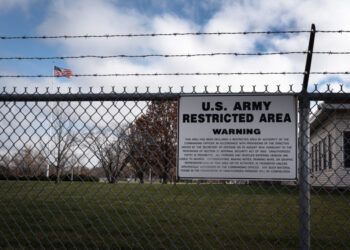
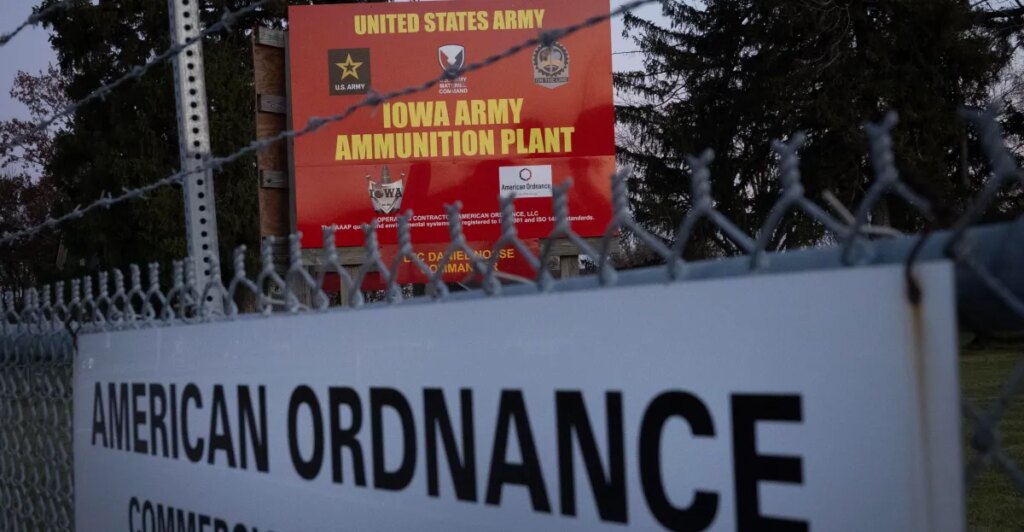
In Iowa, the Pentagon is preparing to send a toxic plume of lead dust into the sky the day before Thanksgiving — by blowing up about five tons of lead azide, an unstable explosive, in order to dispose of it.
The detonation was briefly halted by a lower court before a federal circuit court cleared the way on Monday, and it now appears set to take place on Wednesday morning.
According to the Army, there’s a real need for haste: The lead azide is sufficiently unstable that it’s at risk of detonating on its own in an uncontrolled explosion, and falling temperatures in Iowa reportedly make such an explosion more likely. An uncontrolled explosion would also be more dangerous and unpredictable, and potentially cause worse lead pollution.
At the same time, though, Iowa residents are angry and alarmed by a lack of clear information, poor communication by the Army, and the potential health hazards.
The potential for things to go sideways has President Donald Trump nervous enough that he tried to pass the decision to Rob Sand — not the current Iowa governor, but the incoming Democratic governor-elect — and let any consequences fall on his head. But as of Tuesday, it appears the detonation will go forward with court approval.
The lead plume produced by the blast — which will take place inside reinforced concrete bunkers, along with other steps to mitigate the risk — could still spread as far as 100 miles from the site, according to the Washington Post.
The American Lung Association has urged anyone near the blast to remain inside for one to two days afterward, among other guidance, and on Tuesday, the Health & Human Services Department recommended that children and pregnant women evacuate from the path of the plume, which could stretch into neighboring Missouri.
The lead risk all around us
Emergency munitions detonations in the US are pretty rare — there are, thankfully, better ways to dispose of toxic materials these days (and questions about why the Army didn’t pursue them in this case).
But despite a great deal of progress in the US — including banning things like new lead paint and pipes and leaded gasoline in the 20th century — lead remains a serious public health threat.
Part of that is because of how dangerous it really is: Lead is not just a neurotoxin, but one with no safe levels of human exposure; even a little bit can be harmful, especially to children.
But as my colleague Dylan Scott reported in 2024, it also keeps popping up nearly everywhere we look, including in our food supply.
According to Dylan’s reporting, there are three big reasons for lead’s seeming inescapability: Active disregard, negligence, and the fact that it’s just really hard to get rid of. Lead was widely used in the US decades ago, before those bans on lead paint and leaded gasoline, and some of that lead is still around, in the soil, in old houses, and in other materials dating back to that time.
It’s also not a problem that the US can easily address alone, since lots of lead exposure is the result of goods being imported into the US.
“If we really want to solve this,” Drew McCartor, the director of a global public health nonprofit, told Dylan at the time, “it requires a whole-of-government commitment to work outside of our borders.”
One link for later
➨ Follow “Maslow’s hierarchy of hosting.” Thanksgiving is almost upon us, and if you’re feeling a little angsty about your holiday obligations, consider this guidance from the event planner Megan Fitzgerald: Your hosting needs, at a minimum, start with a clean space, a bathroom stocked with adequate toilet paper, and enough cups and water to go around. (Plus, of course, the food.) Basically, everything else is extra.
Before you go…
- Did you know…that, with very few exceptions, US grocery stores sell only one breed of turkey? It’s called the Broad Breasted White turkey, and it’s been bred to grow twice as fast (and become nearly twice as big) as its forebears did in the 1960s.
- Today’s trivia: What’s the name for the astronomical phenomenon that occurs when Earth’s natural satellite is at its perigee? (Here’s a hint: It’s happening tonight. You can find this and other brain puzzles in Vox’s daily crossword. Look for the answer in tomorrow’s edition.)
- Yesterday’s trivia: Yesterday, we asked you which 19th-century author and activist is known as “the mother of Black feminism.” That would be Anna Julia Cooper, who was one of the first African American women to receive a PhD. She lived to 105, well into the 20th century.
The post Why the Army wants to detonate toxic explosives in Iowa appeared first on Vox.