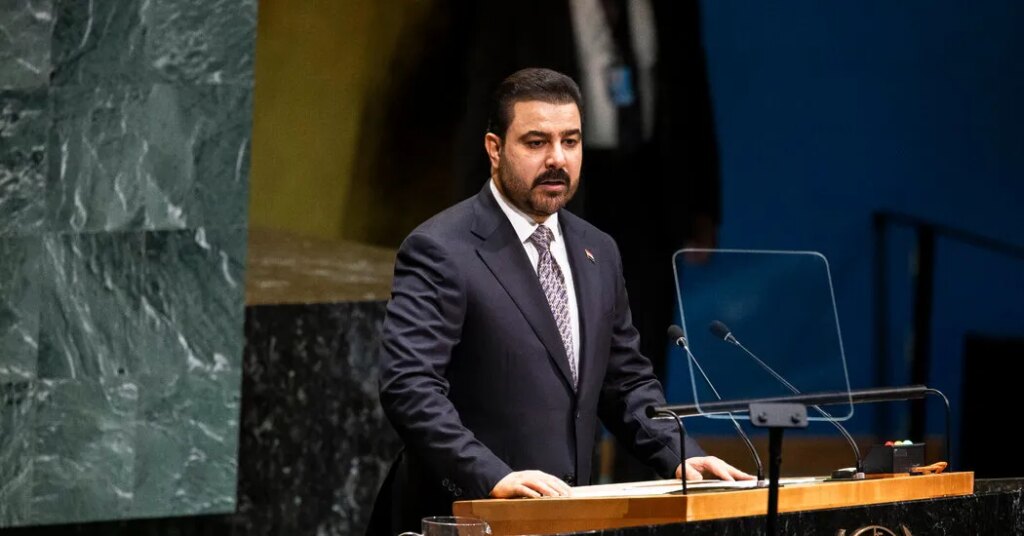
Iraq’s prime minister ordered a federal takeover of border crossings and oil fields long administered by the country’s semiautonomous Kurdistan region on Tuesday, in a major push by the central government to retake power and resources.
Prime Minister Ali al-Zaidi’s move against the powers of the Kurdistan Regional Government comes just days after he scored a symbolic victory against the country’s most powerful Iran-backed militia by sending federal forces into territory that had long been controlled by that group.
Both efforts are part of Mr. al-Zaidi’s risky campaign to assert control across a country long fractured by regional loyalties and roiled by militias aligned with neighboring Iran. His success will hinge on his ability to turn his orders into tangible gains, without triggering armed confrontation between the central government and forces outside its control.
A statement released by the prime minister’s office on Wednesday said he was moving to extend the central government’s control over Iraqi Kurdistan’s borders with neighboring countries, oil fields and oil exports “proceeding from the principle that national sovereignty is indivisible and that protecting Iraq’s wealth is an existential battle.”
The decision came a day after Mr. al-Zaidi launched an investigation into alleged oil smuggling in the region — a form of corruption that experts say most Iraqi political factions are involved in.
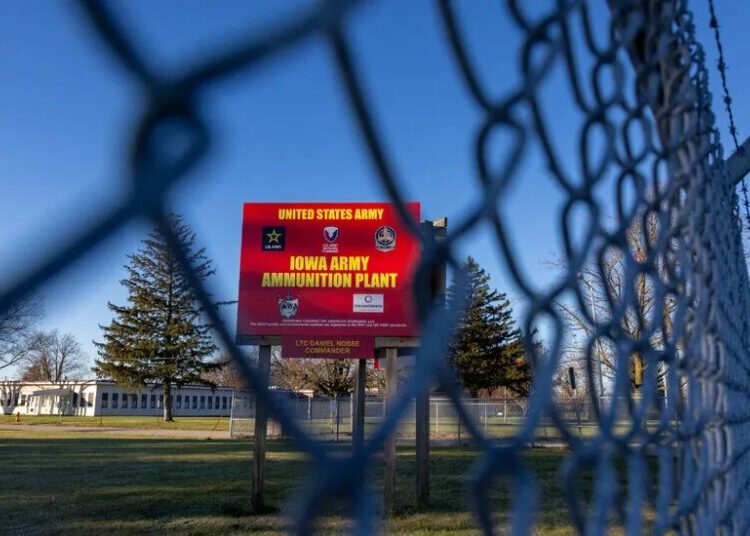
The moves followed the same pattern as his efforts last week against the powerful, Iran-backed Kataib Hezbollah, sending forces into the territory they held after he launched an investigation into their alleged oil smuggling.
Mr. al-Zaidi’s actions are largely seen by analysts as political and strategic.
In response to Mr. al-Zaidi’s directive, Iraq’s two main Kurdish political factions set aside an ongoing feud to signal they would resist the initiative.
“The Kurdistan Region is the product of the blood and longstanding struggle of the people of Kurdistan, and any infringement upon its rights and its gains is a red line,” the Kurdistan Democratic Party and the Patriotic Union of Kurdistan said in a joint statement.
The Kurdish minority carved out a semiautonomous region in northern Iraq after the 1991 Persian Gulf War. But in recent years, Iraq’s Arab Shiite Muslim majority has sought to reassert state centralization.
Mr. al-Zaidi’s campaign to rein in Iran-backed militias has provoked concerns that it could trigger internecine conflict, but he enjoys widespread support in the capital, Baghdad, for moving against Iraqi Kurdistan.
“For years, the central government has been chipping away at the financial autonomy and economic viability of the regional government,” said Ramzy Mardini, the founder of Geopol Labs, a Middle East-based geopolitical risk advisory firm. “The danger for the Kurdistan region is that it could retain the constitutional trappings of autonomy while gradually losing the material means to exercise it.”
Iraq’s deepening financial crisis, caused in part by the U.S.-Israeli war against Iran, was likely a reason for Mr. al-Zaidi to assert control over Iraqi Kurdistan’s oil, Mr. Mardini said.
Kurdish leaders have few cards to play against the central government, Iraq experts say.
The Kurds have long had the support of successive U.S. governments, may not be able to count on the Trump administration, which has already pressured its Kurdish allies in Syria to come under the Damascus central government and integrate their forces into the new Syrian army.
“These are also ideas pushed by the Trump administration, in particular his envoy, Tom Barrack, who has said pretty explicitly he doesn’t believe federalism works,” said Renad Mansour, an Iraq analyst at Chatham House, a London-based research institute. “That’s music to the ears of some leaders in Baghdad.”
Iraqi Kurdistan, once seen as a top U.S. regional ally, operated almost as a state-within-a state after the U.S.-led invasion toppled Iraqi President Saddam Hussein in 2003. Iraqi Kurds controlled their own borders and generated revenue through oil fields and oil exports they largely controlled.
But when the region’s emboldened leaders in 2017 called a referendum on independence, the Baghdad government reacted by seizing major Kurdish-held oil fields and halting pipeline exports of oil to Turkey. That pipeline was only restarted this year, when Kurdish and central government authorities reached a deal amid the Iran war, which blocked oil shipments through the Strait of Hormuz.
After losing much of its oil revenue, the region’s administration remains vulnerable to Baghdad’s centralization drive. The central government pays public sector salaries, giving it enormous leverage.
Iraqi Kurdistan has been further weakened by a power struggle between its two main parties, which left it without a functioning regional parliament for two years.
Baghdad’s latest moves to cement control will likely unnerve Iraqi Kurds, still traumatized by centralized rule under Saddam Hussein, who was charged by a special Iraqi court with attempting genocide of the Kurds.
A younger generation of Iraqi Kurds, who never experienced Saddam’s rule, meanwhile, have little connection with the rest of the country.
“A generation of Kurds has only really known life under the Kurdistan Regional Government. They don’t speak Arabic. They followed the dream offered by their leaders that they will one day move toward a state,” Mr. Mansour said. “And now their future reality looks very different.”
The post Iraq’s Prime Minister Aims to Wrest More Power from Kurdistan Region appeared first on New York Times.