Elon Musk has done a lot for President Trump in the past couple of years.
He spent a cool $290 million to elect him in 2024. He became the wealthiest unelected White House adviser the country had ever known. He spent close to $500 million to help Trump’s allies in the midterms.
Now, though, Musk has a message for the nation: He is not MAGA after all.
That comment came during an interview with my colleague Andrew Ross Sorkin at the DealBook conference yesterday, and I’d encourage you to watch the whole thing. Musk made himself the latest right-leaning cultural figure to distance himself from Trump, following the likes of Joe Rogan and Ben Shapiro.
“I feel pretty foolish about having spent so much money and not seeing much for it,” Musk said, before trying to downplay his political involvement. “I didn’t put a lot of personal attention into it because I focused on, on building SpaceX, Tesla, you know.”
The intense focus on Musk’s spending obscures an important political point. He was never just a donor on the sidelines, nor a mere MAGA adherent (or “dark gothic MAGA,” as he memorably put it). In the opening months of last year, he was the most visible member of the Trump administration besides the president himself — and Musk’s polarizing and chaotic tenure leading the so-called Department of Government Efficiency became a political liability that the administration struggled to shake.
In other words: It’s not just that Musk failed to help Trump win. It’s that in some ways, he could be part of why Trump’s party lost.
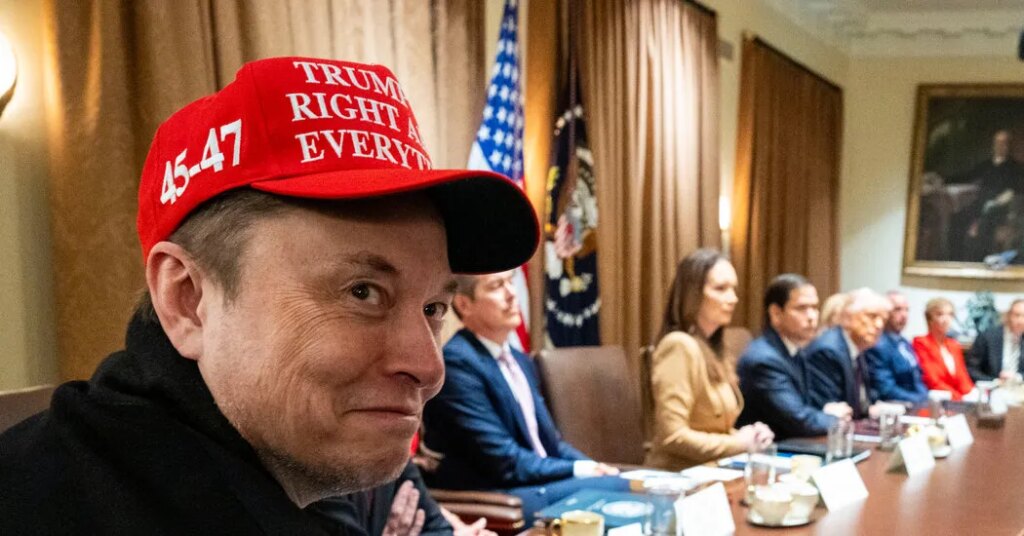
Musk was omnipresent in Washington. His aides gutted government agencies like the Consumer Financial Protection Bureau and U.S.A.I.D. He was in the Oval Office with his child on his shoulders; wielding a chain saw onstage at the Conservative Political Action Conference; sitting shotgun in a Tesla with Trump on the White House driveway and — perhaps most controversially — at the Defense Department, meeting with Pete Hegseth.
Polls showed that DOGE was unpopular, as was Musk himself. Even people who voted for Trump weren’t quite sure this was what they had signed up for.
“It was sold to the American people in such a way that, ‘This is going to be good for you,’” Jerry Jacob, a tech worker from New Jersey, told me this fall. He voted for Trump in 2024, but he said he found DOGE off-putting. “Are things better now than before? Honestly, I wouldn’t be able to say yes.”
Democrats seized on the image of Trump cozying up to Musk as they built a caricature of a president beholden to the billionaire class and made it core to their midterm pitch. Musk remained a political target long after he departed the White House in the late spring of 2025. His big spending on behalf of Ken Paxton, the Trump ally and Republican Senate nominee in Texas, gave Democrats a new opening to go after their favorite foil.
“Ken Paxton is funded by one dude,” James Talarico, Paxton’s Democratic opponent, said in the closing days of the campaign. “Elon Musk wants our land. He wants our water. He wants our tax dollars. He wants his very own personal United States senator. He is trying to buy Texas.”
“On Nov. 3, we are going to deliver a crystal clear message to the world’s first trillionaire: Texas is not for sale,” Talarico said. He won convincingly.
Now that the political winds have shifted, Musk has, too. He described himself at DealBook as “ideologically quite moderate,” and praised Texas’ newly elected Democratic governor, Gina Hinojosa, as “quite moderate” herself.
It was part of his time-honored ritual of cozying up to the powerful, whoever that is. He has showered right-wing leaders in Argentina, India and Brazil with compliments. He took President Barack Obama on a tour of SpaceX in 2010 and said he voted for Hillary Clinton in 2016 before his expensive mission to elect Trump in 2024.
“You know,” he told Andrew, “American elections are not just about money.”
Hannah Fidelman contributed reporting.
The post Me, MAGA? Elon Musk Backs Away From a Presidency He Shaped appeared first on New York Times.