In today’s edition of The Backstory, a Palestinian American political analyst shares his thoughts about our headlines about the Middle East. We also explore how we think about headline writing and how we’re covering the spread of measles in insular communities. But first: how our reporters in Washington, Silicon Valley and Asia broke open our Nvidia investigation — and some of the questions it raised for people.
A spying scandal
When The Times has big scoops like the Chinese spy plot that swept up Nvidia and Jensen Huang, there’s often a juicy backstory. There’s also usually questions from readers about how we’re sure our reporting is right.
The backstory here involves anonymous sources, so we can’t get into all the details. That’s because we never share information that might expose these sources, who can risk their jobs and sometimes even potential prosecution by talking to us. Richard W. Stevenson, our Washington bureau chief, says that when we produce a story based largely or entirely on unnamed sources, we aim to confirm our reporting with multiple people who have independent knowledge of the facts.
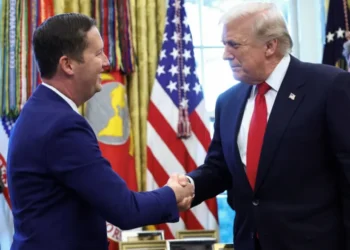
Our Nvidia reporting drew on tips, shoe-leather sleuthing on three continents, shipping records and other documents, interviews and rigorously sourced facts to produce stories that surprised even our reporters. And everything we’ve learned since our Oct. 29 scoop has built on the picture we reported then: The U.S. intelligence community believes that Alice Huang was secretly working with China’s top spy agency and using her romantic relationship with Jensen Huang to gain access to powerful A.I. chips for China.
Some people are accusing us of setting out to take down Mr. Huang. Not so. When we start work on investigative stories, we don’t know where we’ll end up. And it wasn’t Mr. Huang’s affair alone that made this blockbuster news; it was the national security issues stemming from his relationship with Ms. Huang. As the White House correspondent Maggie Haberman told me, “We know some people are focused on the salacious elements here, but the much larger and more durable issue is the possibility that banned, high-end Nvidia chips were smuggled into China.”
There are also questions about whether we’ve definitively established Ms. Huang was a spy. The word “spy” evokes images of James Bond. But in the Chinese system, many spies are not trained intelligence agents with high-tech gadgetry. Many are business executives who are pressured or expected by the state to exploit their access to valuable targets, like Mr. Huang, to collect intelligence for the Chinese government. So we generally refer to this as a spy plot or a spying scandal and refer to Ms. Huang as a Chinese intelligence asset.
I spoke with Maggie, Dick and several of the reporters and editors who have broken these stories about all the nuances.
Sound Off
Omar Baddar, a Palestinian American political analyst and a member of the National Policy Council of the Arab American Institute, has long believed that our headlines on articles about Palestinians, Israel and the war in Gaza are too neutral. He and I talked it through: Listen to our conversation, and read an edited exchange below. I want to keep exploring all facets of this coverage, so keep an eye out for more Sound Offs to come.
Omar Baddar: In 2022, The New York Times ran a story about Ukrainian attacks on Russians inside Ukraine. The headline read, “Guerrilla Attacks Signal Rising Resistance to Russian Occupation.” Just in case the audience was not clear on how to understand that violence, the subhead notes that those attacks are “fueled by brutal Russian repression and worsening humanitarian conditions.”
Essentially, [The Times] didn’t just report on the violence as Ukrainians attacked Russians, but framed it specifically as resistance to Russian occupation, repression and brutality. If you jump to a nearly identical situation just a few weeks ago, in October, where there had been a Palestinian attack on Israeli occupation soldiers in the West Bank, the headline that The New York Times ran with is “Palestinian Gunmen Open Fire on Israelis in the West Bank, Officials Say.”
You can see a massive contrast where [The Times is] not framing the correct context for the audience to understand. All you see is that Palestinians have attacked Israelis, and when it’s devoid of context, the audience can very easily come away with the misimpression that Palestinians are the aggressors in this situation, even though they are in fact responding to an illegal Israeli military presence on their land.
Patrick Healy: Omar, how would you have written that headline?
Omar: I would have said something along the lines of, “Shooting of Israeli Soldiers Shows Growing Resistance to Israeli Occupation in the West Bank.” Noting, maybe even in the subhead, the fact that the occupation is illegal, that it is the longest modern military occupation in history, it’s lasted now for over 60 years. Or a mention of the violence, the fact that we’ve had in the past couple of years, more than 1,200 Palestinians killed in the West Bank, including hundreds of children.
Patrick: With headlines, we do have a process in place that applies to everyone. Most of our headlines are really focused on a news event. And all of our headlines are short. That Ukraine-Russia headline was about a people who had just been invaded in an unprovoked, premeditated war, the biggest land war there since World War II. They were just starting to form a resistance movement. So that specific headline was really capturing news events happening at that moment. I think that was fair and accurate.
The headline on the Palestinian gunmen opening fire on Israelis was fair and accurate for some of those same reasons. It’s about a specific news event on a day as part of a decades-long conflict. It was attributed, and the subhead did say that the West Bank is an Israeli-occupied territory.
I’m not saying our headlines are perfect. We have had errors in headlines, some really big ones. When we get those wrong, we correct them, and we tell the world that we’re correcting them. But we are publishing 200 pieces of journalism a day. I think for the most part, we’re getting headlines pretty spot on.
When Israel acts, when Hamas acts, the headlines say it.
Omar: I feel like we’ve touched on something.
When you talk about the novelty of what was happening in Ukraine, I think that’s part of the problem in a way — that Israeli occupation and the violence of that occupation against Palestinians has been so normalized, has been going on for so long, that it has become somewhat invisible. You see it in the level of humanization that if there is ever a Hamas attack on Israelis, that always makes headlines. There’s always a sense of the story, the human angle, who these people are, in a way that you’ve had now virtually daily Israeli attacks on Gaza still ongoing during the so-called cease-fire. We don’t see that same level of humanization. It doesn’t break news. We don’t know who these children are who are getting killed day in and day out. And sometimes it is about what’s missing.
Patrick: You make a fair point about humanization. It has been such a challenge for us over the last few years of not being able to get New York Times reporters into Gaza. We pressed the Israeli government on this. We have covered, I think, really powerfully, including with a Palestinian reporter on the ground in Gaza who works for us, the issues of hunger, of famine, of death, mass casualties there. But you’re right, we’re not able to go in and bear witness and tell the stories of individuals as deeply as we want.
Omar: I completely appreciate that you have a hard job in front of you. Somebody’s going to be upset no matter what you say.
I strongly speculate that this is going to be one of those issues that people look back at in history and wonder how we allowed for that to happen the way it unfolded. I would just say that sometimes, a good-faith effort to be objective can in fact miss the mark and inadvertently whitewash some of the worst crimes in history. And I would encourage some reflection on whether that might be inadvertently happening in this case.
Measles spread in the U.S.
Measles has spread uninterrupted in the United States for more than a year, with many outbreaks in insular religious communities. The health reporter Teddy Rosenbluth shared how she connected with those communities.
In January 2025, when I arrived in Gaines County, Texas, to report on a growing measles outbreak, I knew it would be challenging to find people willing to talk. The outbreak appeared to be spreading mainly through a large Mennonite population, a community that largely keeps to itself. I feared people would be especially reluctant to talk to a journalist.
My fears proved correct when a nurse at a local clinic sheepishly showed me messages in a neighborhood group chat, warning people not to talk to the New York Times reporter in town.
I realized I needed to adjust my normal reporting strategy, which often involves casting a wide net and sending out cold emails. I looked for sources who had spent years building trust within the community: In Texas, my most important source was a community doctor who had learned some Mennonite low German. He helped introduce me to many families who had been hit with the virus.
I slowly began building up a network. During in-person interviews, I often turned off my tape recorder, to make those who were wary of technology more comfortable. I also took off my N95 mask at the clinic — putting my full trust in my childhood vaccines — so I could talk face to face with the parents of sick children. When an outbreak picked up in Mennonite and Amish populations in Pennsylvania this summer, instead of shooting off dozens of emails, I began calling landlines.
And when the articles were published, I called sources who didn’t have access to the internet or the print paper and read the story aloud to them.
Your question about headlines
We’ve talked a bit about headlines already today, but here’s a question from Logan Dragone, a reader in Orlando, Fla.:
I’ve often seen The New York Times receive heavy scrutiny online over its headlines, especially in breaking news stories. What goes into crafting a headline that is both informative and accurate?
Mick Sussman, a Standards editor who works on headlines, answers:
It’s a hard task, capturing nuanced stories about contentious topics in roughly 70 letters and spaces at a time. Editors often deliberate over shades of meaning. For a pre-election story, a draft headline referred to candidates challenging the Democratic establishment from the left as “insurgents.” Editors had a discussion: Did this term, often used for militant rebels, feel loaded? Instead, we went with “progressives.” A political label like that isn’t ideal either, but it’s hard to avoid some level of simplification in such a tight space. (We also look out for inappropriate tone, like wordplay in a headline on a somber story.)
For a breaking news story, we begin with limited or contested facts. To get the news published, we look for what we call a basic, “do-no-harm” headline that prioritizes accuracy. Then we refine it as the news develops.
Even as we guard against missteps, we don’t want to dilute the potency of our headlines. A good headline will entice readers by conveying the force of our work without overstating it.
Have a question? Submit it here.
Correction of the Week
The original version of an obituary of Annette Green, who turned the nonprofit Fragrance Foundation into a P.R. powerhouse, misstated which kitchen appliance in her apartment had never been turned on. It was her oven, not her stove.
Pop quiz
Fill in the blank below. Click the correct word to see the answer and read the article; scroll to the bottom of this newsletter for the explanation.
_______ south of Miami lies the slow, lazy Key Largo, part of the tropical island chain of the Florida Keys.
We’re taking a break next week for Thanksgiving. Enjoy the holiday! — Patrick
P.S. Use farther for physical distance, further to mean additional or continued.
The post A Conversation on Middle East Headlines appeared first on New York Times.