Last month, the University of North Carolina at Chapel Hill, where I once taught, reached an agreement with the Trump administration to resolve 18 federal civil rights investigations. Last July, Columbia University, another place I once taught, bowed to White House pressure and signed an agreement that required the school to, among other things, fork over $200 million to settle alleged violations of antidiscrimination law. This list goes on: Northwestern University settled for $75 million, Cornell University for $60 million, Brown University for $50 million.
To varying degrees, all these cases involved esteemed institutions of higher learning capitulating to President Trump’s war on so-called wokeness. All of them involved university administrators and boards of governance that should have known better and stood for something greater than choosing expediency over resolve — betraying their educational mission on their way.
Thank God that in the midterm elections, voters demonstrated the courage that so many university leaders couldn’t muster.
At least one thing should be obvious to anyone who has the privilege of teaching at America’s august colleges and universities: The point of higher education is to critically scrutinize ideas and to vigorously engage received wisdom and conventional thought. To that end, academia should be committed to rigorous inquiry, an exchange of competing ideas and the freedom to disagree. Through that process, whether in the humanities or the hard sciences, these schools offer ideas that lead society to a better future.
But over the course of the past two years, some of our most prestigious institutions were willing to squelch this sort of inquiry to avoid Trump’s wrath. From the beginning, they should have seen through his agenda and fought against it with their considerable resources. In far too many cases, they didn’t, leaving it to voters to clean up the mess. Because of this, the midterm elections revealed that too many institutions of higher education lag far behind vast segments of society in grappling with complex ideas of social justice and now must work hard to catch up.
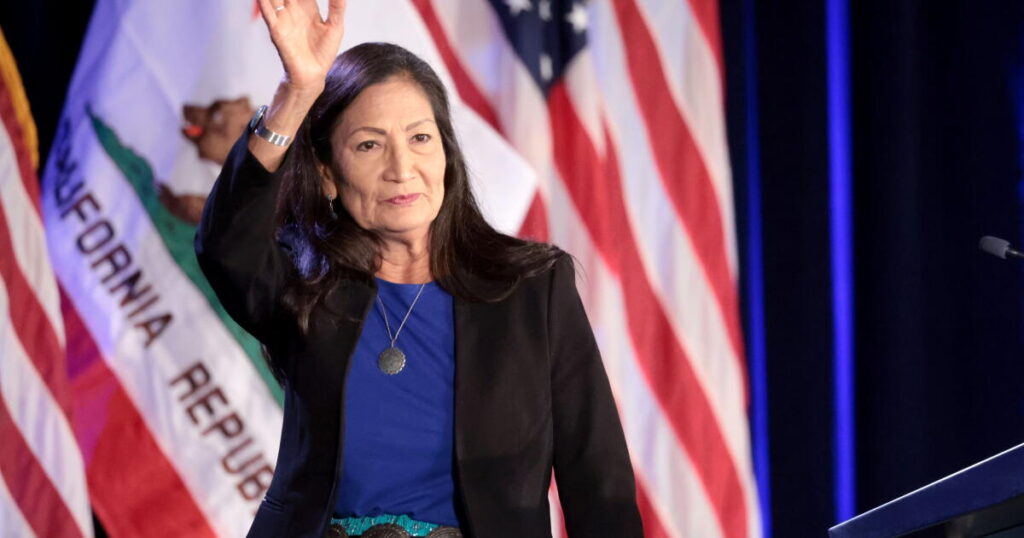
We must begin with the American electorate’s unapologetic embrace of diversity — or to put it another way, the embrace of merit: We elected the nation’s first Black and Native American female governors, the first Native American female U.S. senator, the first Black governors of Florida, Georgia and Wisconsin, the first Latino governor of California, the first Gen Z woman and first Black woman from Colorado as a member of Congress, the first openly gay male U.S. senator, the first Muslim U.S. senator and Mississippi’s first Black U.S. senator since Reconstruction. Colorado will have its second consecutive Jewish governor.
The Trump administration’s politically motivated backlash against D.E.I. has lassoed leaders of many of our elite educational institutions. Rather than defending diversity goals that universities have worked toward for years, these schools folded at the first sign of trouble — lending credence both to the ideas that D.E.I. was a progressive fad and that it was somehow a cause of the country’s woes. But the American electorate decided that fitness of office and service to the public are not compromised by the diversity of race, gender, sexuality or religion.
Many prestigious universities shamefully axed programs and policies that address entrenched legacies of racial, sexual, gender and religious injustice. Those institutions merely amplify the bigotry of an administration caught in the thickets of white supremacy, homophobia, antifeminism and white Christian nationalism. The electorate roundly rejected these biases and embraced a notable range of identities and ideologies in fielding an impressive political class.
Gallingly, craven educational institutions claim that because they have stopped promoting diversity, merit will once again determine who gains access to education and employment. Such a claim strains credulity. First, because the idea that merit alone has ever determined who gets what runs contrary to American history. That history teaches us that merit was not the basis of reward or punishment in slavery. It surely wasn’t at play when Black folks were subsequently excluded from schools, jobs, the military or professional sports. Merit didn’t factor in denying women or religious minorities entry to colleges and universities. And second, it was the diversity initiatives that prized merit over identity, seeking to move past the identity-based admissions and hiring that long filled campuses with straight, cisgender, white Christian men.
These institutions say they aim to eliminate incompetence and embrace rigor. Yet they offer academic cover to an administration riddled by vast ineptitude and professional mediocrity. The present administration has boosted a media commentator and a wrestling executive to Cabinet positions for which they are dramatically unqualified. The midterm electorate selected a new slate of figures who are physicians, scientists, educators, loggers, ministers, health executives and experienced state leaders whose merit is conspicuous to the public.
Many of our universities promote institutional neutrality, or the notion that a university should keep its nose out of politics that are unrelated to its educational mission. The university stays neutral to supposedly protect the freedom of faculty and students to express dissent or take controversial positions. In practice, institutional neutrality is hardly neutral. It favors the status quo. If one is in a car headed up a hill and it is put in neutral, it will roll back down the hill, suggesting that neutrality favors momentum and extends a given direction. Institutional neutrality often puts a gag order on universities to be courageous in the face of obvious injustice.
Diversity and meritocracy are not the only American values on which higher education has capitulated in the past two years. It is also cowardly for our universities to remain silent in the face of the fascist suppression of free speech on campus. Fear ripples through our campuses of the negative consequences of open protest of injustice or the scholarly opposition to authoritarian behavior. ICE threatens our comity; the Department of Justice curtails civil rights and scrutinizes visas, creating a chilling effect. Many officials in academia look away as our immigrant students are terrorized, our Black students are stigmatized as inferior and our Latino students are demonized.
Those “leaders” in higher education cut deals with a fiercely autocratic administration in acts of gross moral surrender and gutless political complicity. The electorate courageously rejected such immoral and corrupt practices and endorsed integrity and institutional commitments to fairness, justice and progress.
Many of our colleges and universities must recover our rightful mission and our collective souls amid the perilous abdication of our moral duty to educate the culture and the future. We must learn crucial lessons from an electorate that was fed up with the bullying and thuggery of a brutal demagogue.
The midterm elections of 2026 will go down as one of the most remarkable reversals of fortune in political history. But they may also mark the opportunity for higher education to reclaim its vocation as an inspiring incubator of helpful ideas for our society, rooted in humanity and conscience — and not obsequious cowardice.
Michael Eric Dyson is a professor of African American studies at Vanderbilt University and an author, most recently co-author of “Represent: The Unfinished Fight for the Vote.”
The post Voters stood up for diversity and merit, as universities failed to do appeared first on Los Angeles Times.