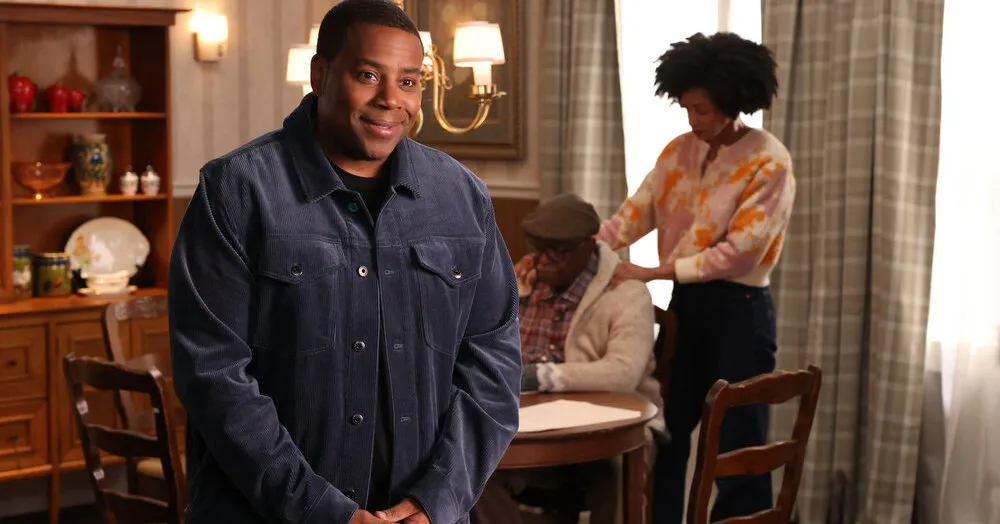
A “Saturday Night Live” sketch has been widely shared this week for satirizing the fact that it’s usually the sister — not the brother — who shoulders the load of caring for aging parents.
“‘Sister’ is a live-in, 24/7 elder care provider that is completely free and also your sister,” the comedian John Mulaney says in the fake ad, which aired over the weekend. “Now I don’t have to worry about Dad getting the care and attention he needs, because my sister will do it and I can get back to my life and the stuff I like to do.”
The joke hit close to home for many families, precisely because it’s so true. A variety of studies show that in general, daughters provide at least twice as much care as sons (and relatedly, that men have more leisure time).
“The best long-term care insurance in our country is a conscientious daughter,” wrote Stanford researchers in a commentary on dementia care in JAMA Neurology.
The “S.N.L.” sketch was basically the funny version of a study published in the American Sociological Review by Angelina Grigoryeva of the University of Toronto. She showed that daughters spend 14 hours a month, on average, caring for parents, compared with six hours for sons. Sons provide less care if they have sisters, and daughters provide more if they have brothers rather than sisters. And daughters are more likely than sons to provide care even if it conflicts with their work or child care demands.
Her paper was based on data from 2010, but she expects little has changed. (Other data shows that while more sons as well as daughters are providing care as baby boomers age, 60 percent of caregivers have consistently been women.)
“I think if there will be social change, it will take decades and not years,” she said. “But I hope that for the generation of our kids, men will be more involved sons, just like they’re becoming more involved fathers.”
As the population of older adults grows and the fertility rate declines, long-term care is a challenge for countries around the world. But the United States makes it particularly hard.
Other rich countries support family caregivers with policies like universal paid leave and cash benefits, and provide for aging adults with national long-term care insurance or subsidized at-home or residential care.
The United States has none of these at the federal level. It generally approaches caregiving, across the life span, as something for individual families to figure out for themselves.
Medicare mostly covers short-term medical needs, like recovering from a stroke or illness. It doesn’t help with long-term daily needs like bathing, dressing and meal preparation, which many people don’t realize, surveys show.
Medicaid, which provides insurance for low-income people, does cover long-term care — including nursing homes, home health aides and stipends for some family caregivers — but it doesn’t apply until someone has spent down savings, and there are often long wait lists.
Only 15 percent of Americans age 65 and older have long-term care insurance, and the market is shrinking while premiums are rising. Assisted living is often prohibitively expensive, and home health care workers are increasingly hard to find, in part because of low wages and deportations.
So for most families, the solution is unpaid relatives.
In the United States, seven in 10 older people get care only from relatives, according to research by Jonathan Gruber and Kathleen M. McGarry. If not spouses, they tend to be daughters — particularly those with higher levels of education and pay, because they’re more likely to have flexible jobs or to be able to take time off work.
Those daughters are rarely paid for their efforts, and often pay a price in their careers and well-being long term. In many other rich countries, older adults and their caregivers get more support.
Nearly two-thirds of high-income countries provide at least some paid leave for people to care for adult family members, according to the World Policy Analysis Center.
Northern European countries provide the most support for older adults. The Netherlands spends more than any country, 4.1 percent of its gross domestic product, compared with 1.3 percent in the United States, according to the Organization for Economic Cooperation and Development. Programs in the Netherlands include meal delivery, activities to combat isolation, dementia villages and respite breaks for family caregivers.
These more generous countries still rely on family caregivers — although research shows countries that spend more on care use less unpaid caregiving.
“We have all these different countries, they have very different systems set up to deal with long-term care, but regardless of what country you look at, the majority of care is provided by family members,” said Professor McGarry, an economist at the University of California, Los Angeles. “And everywhere it’s more likely to be daughters than sons.”
While there have been legislative attempts to increase support in the United States — including President Joseph R. Biden Jr.’s proposal to spend $150 billion to expand Medicaid’s home-based care coverage and raise wages for home health aides — they have not gained traction.
That’s why some people are happy that the “S.N.L.” sketch is bringing attention to the issue, as uncomfortable as it might be.
“I think this is an exciting step because it’s acknowledging that this is really true,” said Brigid Schulte, director of the Better Life Lab at New America. “We’re all kind of trapped in these roles, and then our public policies and workplace policies reinforce it, so we’re all laughing at being trapped in our own cages.”
Daughters do more of this work for many reasons. They’re socialized to be caregivers: “Years of internalized sexism warp Sister’s brain into thinking caretaking is her responsibility and somehow not yours,” as the “S.N.L.” sketch puts it.
Employers, and society at large, operate on the assumption that women do more caregiving than men, research shows. Also, researchers noted, women tend to outlive men, and aging mothers may feel more comfortable with a daughter helping them with more intimate forms of care. And many daughters want to help.
What could change, researchers said, is the involvement of men — especially brothers — and policies to support older adults and their family caregivers.
The post That ‘S.N.L.’ Sketch About Sister? It’s More Like Nonfiction. appeared first on New York Times.