President Trump has waged a fierce culture war in Washington during the first half of his second term, assailing some institutions and programs for their “wokeness” and trying to align them with his own agenda.
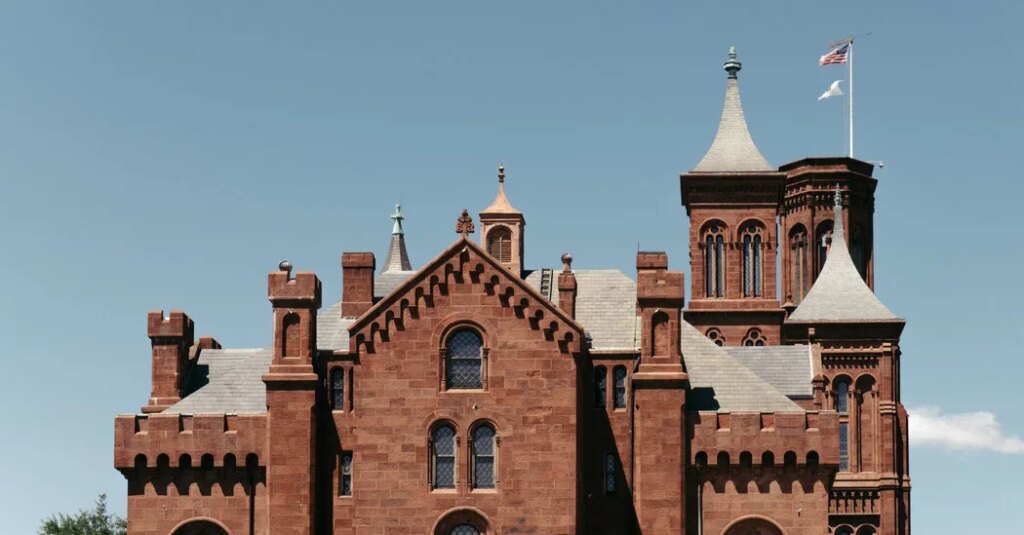
He tried to fire the director of the National Portrait Gallery and stamp out “improper ideology” at the Smithsonian Institution.
At the John F. Kennedy Center for the Performing Arts, he and his allies are fighting to put his name on the building, which was created as a memorial for a slain president.
He is also continuing to push for a two-year closure of the center’s main building for a $250 million renovation.
Those efforts, and others, have produced a few victories for the administration but have also been met with public protests, boycotts, legal battles and judicial injunctions. Now, after a major loss for Republicans in the midterm elections, Mr. Trump must also reckon with redrawn lines of power in Congress, where Democrats will soon have much more control over cultural funding, oversight panels and appointments to the Smithsonian’s governing Board of Regents.
Facing a searing vote of no-confidence from an electorate angered by high costs and the war in Iran, will Mr. Trump still want to spend time, energy and political capital fighting Democrats on cultural issues in Washington?
Mike Gonzalez, a senior fellow at the Heritage Foundation who tracks the White House’s cultural efforts, predicts the answer will be a very clear yes.
“More than any other previous conservative leader, Trump has understood the urgency of taking back the cultural ground that we lost to the left,” Mr. Gonzalez said. “I very much doubt that Trump is going to give up on the fight.”
But come January, the headwinds the president faces in transforming Washington’s cultural institutions will have gotten much stronger.
“It is an open question as to whether he accepts the reality that Democrats can really stop him from moving forward, and that the only way for him to have a long-term impact on these things is to work with Democrats,” said Robert White, a Democrat who was elected to the House as a nonvoting delegate for the District of Columbia and intends to get involved in oversight of its cultural institutions.
“Democrats in Congress are not going to roll over on this,” Mr. White said.
To be sure, both the Kennedy Center and the Smithsonian operate as largely private organizations, with their own governing boards. But they both are creations of Congress and rely heavily on federal funding. In the case of the Smithsonian, the institution’s citizen trustees — which account for nine of the 17 seats on its governing board — are appointed by the lawmakers and approved by the president.
The party in control can also set the narrative for congressional hearings.
This year, the Republican-led House held two hearings that gave voice to White House criticism of how the Smithsonian depicts American history. Few expect the incoming Congress to hold such hearings, which one ranking Democrat characterized as a “political witch hunt.”
Asked to comment on the Trump administration’s cultural initiatives going forward, a White House spokesman said in a statement that the president would continue to be focused both on “improving the nation’s capital” and “enacting his common-sense, America First agenda.”
Going into January, the Kennedy Center will be part of a long list of issues that Democrats are eager to investigate. For months, efforts to push back on changes at the center have been led by two Democratic legislators: Representative Joyce Beatty of Ohio, who is suing the center over Mr. Trump’s agenda, and Senator Sheldon Whitehouse of Rhode Island, who has led a yearlong investigation into the center’s affairs.
Soon, Democrats will have the power to subpoena documents and witness testimony from figures such as the Trump-appointed managers of the center.
Representative Chellie Pingree of Maine, the top Democrat on the House appropriations subcommittee that oversees funding for the Kennedy Center, said she will likely hold a hearing to confront center officials about the institution’s finances and construction plans under Mr. Trump. Ms. Pingree said officials have stonewalled her on key details, but now, “there’s no running and hiding.”
The governance of the Kennedy Center was laid out in legislation that Congress passed in 1958 to create the institution, originally called the National Cultural Center. The founding law gave the president of the United States the authority to select board members, a provision that empowered Mr. Trump to fire trustees en masse in early 2025. The new board then appointed Mr. Trump as its chairman.
Some Democratic lawmakers have discussed legislation that would reduce presidential authority over the center’s board.
“Congress created the governing structure of the Kennedy Center, and Congress could change the governing structure of the Kennedy Center,” said Michael Kaiser, who ran the performing arts venue for more than a decade.
Mr. Trump’s veto power would make adoption of such legislation unlikely. But in January, Democrats will have much more leverage in negotiating spending bills, including those that typically allocate about $1 billion for the Smithsonian and about $45 million annually to operate and maintain the Kennedy Center, a federal building.
“We have the power of the purse,” Ms. Pingree said.
Ms. Pingree said Democrats could, in theory, introduce a provision that explicitly blocks the demolition of the center — which Mr. Trump has entertained — without the approval of Congress. Or they could seek to withhold funding for the Kennedy Center if Mr. Trump’s name is put back on the building, she said.
For Mr. Trump, the restoration of his name to the center since it was removed in June by judicial order has become a core goal. Workers had added his name to the facade last December after a board vote, and Mr. Trump has argued that it was appropriate because of his effort to secure the $257 million from Congress that could fund a major, much needed overhaul of the building.
Then, in September, he issued a stark ultimatum: Unless an appeals court allows his name to be restored to the marble, he would cancel the major renovation for what he has called a “dilapidated” building.
His pursuit of such credit has not been popular, though, according to a mid-October poll by ABC News, Washington Post and Ipsos, which found that 80 percent of respondents thought it inappropriate for Mr. Trump to push to put his name on the center.
Jason Roe, a Republican strategist in Michigan, said that although the midterm results were likely founded in economic concerns, it did not help that Mr. Trump seemed to focus on matters that some voters might have viewed as a distraction.
“I think the president picked inopportune times to focus on his vanity projects,” Mr. Roe said. “And I think that just underscored the frustration of the electorate.”
At the Smithsonian, where Mr. Trump by executive order prohibited exhibits that “degrade shared American values,” congressional influence extends further. The House and Senate jointly appoint the nine citizens who serve on the institution’s governing 17-member board. Control of the board is central to Mr. Trump’s effort to overhaul the Smithsonian’s policies and personnel, and the president has announced his intention to find regents who are in accord with his thinking.
But six citizen regents have had their terms expire in the past eight months, and the board, quite unusually, has not forwarded the names of potential replacements to Congress. The board has not explained its reasoning, but three people familiar with the process have said it appeared to be because the people nominated by the bipartisan board were unlikely to win support from a Republican-led House or Senate.
The calculus changes in January, however, when Democrats take power. Mr. Trump would still be able to veto replacements, but it would be more difficult for him to get candidates who share his views through.
Though he has lacked the power to undo Smithsonian actions he disagrees with, Mr. Trump has still had an impact. His unsuccessful effort to fire the director of the National Portrait Gallery over what he described as partisan bias led the director, Kim Sajet, to resign.
Scrutiny of Smithsonian exhibits not only led to the congressional hearings about content at the National Museum of American History, but also convinced the artist Amy Sherald that the institution was preparing to censor a show she was planning for the National Portrait Gallery. Smithsonian officials denied that, but she canceled her show.
Just last week, Mr. Trump in a news release criticized the history museum, describing it as a “battleground” in a “campaign to undermine our founding principles and diminish our Nation’s extraordinary achievements.”
But much about the president’s agenda at the Smithsonian remains unfulfilled. Its leadership is largely intact. Though the Smithsonian’s secretary, Lonnie G. Bunch III — who has been a focus of White House criticism — announced in September that he would step down at the end of this year, Mr. Bunch has said it was simply time to leave.
Months after the White House ordered that $84,000 in signage be posted outside the history museum to warn against what it called “inaccurate information,” the signs have yet to materialize.
The White House has spoken of its ability to hold back the disbursement of congressionally allocated funds to the Smithsonian if it continues to buck the president’s program. But it has yet to withhold any money, and the Smithsonian, whose budget of about $1.8 billion largely comes from the federal government, has long been something of a sacred cow. The president proposed cutting its budget by about 12 percent in the 2026 fiscal year, but the Republican-led Congress did not go along.
Given the other pressing issues that are likely to become battlegrounds, it is possible that neither the Democrats nor the president will have much time to spend bickering over cultural programming or leadership.
“You can imagine a scenario in which Trump rediscovers his deal-making roots, recognizes that there are opportunities to forge some degree of bipartisan consensus and decides to ratchet down some of the most contentious fights,” said Howard Wolfson, a Democratic political strategist.
But Mr. Roe, the Republican strategist, said that Mr. Trump might relish a fight with Democrats over “wokeness” as a way to distract from issues that he views as having higher stakes.
“He might not lead with it in the same way that he has before,” Mr. Roe said, “but I would struggle to see him abandoning it.”
The post Trump’s Culture War, Amid Setbacks, Will Soon Face a Hostile Congress appeared first on New York Times.