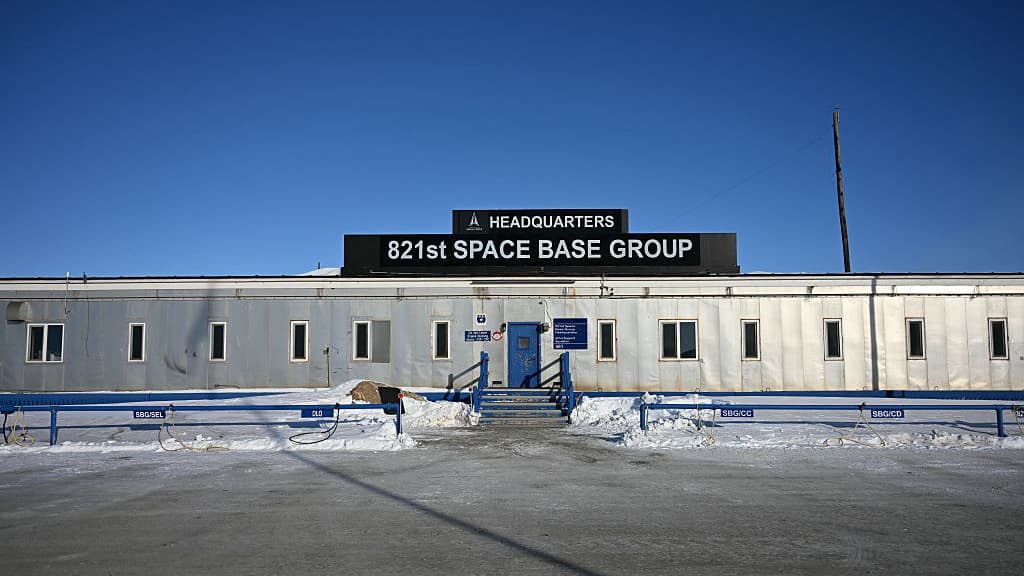
President Donald Trump began his second term in office by weaponizing European worries about being abandoned by the United States, attacking NATO, and threatening to annex or buy Greenland, the semi-autonomous territory of the Kingdom of Denmark.
On Sept. 22, Trump got much of what he wanted, short of sovereignty. He signed an agreement with Denmark and Greenland on the future of U.S. presence on the island. In a speech at the United Nations, Trump described the deal as offering the U.S. “permanent control over security and all other needs on that territory,” and forbidding American adversaries from establishing a “military presence” or making “sensitive investments” there.
The deal aims to address the limitations of the 1951 agreement that governed the U.S. security relationship with Greenland and counter the growing threat posed by Russian and Chinese activity in the Arctic. The new agreement increases American presence on the island through the expansion of two military installations. Whether it adequately addresses U.S. national security concerns remains to be seen. But it does resolve one of the disputes that have strained relations within NATO since President Trump’s return to office. And it reflects America’s short-term approach to coercing allies in the Trump Era.
For now, the acute phase of the Greenland crisis appears to be over. Denmark’s ambassador to the U.N. described the deal as “good” for all parties, as well as for “international peace and security.” Some observers, irrespective of their views on the methods used to secure the agreement, have emphasized that the deal does advance U.S. national security interests. As Americans voted in midterm elections that gave Democrats control of both houses of Congress, Greenland’s legislature approved the September agreement. Trump hailed the Greenland deal as Europe giving the U.S. the “greatest gift we were ever given.”
Seventy years earlier, another American election coincided with a crisis between Washington and two of its closest allies, Britain and France, over their invasion of Egypt and seizure of the Suez Canal. Washington coerced its allies to withdraw their forces. Judged by its immediate aims, the coercion succeeded. But the longer-term costs of American coercion of allies offer a warning.
Even if the Greenland crisis remains resolved, a big if, the consequences of Washington’s coercion, like those of its intervention in the Suez crisis, are likely to reverberate throughout the alliance for years to come. The historical parallels are imperfect, but earlier episodes of U.S. coercion against allies offer clues to what might follow.
The U.S. has occasionally used coercion to resolve disagreements with allies. When it has, Washington has typically made its demands and their limits clear: it specified the policy outcome it sought, confined its pressure to the issue at hand, and promised a return to normal relations once the allies complied. In short, Washington offered a path back. The American nuclear non-proliferation policy illustrates this approach. In the 1970s, the U.S. used threats of abandonment, among other forms of pressure, to prevent South Korea from developing a nuclear weapons program.
The Trump Administration’s coercion has typically lacked those limits. Its pressure spills across policy areas, from trade relationships to state sovereignty. What’s more, it often lacks a clear, stated objective and offers no obvious path back. The administration has yet to articulate a positive vision for America’s alliances. In these ways, coercion under Trump differs in kind from that wielded by his predecessors. The resulting damage to America’s alliances is likely to endure long after the immediate disputes are settled.
Ghosts of the past
Even cases of conditional American coercion show how alliance cohesion can shift in ways the U.S. did not anticipate. In July 1956, President Gamal Abdel Nasser of Egypt proclaimed, “The Suez Canal belongs to us! And it will be run by Egyptians! Egyptians! Egyptians!” Nasser nationalized the Suez Canal Company, the international enterprise that had operated the canal since 1869.
In the fall of 1956, as President Dwight Eisenhower campaigned for a second term, Britain partnered with France and Israel, invaded Egypt, and seized the northern end of the Suez Canal, a lucrative and vital waterway for international trade. The invasion of Egypt by American allies came at the height of the Cold War. The Eisenhower Administration worried about Soviet intervention in the Mediterranean should the conflict become prolonged, and Eisenhower wrote in his memoirs about the potential damage to the “interests of the entire Free World.”
President Eisenhower launched a coercive campaign against Britain and France with the aims of establishing a ceasefire and then the withdrawal from Egypt. In the aftermath of World War II, Britain was heavily indebted, and the pound’s role as an international reserve currency made it vulnerable to a run. The British pound came under pressure.
Washington squeezed Britain’s finances and oil supply until its allies agreed first to stop their military campaign and then to withdraw from Egypt. Britain accepted a ceasefire on Nov. 6, the day of the U.S. presidential election, and France, unable to continue without its ally, followed.
George Humphrey, who was the Secretary of the Treasury at the time, told the British ambassador, “You are like burglars who have broken into somebody else’s house. So get out! When you do, not until then, you’ll get help.” Only once London announced the withdrawal in December did relief follow, including a large IMF drawing. The withdrawal of French and British forces from Egypt came to symbolize their decline as imperial powers.
Washington saw its coercive campaign as a success. Britain and France halted their operations within days and withdrew their forces by Dec. 1956. But over time, the episode propelled the two countries along divergent paths: Britain deepened its reliance on the U.S., and France sought greater autonomy.
The different British and French strategic choices were shaped by the options each country had and whether backing down discredited only a leader or an entire policy direction. Britain already had the bomb, having conducted its first nuclear test in 1952, but nuclear weapons could not protect against the financial pressure Washington had applied. And Britain had already walked away from the negotiations on European integration in 1955.
With no other alternatives to fall back on, it chose to rebuild its standing in Washington, a bet that paid off with the 1958 U.S.-U.K. Mutual Defense Agreement. In London, backing down cost Prime Minister Anthony Eden his job, but left his party in power to double down on the relationship with Washington.
In Paris, where the invasion had broad support, capitulation discredited an entire policy direction. France also had alternatives: a nuclear program underway and a European path with a willing partner in West Germany. The French turn toward Europe gained urgency on Nov. 6, 1956. West German Chancellor Konrad Adenauer was in Paris that day to discuss the European project; his meeting with French Prime Minister Guy Mollet gave momentum to the negotiations that produced the Treaty of Rome the following March.
“Europe will be your revenge,” the West German leader told the French, according to Christian Pineau, France’s foreign minister at the time. Within a decade of Suez, France had also tested its first nuclear weapon and announced its withdrawal from NATO’s integrated military command.
These policies survived the collapse of France’s Fourth Republic and the advent of its Fifth Republic, as France continued to pursue greater independence from the U.S. Two decades after the crisis, Pineau, hardly an impartial observer, wrote that the French public backed Charles de Gaulle’s withdrawal from NATO’s integrated military command because the French people had “lost confidence” in American commitments. In his view, the French felt abandoned by Eisenhower. “The Suez affair had made the French forget the amphibious invasion of Normandy and the Marshall Plan,” Pineau observed.
The price of American coercion
President Trump antagonized America’s closest allies during his first term, but he has intensified his coercive campaigns against them since returning to the White House in January 2025. His threats to acquire Greenland led the Danish government to plan to blow up runways on the island and fly in additional supplies of blood in preparation for a possible American invasion.
Trump has spoken about making Canada the 51st state of the U.S., signed an executive order renaming Lake Ontario as Lake America, levied a series of tariffs, and has banned several Canadian products. He has done so with constantly shifting rationale and no clear path for restoring the bilateral relationship.
It is too early to know the lasting consequences of these coercive campaigns. Although Denmark ultimately reached a deal with the United States, the way it weathered the crisis is telling. Copenhagen built a European coalition around Greenland, with military personnel from Finland, France, Germany, the Netherlands, Norway, Sweden, and the United Kingdom deploying alongside Danish forces, and France opening a consulate on the island.
Canada may already be following the path of greater autonomy from America that the French took after Suez, although it is yet unclear whether that shift will outlast the immediate dispute, survive a change in leadership in Washington or Ottawa, or endure over time. Prime Minister Mark Carney of Canada is already hedging.
Ottawa signed a security and defense partnership with the European Union in June 2025. In February, Canada became the first non-European country to join SAFE, the European Union’s €150 billion ($164 billion) loan program for defense procurement. Canadian officials have framed the decision partly as a way to secure market access for Canadian industry, but the direction of travel is clear.
Many American allies today resemble France of the 1950s and the 1960s more than Britain in ways that matter most. They have both a motive to hedge and partners—often targets of U.S. coercion themselves—willing to hedge with them. In 1956, “Europe” was a nascent project. Now, it is an institution with its own defense funds and procurement programs. In the 1950s and 1960s, American allies had few alternatives in a bipolar world. Today, changes in the global balance of power are testing American predominance and could offer these allies new partners, including China.
And much as de Gaulle pursued closer ties with the Soviet Union in the 1960s without leaving the Western camp, American allies need not shift the center of gravity of their foreign policies toward China. Carney, who described China as the biggest security threat to Canada during his 2025 campaign, traveled to Beijing in January 2026, cut tariffs on Chinese electric vehicles, and spoke of China as a more predictable partner.
Not every ally will follow that course. Allies that depend most directly on U.S. forces for their survival may hedge more slowly, if at all. The result could be a divided alliance network, with some members hedging against American power and others continuing to hang on.
American coercion during the Suez crisis directly targeted two allies, but it also sent a signal to others. West Germany watched as the U.S. mounted a sustained economic and political pressure campaign against two of its closest allies. In Pineau’s telling, Adenauer shared his French counterparts’ doubts about American guarantees and urged them to focus on European integration. Today, the entire network of American allies is watching as the Trump Administration subjects one friend after another to coercion. The European deployments to Greenland suggest that some are already drawing conclusions and acting on them.
One can draw some comfort from NATO’s survival despite the tensions that have strained the alliance since Trump returned to office. But France did not formally leave NATO after the Suez crisis. It scaled back its role within the alliance. In a decade, the U.S. may find that its allies remain bound to it on paper but have so thoroughly hedged against American power that America’s leverage and influence have fundamentally eroded.
Once upon a time, America had a vast network of allies and partners whose capabilities it could draw on, whose markets it could access on cooperative terms, and whose support it could count on in a crisis or war. America might now find itself increasingly alone. Some of this hedging will likely be reversible, especially if the new Congress takes a more active role in foreign policy and checks an administration that indiscriminately coerces allies to secure short-term, transactional goals. But some of the damage will outlast both the Greenland crisis and the Trump Administration.
Diplomatic warmth can return with a new administration, as it did when Joe Biden became president in 2021. But procurement programs, supply chains, and institutional commitments such as SAFE, with provisions favoring European suppliers, can bind allies to new partners for years to come. Future American administrations seeking to repair these relationships will be forced to compete for the loyalty of their allies. They will not be able to simply reclaim it.
The post The Greenland Test: What Follows When America Coerces Its Allies appeared first on TIME.