Colonial Williamsburg, which has spent a century cultivating its role as a living history museum for the Colonial era, is unveiling an ambitious $600 million expansion Monday that includes a bigger focus on the Constitution and the Bill of Rights.
The Colonial Williamsburg Foundation, which runs the museum, is announcing the five-year expansion plan to mark its 100-year anniversary. It will not only involve physical improvements to the 301-acre landscape of Virginia’s former capital but also establish a National Institute for the Constitution and Civic Virtue.
Author and constitutional scholar Jay Rosen will lead the new institute, the foundation said in announcing its plans. Former federal judge J. Michael Luttig and his wife, Elizabeth, are contributing $10 million to the institute, which will sponsor a lecture series among constitutional experts in Williamsburg, D.C. and various places around the country. Luttig, a vaunted conservative, is known for advising Vice President Mike Pence that he lacked the constitutional authority to overturn the 2020 election, despite pressure from President Donald Trump.
In some cases, Rosen and panelists will interact with Williamsburg’s historical interpreters who research and portray figures from history such as Thomas Jefferson and George Wythe.
“We enter our second centennial with an investment plan and a programmatic plan that really allows us to fulfill our mission so that the future may learn from the past and inspire a season of civic renewal,” foundation chief executive Carly Fiorina said in an interview. She added that the money for the initiative was raised from 180,000 individual donors.
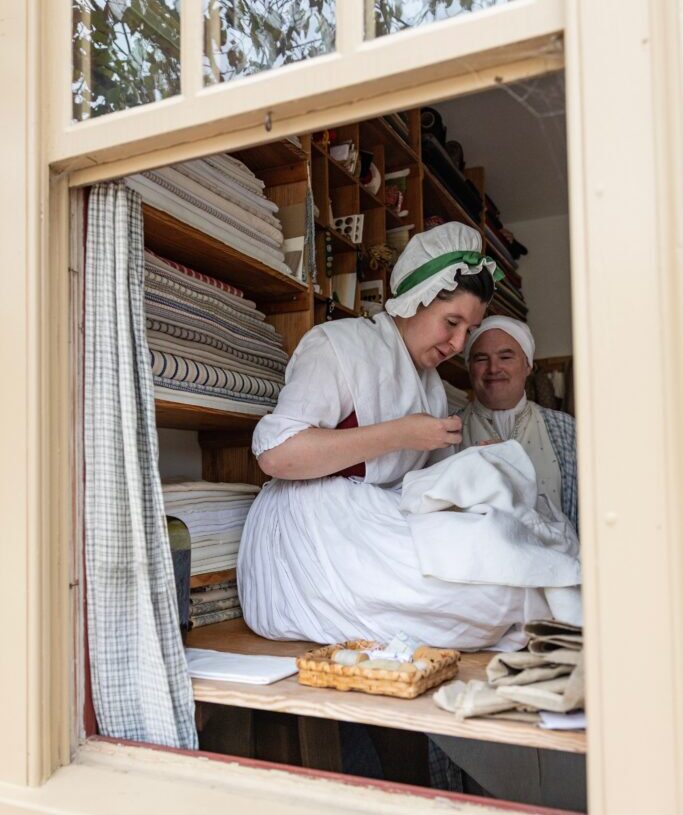
The five-year plan, which culminates in 2031 with the 250th anniversary of the 1781 British surrender at Yorktown, also includes new investment in historical interpreters and traditional tradesmen, such as blacksmiths, furniture makers and others who practice Colonial-era crafts. The foundation also will increase educational offerings in areas such as archaeology, food and horticulture, according to the announcement.
New reconstructions of period buildings are planned for the coming years as well as sweeping changes to the city’s landscaping, officials said. Those will join other attractions that opened this year, such as a multimillion-dollar archaeology center, a reconstruction of the Bray School for enslaved children and the opening of an African Baptist Meeting House on the grounds of an early Black church.
The Colonial Williamsburg Foundation dates its origins to 1926 — particularly to a Dec. 7 telegram from philanthropist John D. Rockefeller Jr. in which he authorized the rector of Bruton Parish Church to purchase an 18th century house on the central Duke of Gloucester Street. That kicked off Rockefeller’s comprehensive effort to buy and restore properties throughout Williamsburg.
At the time, Williamsburg was a sleepy Southern town whose Revolution-era architecture was concealed behind facades of gas stations, grocery stores and modernized private homes. Throughout the 1920s and 1930s, structures from the Civil War era and later were torn down, and Colonial-era buildings were either restored or reconstructed.
Today, Colonial Williamsburg looks like the Virginia capital of 1776 when George Washington, Thomas Jefferson and other founders debated breaking free from Great Britain. The attraction has at times struggled to adapt to the digital age, and it has only recently emerged from a period of financial difficulty and declining attendance.
Fiorina, the former chief executive of Hewlett-Packard, has served on the foundation’s board for a decade and took over as chief executive earlier this year.
The post Colonial Williamsburg unveils $600 million upgrade for its 100th birthday appeared first on Washington Post.