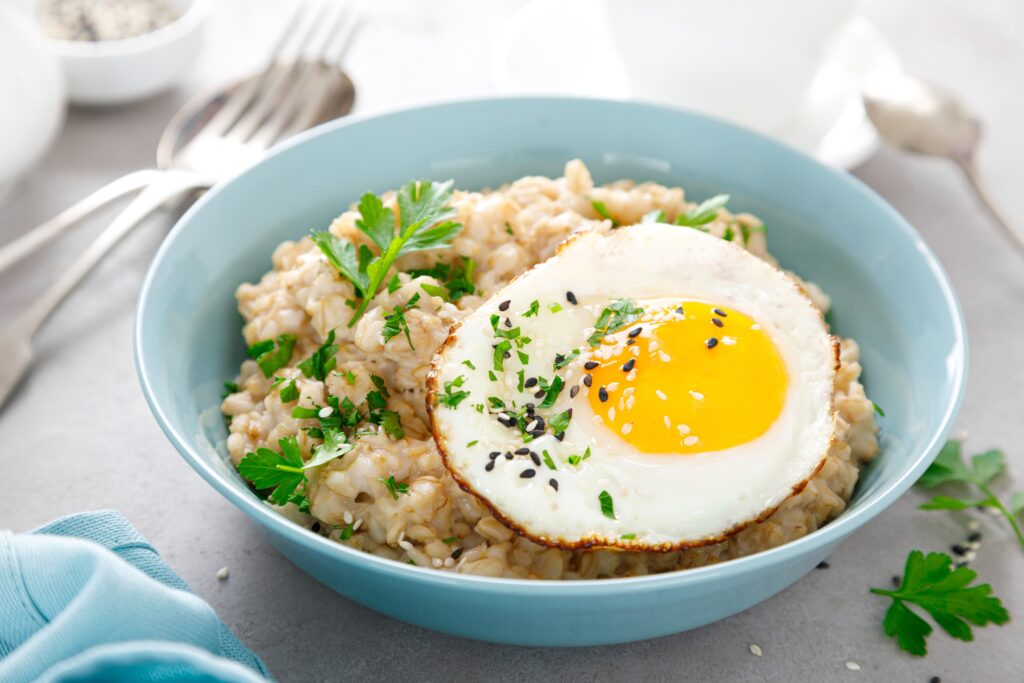
With breakfast’s long-standing reputation as the “most important meal of the day,” it can feel like there’s a lot of pressure to get it right. Ask nutrition experts what to eat in the morning, and you’ll probably hear plenty of praise for eggs and oatmeal. But is one better for you than the other?
Both are quick and easy to make, but they bring different things to the breakfast table. Eggs are typically savory, while oatmeal often gets the sweet treatment. One comes from an animal and the other is a whole grain. Depending on your health needs and what you’re looking for nutritionally, either one might have the edge. How you prepare them can make a difference, too.
The reality is that neither food is perfect for every person, in every situation. Eggs are protein-rich but missing fiber, while oats offer fiber but less protein, said Elizabeth Klingbeil, a registered dietitian and assistant professor at the University of Texas at Austin and a national spokesperson for the Academy of Nutrition and Dietetics.
Both deserve a place in your diet if you enjoy them — and where one falls short, the other can step up to fill the plate.
How they affect cholesterol
Oatmeal can help lower low-density lipoprotein (LDL) cholesterol, known as the “bad” kind, said Lindsay Malone, a registered dietitian and instructor at Case Western Reserve University in Cleveland.
A type of soluble fiber called beta-glucan — that’s also found in other foods including mushrooms and barley — drives that effect. “This fiber binds to bile in your digestive tract and then, to make more bile, you actually break down cholesterol,” Malone explained. Your liver uses cholesterol from your bloodstream to produce more bile acids, helping lower your LDL levels. In one study, people who took an oat beta-glucan supplement saw their LDL fall after four weeks.
Eggs, meanwhile, provide a combination of protein and fat — mostly the unsaturated kind. Replacing saturated fat with unsaturated fat in your diet can also help lower LDL cholesterol.
Eggs do contain some saturated fat, which can raise LDL levels. It’s in the yolk, so if you’re cutting back on saturated fat — whether you have high LDL, heart disease runs in your family or you simply want to look after your heart — using more whites and fewer yolks is one option, Klingbeil said. So is cooking your eggs in olive or avocado oil instead of butter.
As for the cholesterol in eggs, its effect on blood cholesterol is more complicated than you might think. “Dietary cholesterol from foods does not necessarily change your personal cholesterol,” Malone said. It can raise LDL, but the response varies from person to person.
The American Heart Association says moderate egg intake can fit into a heart-healthy diet. However, it advises people with abnormal cholesterol levels to be cautious about foods high in dietary cholesterol, especially if they also have diabetes or are at risk for heart failure.
How they compare on protein, vitamins and minerals
Two large eggs have about 12 grams of protein, compared with about five grams in a half-cup of dry rolled oats. The protein and fat in eggs can help you feel full, Klingbeil said. The fiber in oatmeal helps tide you over, too, and adding a source of protein can make it an even more filling breakfast.
Eggs also contain all nine essential amino acids your body needs but can’t produce itself, making them a complete protein. Oats are lower in some of those amino acids, but they can still play a part in helping you meet your daily protein needs, Klingbeil said.
Both foods provide folate and iron. Eggs have more folate, while oats have more iron.
Eggs also offer some important nutrients you won’t get from plain oats. They’re one of the few foods that naturally contain vitamin D, which helps your body absorb calcium and keeps bones strong. They also provide vitamin A, which supports skin health, and lutein, a carotenoid that supports eye health, Malone said.
Eggs don’t have it all, though. They’re missing something oats have in spades: fiber, in both its soluble and insoluble forms.
If you want more fiber
Oatmeal has the edge over eggs when it comes to your gut health, Klingbeil said. Its two types of fiber do different jobs. Some soluble fiber feeds helpful gut bacteria, while insoluble fiber adds bulk to your stool and helps keep you regular.
The exact amount of each type varies by brand and how the oats were processed, Klingbeil said. Steel-cut, rolled and quick oats all give you some of both.
A half-cup of dry rolled oats, for example, has about four grams of fiber, or roughly one-seventh of the FDA’s daily value of 28 grams. Topping your oatmeal with other fiber sources like berries, nuts or seeds can help you get closer to that recommended amount. (Eggs have no fiber, so pairing them with fiber-rich foods is another way to work toward that goal.)
If you’re watching your blood sugar
A bowl of oatmeal and a plate of eggs can affect your blood sugar differently. What you eat with them can make a difference, too.
On their own, eggs have little immediate effect on blood sugar because they contain so few carbohydrates, Klingbeil said. With oatmeal, your blood sugar will generally rise more, especially if you’re having a sweetened variety.
The fiber in oats can temper that rise, though, by slowing how quickly sugar from the meal enters your bloodstream. If you prefer oatmeal, Klingbeil suggested starting with plain oats and pairing them with a source of protein, like the options below, which can help slow the rise in blood sugar.
The bottom line
There’s room for eggs and oatmeal in your healthy breakfast rotation. You can add fiber to scrambled eggs or omelets with vegetables like spinach and steamed broccoli, or a side of fruit or whole-grain toast. It’s also easy to give your bowl of oatmeal a protein boost by cooking it with milk or stirring in (or topping it with) Greek yogurt, Klingbeil suggested.
You can also combine the two. Malone is a big fan of whisking egg whites into oatmeal toward the end of cooking, then keeping it on the heat and stirring until the whites are cooked through. This adds protein and gives her porridge a light, meringue-like texture — she skips the yolks because they can make the oats turn out more like scrambled eggs. She also swears by baked oatmeal recipes for busy mornings. They’re easy to make ahead and typically call for whole eggs, so you get some extra protein from the yolk.
Most importantly, make your breakfast something you actually look forward to. “You want someone to want what they eat, not just to eat it because it’s prescribed to them,” Klingbeil said. Depending on your dietary needs, that might mean cooking your omelet in a little butter or drizzling maple syrup over your oatmeal. A good breakfast gives you some of the nutrients you need, helps keep you full and is exciting enough to get out of bed for.
The post Eggs vs. oatmeal: Which breakfast is better for you? appeared first on Washington Post.