Mark Regnerus is a professor of sociology at the University of Texas at Austin.
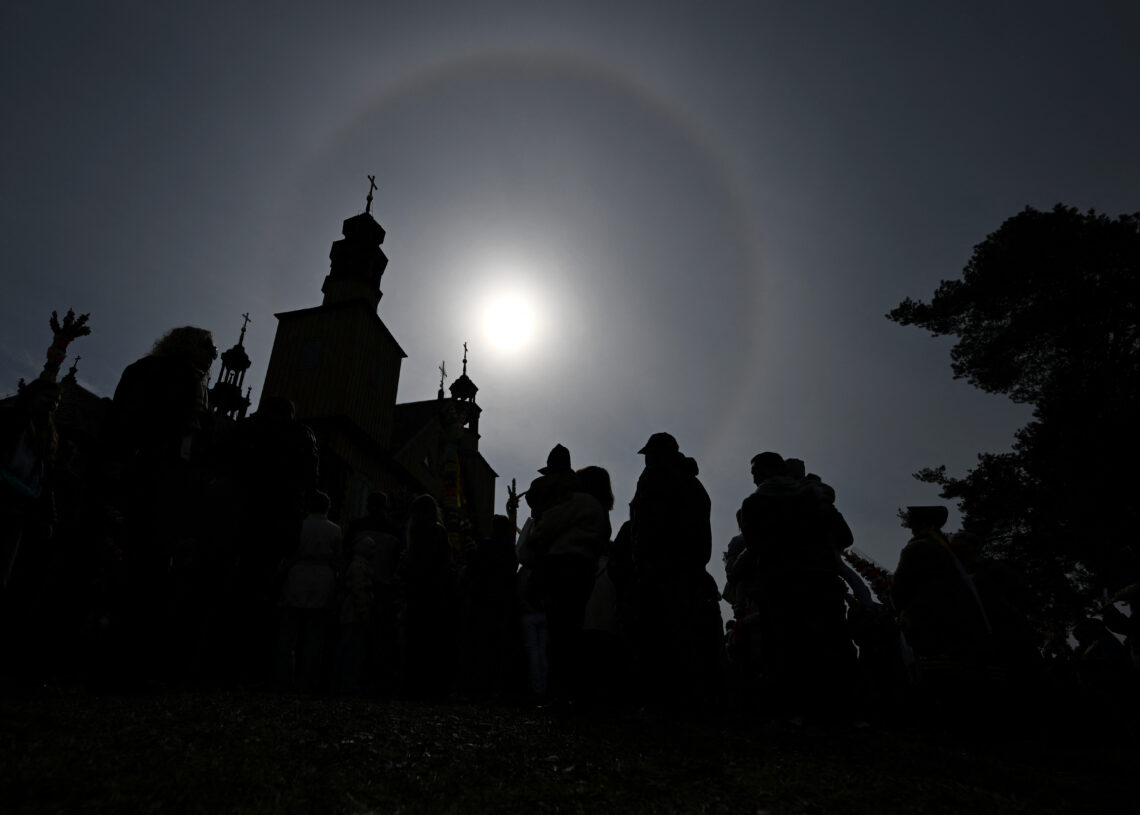
Catholicism has been tied to Polish identity for more than 1,000 years, from the baptism of Prince Mieszko I, founder of the first unified Polish state, in A.D. 966 to the election of the Polish-born Pope John Paul II in 1978. The church was not only the conscience of a suffering nation during decades of Soviet rule but also the locus of opposition to its oppressors. When Jerzy Popieluszko, a priest involved in the Solidarity movement, was killed by members of the Polish secret police in 1984, more than half a million mourners gathered for his funeral.
Not long after Poland’s communist government collapsed in 1989, however, the church’s once-unifying magnetism began to dissipate. Today, a generation that never knew John Paul II has turned away from the church. About 30 percent of the country’s population attends Mass weekly, down more than one-third since the turn of the millennium. The dip is most pronounced among millennials and Gen Z. Baptisms are down 34 percent since 2019, and marriages are down 45 percent. Priestly ordinations are also plummeting. The Archdiocese of Krakow, where John Paul II served for more than 30 years before ascending to the papacy, witnessed only four diocesan ordinations this year in a region with 450 parishes.
How did Polish Catholicism get here? Certain answers are more compelling than others.
Some suspect recent political polarization, which has crippled the national conversation in a manner not unlike that in the United States. Poland’s most popular conservative party — long associated with the church — is entrenched in a feud with a coalition headed by Prime Minister Donald Tusk, now more progressive and aggressive than he was in the same role a dozen years ago. A shooting in Krakow earlier this month has fueled suggestions that social and even family ties are fraying.
Others blame the Polish Catholic Church’s handling of sex-abuse claims. Indeed, there is an overdue reckoning with priestly sexual abuse underway. Young adults are demanding better from the church. But even this is not a sufficient explanation. Nor can the coronavirus pandemic be blamed. Though it stalled the sacraments for a time, a virus is not responsible for the lack of recovery.
Appealing as these theories might seem, the alienation many feel from the Polish Catholic Church is connected to a more unexpected cause: the way Polish Catholics have responded to economic success and market penetration. Poland’s gross domestic product has grown, on average, just under 4 percent annually over the last 20 years, marking the highest year-over-year growth among large European nations. Warsaw, destroyed in the wake of its valiant second uprising in August 1944, is now a top-performing urban economy among post-Soviet satellite states.
Ironically, the Soviet Union fueled Poland’s embrace of modern, market-oriented society. The postwar mass relocation of Polish citizens from east to west, to an area dubbed the “Recovered Territories,” weakened social ties, allowing for a more individualist society. Today, the western region of the country includes many of the most cosmopolitan and progressive parts of Poland. It’s also among the most economically successful and least religious.
But it is wrong to blame markets for Poland’s loss of faith. Surging education and housing costs have delayed matrimony and diminished childbearing, the central feeder of faith and religious participation. Market reforms could cut the price of these goods. The average Polish woman is now anticipated to give birth to 1.07 children over her lifetime. The median marriage now yields one child, just as in China, where fertility was long restricted by the one-child policy.
Poland spent much of 1983 under martial law. But in that year there were twice as many marriages as there were in 2023. When I asked the head of a Warsaw think tank why marriage seemed more stable in Poland’s communist era than today, he pointed to the economy. “It was a communism of poverty,” he observed, an era that pressed people to depend upon each other.
But no one would choose to go back to that period. In Poland — and in much of the West — the church has failed to respond to rising affluence and increased mobility. Faith and economic progress can go together, as demonstrated by the experience of the relatively prosperous and religious United States. But the lessons of the American experience, in which churches respond to market pressures rather than simply lamenting their rise, have not been absorbed globally.
Lower housing and education costs can also encourage family formation. The sequence of marriage, birth and child-rearing once tied people to the church. If family prospers, so will faith. There is much talk of religious revival in the West, especially among Gen Z. Data show that there has indeed been a surge in young-adult baptisms in secular France and Spain. But if marriage and fertility rates there fail to climb alongside new interest in the sacraments, expect any Catholic revival to be brief and Poland’s flight from the faith to continue.
The post Why Poland is losing its Catholic identity appeared first on Washington Post.