Some of America’s most influential leaders will soon gather in Detroit for the Fortune 500 Innovation Forum to discuss innovation, the pace of change and what it takes to compete. In classrooms across the same city, the workers their companies will need a decade from now are hearing about careers they may never get to try.
When Detroit Future City and The Skillman Foundation surveyed 83 young Detroiters in 2025 about career exposure, 78 percent said they had heard from a guest speaker or professional mentor. Fewer than half had done an internship or paid work experience. Just 35 percent had received hands-on training.
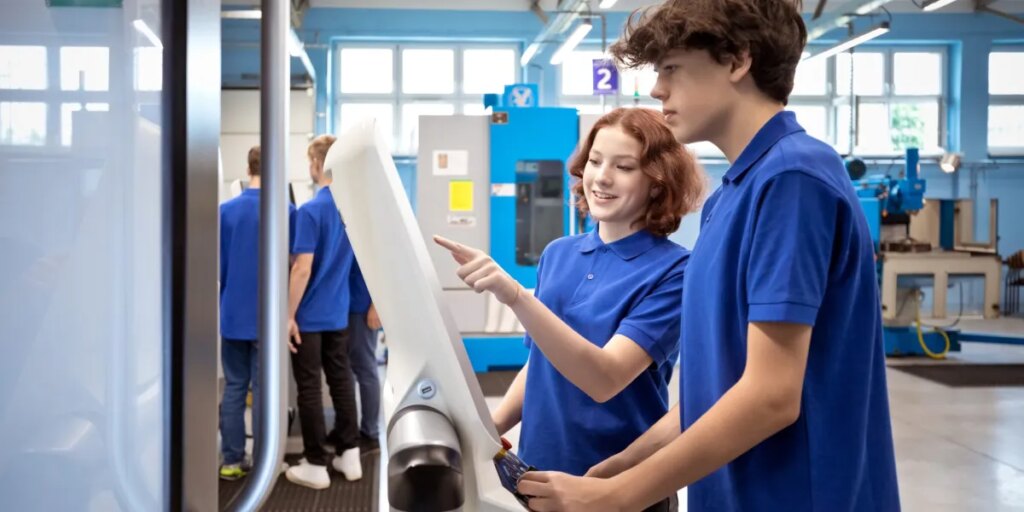
Detroit’s teenagers are not short on talk about work. They are short on chances to do it.
Jordan, a composite of students in our focus groups, shows what that costs. At 14, she loved sketching buildings, rooms and imagined cities. But no one suggested her interests might point toward a career in architecture or design. She discovered architecture years later, by accident, and realized there were pathways she could have explored in middle school.
Her story is common. A student who loved performing did not learn about physical therapy until nearly graduating. A true crime enthusiast had no idea criminology was a career. Students in skilled trades programs wished they had discovered those opportunities earlier.
Talent is not the problem. The pipeline is.
Some youth are best suited for college, while others may pursue careers directly after high school. Both need opportunities to explore options and find a path forward.
Across the country, employers report trouble finding the right skills and experience. In a 2025 U.S. Chamber of Commerce survey, just 38 percent of hiring managers said finding candidates with the right skills was easy; 37 percent said the same about experience. The report, produced with the College Board, also found that 84 percent believe most high school graduates are not workforce-ready.
That points to a blind spot. Workforce programs focus on the late stages: choosing a major, enrolling in training, applying for a job. By then, young people like Jordan have already formed assumptions about which careers exist and where they belong.
We are trying to solve the talent problem at the end of the journey instead of the beginning.
Our May 2026 report, which Skillman funded, started with young people themselves: surveys and focus groups with nearly 200 Detroit youth, along with conversations with educators, employers and community leaders.
What we heard was consistent: Young people want earlier career exposure, mentors to explain different pathways and opportunities to connect school with the world beyond it. They are not asking adults to decide their futures. They want the possibilities to be more visible and accessible.
That is not just a Detroit challenge. According to NAF’s 2025–2026 Student Survey, 47 percent of students who did not participate in work-based learning cited a lack of awareness of available opportunities. Meanwhile, 79 percent of students who participated said those experiences helped them identify and develop skills for their future careers.
Exposure alone is not enough. In Detroit, talk is plentiful and practice is scarce.
Closing that gap is where business can make a significant difference.
Businesses can build on Career and Technical Education programs by offering workplace exposure, mentors, internships, apprenticeships and other forms of work-based learning. These experiences help students test their interests, build skills and understand career requirements.
Apprenticeships show the payoff. According to the U.S. Department of Labor, more than 800,000 people participate in apprenticeship programs annually nationwide. And the department’s April 2026 ApprenticeshipUSA fact sheet reports that 93 percent of apprentices who complete their programs retain employment, demonstrating the value of connecting education with hands-on experience and career opportunities.
Business cannot do this alone; educators, workforce organizations, higher education, philanthropy and community partners all have roles. The goal is to help young people see their options, not steer them toward one path.
Detroit is already putting this approach into practice.
Detroit Public Schools Community District’s High School Redesign strengthens connections between education, career exploration and life after graduation. Beginning in the 2026–27 school year, it expands advising, academic supports and college- and career-connected experiences across neighborhood high schools.
Henry Ford Health’s RYSE MED program offers another example, providing hands-on opportunities to explore careers in medicine and health care. From 2022 to 2026, the program enrolled 120 high school students, including 45 who attended DPSCD schools.
If businesses want stronger pipelines tomorrow, they cannot wait until students graduate to begin building them. They need to become visible earlier, in classrooms, in after-school programs, in summer internships, in middle schools, through meaningful opportunities for young people to learn by doing.
Detroit’s executives will spend the Forum talking about innovation. The students in the city around them are already hearing plenty. What they need is the chance to try the work, and business can give it to them.
Names and some identifying details have been changed to protect the privacy of youth research participants. Jordan is a composite based on real focus group accounts from the authors’ research and does not depict any one participant’s account verbatim.
The opinions expressed in Fortune.com commentary pieces are solely the views of their authors and do not necessarily reflect the opinions and beliefs of Fortune.
The post Detroit’s innovation lesson: what kids hear about careers vs. what they actually do appeared first on Fortune.