It’s been a very good year for Stéphane Bancel. On a crisp October day, the CEO of Moderna, of COVID-vaccine fame, is sitting in his glass-walled office in the company’s headquarters in Cambridge, Mass., weeks before encouraging results from the company’s first mRNA cancer vaccine would become public. He’s recounting the biotech’s rocky road turning an unproven, scientifically dismissed approach—using messenger RNA, or mRNA, the genetic code that instructs cells to make proteins—into a platform for producing new categories of medicines.
Fifteen years ago, Bancel had his doubts. At the time, there were no approved mRNA-based products on the market, and most scientists would have agreed that mRNA was too unstable to form the basis of a new class of medical treatments. In fact, the entire biotech industry had bet—successfully—on manipulating another, more reliable genetic material: DNA.
“It was crazy to think of using mRNA as a drug,” Bancel reflects. But that was before a fateful meeting forced him to look at the genetic material in a different way, and realize that with the right manipulation, mRNA provided a way to make drugs that were never possible with existing strategies. Now, he believes that nearly any protein drug made today with existing, recombinant DNA technology can also be made using mRNA.
The company’s goal isn’t to follow the usual road map and make one type of drug for one disease at a time, but to build a new platform from which a variety of different treatments can be developed in a plug-and-play scenario—similar to how the computer-technology industry is built on the foundational hardware and operating systems around which a whole universe of software has blossomed. “mRNA is the information molecule, so if you find the way to safely and effectively get it into the right cells, you can unlock a lot of medicines to help people’s suffering,” says Bancel.
Moderna’s mRNA COVID vaccine saved an estimated 2 million lives globally—while earning the company $46 billion—from 2021 to 2024. This fall, people are getting its newly approved mRNA flu shot, the first of its kind. And in October, Moderna announced with Merck that their mRNA approach also worked to stimulate the immune system to fight cancer—creating a therapeutic vaccine, rather than a preventative one. Intismeran, combined with one of Merck’s drugs, successfully kept melanoma from recurring in a group of patients with mid- to late-stage disease. By the end of the year, Bancel says, he expects to unveil similarly encouraging results from Moderna’s first mRNA therapy for a rare disease.
In just over a decade, mRNA has gone from molecular misfit to biomedical golden child, in no small part because of Bancel’s efforts at Moderna to prove the naysayers wrong. “At the beginning, it was either zero drugs, or we find a way to climb this mRNA mountain and make a lot of drugs,” says Bancel.
Consider vaccines, where mRNA is quickly becoming the preferred technology for its speed. Scientists at Moderna can create a vaccine against any pathogen within six to eight weeks—far faster than it takes to then conduct the human studies required by regulatory agencies to establish a therapy’s safety and efficacy. Cancer researchers hope to harness that speed with customized mRNA vaccines like intismeran.
That’s what Bancel saw in mRNA more than a decade ago: an untapped vein of therapeutic ore. With mRNA, once it’s properly instructed to make the right proteins to fight a virus, fix a genetic disease, or tackle a tumor, the human body becomes its own treatment factory.
Over a series of interviews with TIME spanning several years, Bancel unveiled the story of how a startup betting on an untested technology came to sit at the same table as decades-old pharmaceutical giants, and now holds the key to a transformative platform that could redesign treatments in three critical areas: infectious diseases, rare diseases, and cancer.

Born in Marseilles, Bancel grew up with a strong interest in math and science, fueled in part by his father, an engineer who was always fixing things around the house. “We used to sail in the summer, and one summer my brother and father and I sailed from Marseilles to Mallorca—a two-day trip—and the engine broke in the middle of the water in the middle of the night,” he says. “I remember we were holding the flashlight above him, and he was fixing the engine by himself.”
Bancel was pursuing a degree in chemical engineering at Ecole Centrale Paris when, on a whim, he took a genetics class at the university next door and “fell in love with genetics,” he says. He went on to earn a master’s in chemical engineering at the University of Minnesota and an M.B.A. from Harvard Business School before working at Eli Lilly in Indianapolis for six years, mostly in manufacturing.
In 2006, he became CEO of the French diagnostics company bioMérieux. He was working in the company’s Boston office in 2011 when he got a call from his friend Noubar Afeyan, founder of Flagship Pioneering, a venture-capital firm and health-startup incubator. Bancel served on the boards of several of Afeyan’s startups and had already turned down multiple offers to lead some of the new companies. But Afeyan thought he finally had one that might entice his friend.
Afeyan had been approached by a trio of scientists with the idea for a company to develop new treatments from mRNA. He showed Bancel data from a handful of mice that had been injected with human mRNA to make a human protein. “I’m like, ‘This is impossible, because everything we learned in biology is that if you inject mRNA, you create an immune response,’” says Bancel. But what if it worked? Afeyan persisted. What would it mean? “I said, if it works, you’re going to be able to make hundreds, maybe thousands of medicines that you cannot using [current] biotech technology,” says Bancel.
Up to that point, the biotech industry was focused on manipulating DNA and making products to work on molecules that cells secreted—all in cell cultures using bacteria or viruses that were genetically engineered to produce the molecule in question. mRNA, on the other hand, works inside of cells, temporarily adding new genetic instructions for the cells to make new proteins, which could replace missing ones in certain diseases. In the case of infectious diseases or cancer, it could theoretically make proteins to stimulate the immune system.
But mRNA was too unstable to turn into a treatment formulation and too aggravating to the immune system, so the possibility of mRNA generating a new class of drugs hadn’t advanced past “what if.” When Bancel asked his good friends from college and business school whether he should take Afeyan’s offer to helm the new company, everyone told him “Don’t do it,” he says. Two other biotechs—CureVac and BioNTech (which would become Moderna’s competitor during COVID), both from Germany—had a head start on exploiting mRNA. But Afeyan was convinced that Moderna could lead this new field. Bancel had a choice to make, Afeyan said: Flagship would proceed with the company, with Bancel either as its head, a board member, or a regret-filled bystander.
The chance to build something in biotech from the ground up and figure it out along the way proved too tempting for the engineer in Bancel. In 2011, the company went from being called LS18—short for Life Sciences 18 in Flagship’s ledger of startups—to Moderna, a mash-up of “modified RNA,” with Bancel as its first CEO.
Bancel had experience in the pharmaceutical industry, but he had no playbook for starting a new company based on an unproven technology. He dived straight into every aspect of the company—even getting on the floor to build secondhand desks himself at Moderna’s first headquarters in Cambridge—and pushed himself and his team hard. “The key was, how do you get to that one drug before you run out of money and investors throw in the towel on you, saying we’re done?” he says.
Moderna spent its first few years in stealth mode, with no website, to the point that media and market watchers called the company suspiciously secretive. Analogies were drawn to another startup: the blood-diagnostic company Theranos, which was equally private about its product and ultimately turned out to be fraudulent. At the time, Bancel shrugged off the comparison, saying he didn’t want the world to watch Moderna’s teenage years, as the company developed the technology he was convinced would change medicine.
“My wife Brenda in those first two years thought I was clinically bipolar,” says Bancel. “I would come home some days so energized by the work; I would lie in bed not sleeping because my head was spinning, thinking all night because I was so excited. Literally three weeks later, I would come home borderline depressed, thinking, ‘Sh-t, this is never going to work.’ Brenda would ask, ‘Which is it? Is it going to work or not work?’ I said, ‘I don’t know. Nobody in the world knows, because it’s something that’s never been done before.’”
What inspired Bancel to keep going was the magic trick of viruses, which could essentially do what Moderna was trying to do: introduce new genetic information into a cell and thus co-opt it to make a specific protein. “If you look at nature and learn from nature that it’s possible, then your willingness and your appetite to invest capital is much stronger,” he says. “That’s why I tell my engineers, ‘Yes you can—you just don’t know how yet.’”

There were two big hurdles with turning mRNA into drugs. One was finding a way to control the immune response it generated, and the other was finding a way to deliver the mRNA to the right cells. Both tasks fell to Antonin de Fougerolles, Moderna’s first chief scientific officer, and his team. De Fougerolles didn’t have much to go on. “It’s like blank sheets of paper,” he says. “Eight or nine out of the 10 experiments aren’t going to work. Startups always have a lot of pressure, but I would put Moderna on the high end of that scale in terms of pressure.”
“It’s a very hard place to work,” Bancel acknowledges of the intense environment to produce results. “We debate and debate,” he says. “Every voice makes the discussion better. But it’s not for everyone.”
Early on, with input from his team, Bancel decided to focus Moderna’s limited resources on rare diseases involving missing proteins, because seeing if the mRNA could replace them would be a relatively quicker process.
Dr. Stephen Hoge, an emergency-room physician turned health care consultant at McKinsey, arrived at Moderna in 2012 to help the company prioritize specific disease areas. Hoge liked what he saw during his months at the company and accepted the board’s invitation to join, eventually becoming president in 2015. “I think of him as a brother from another mother,” says Bancel. “If he tells me we need to jump out the window -because it’s good for Moderna, I would jump with him, and on the way down I would ask, ‘Why are we jumping?’” The two often hold contrasting points of view, leading to legendary debates that both see as key to Moderna’s success. “Stéphane and I have argued through the entire history of the company,” says Hoge. “And we often joke that if one of us takes one side, then the other has to take the other. But it’s been part of our success that we often disagree to find the truth in between.” Hoge championed using mRNA in cancer, but also approved a side project exploring how mRNA could work in a vaccine for infectious diseases. It made sense that the drawback that had led many to dismiss mRNA as a treatment—its aggressive stimulation of the immune response—could be an advantage in a vaccine. The first impressive results showed that all of the mice inoculated with the mRNA flu shot had high levels of antibodies to fight influenza weeks after being challenged with high doses of the virus, while the unvaccinated mice did not. The results were exciting enough to add a more robust program on infectious-disease vaccines to Moderna’s port-folio, which would later form the foundation of the company’s COVID vaccine.
One day in 2015, Dr. Tal Zaks, Moderna’s chief medical officer at the time, stuck his head into Bancel’s office with his typical greeting: “Hey, boss.” Zaks had been tracking Moderna’s work in developing vaccines against infectious diseases, and knew the progress the company was making represented an advance over previous efforts—including his own failed attempt at developing a breast-cancer vaccine while a postdoc at the National Cancer Institute. But researchers were also understanding the important role of T cells from the immune system in recognizing cells that had been infected by viruses and were producing viral proteins—in a way similar to how cancer cells make foreign molecules. “One thing we learned along the way in cancer immunology is that it’s very hard to cure cancer without the immune system,” says Zaks. Advances in immunotherapy—including with checkpoint inhibitors, which unleash the body’s immune cells on cancer—could complement an mRNA-based cancer therapy. “All the strands were coming together,” he says, for a potentially successful cancer vaccine.
“He said, ‘I think we should do a cancer vaccine that is individualized because we can sequence for cheap now the healthy cell and the cancer cell from a biopsy, and we can make an mRNA coding just for the mutations in the cancer,’” Bancel remembers Zaks telling him. “‘We can inject it and combine it with a checkpoint inhibitor, and I think it has a very high chance of working.’ And that was the first day I thought about the idea of intismeran.”
Zaks was up-front in reminding Bancel that no cancer vaccine to that point had worked, and that the idea would require an expensive randomized controlled trial that would cost Moderna more than any study it had ever conducted. “If we were going to do this, we would need the technical capability to do it at scale, creating a personalized vaccine for each person,” Zaks says he told Bancel and the Moderna board. “If we couldn’t do that, it wasn’t worth the effort.” Zaks proposed focusing on melanoma, which has many mutations for immune cells to target, and also advocated testing patients earlier in their disease, to see if the mRNA therapy would reduce the risk of the cancer returning.
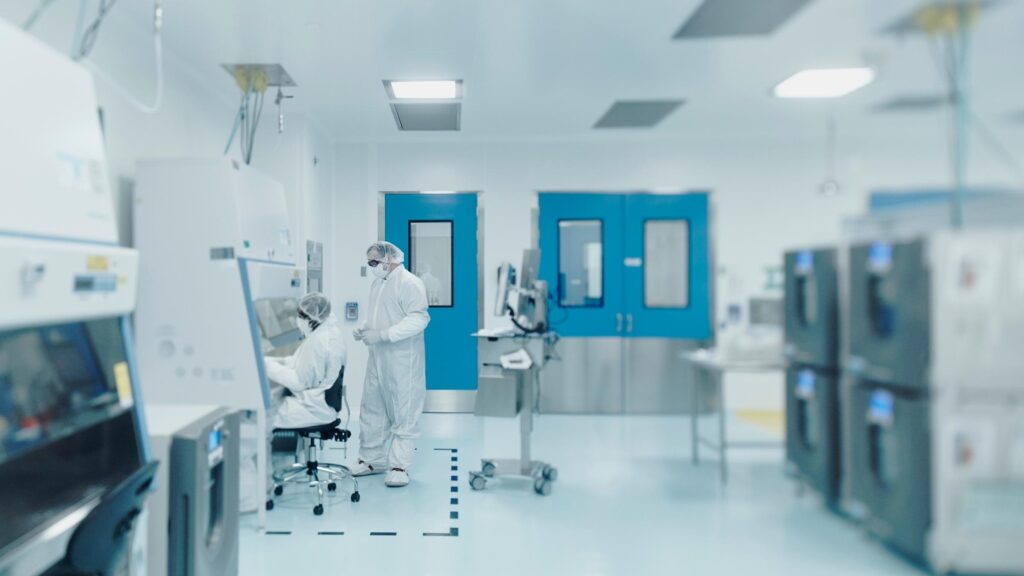
Bancel and the board were in. To fund the program, Bancel reached out to Merck, which makes pembrolizumab (Keytruda), a checkpoint inhibitor. Bancel had already invested in a manufacturing facility in Norwood, Mass., about 45 minutes from the company’s headquarters, that would ultimately take on the work that had started in -Cambridge—sequencing patients’ tumors, generating the right mRNA codes for their vaccines, and then making those vaccines, all under one roof. The Norwood facility would eventually be the hub for making many of Moderna’s products, while manufacturing for intismeran shifted to a new facility in Marlborough, Mass., in 2025
“Given that this experiment was so bloody expensive, it had to have a ‘wow’ effect size,” says Zaks, who is now a partner at global investment firm Orbi-Med. “It couldn’t be on the margins. So we had to do the smallest trial we could do and still show this really whopping effect size so it was not questionable.”
Figuring out how to find the red flags on tumors (the markers distinguishing cancer cells from normal ones), and which ones to target with mRNA to get the best response, was critical. “I figured that we needed to code in a very deterministic fashion because we needed a robust process that was replicable,” Zaks says. He asked his sequencing team the maximum length of mRNA messages they could make, and Zaks added his own knowledge of how long mRNA sequences for tumor markers needed to be; “the rest is simple math,” he says. The ultimate number of those tumor red flags that Zaks and his team settled on was 34—the number included in intismeran. “It was no magic number that we calculated somehow with complicated math,” he says. “It was extremely simple—what length of mRNA did we need to make it reliable, and how long did we need to make each one to cover what tumors expressed? To date, in 2026, this is the only strategy [in cancer vaccines] known to work.”
Just as patients were enrolling in the study and the Norwood facility was starting to make the mRNA cancer vaccines, Moderna and the world were hit with an unprecedented health emergency: COVID.
Bancel saw an opportunity to put the power of mRNA to the test and decided to pivot nearly all of the small company’s resources to developing and manufacturing a vaccine against the SARS-CoV-2 virus. He had reason to be confident. By 2020, Moderna had already conducted eight clinical trials involving mRNA shots against various viruses, from influenza to cytomegalovirus (a common and chronic herpes virus) and respiratory syncytial virus (RSV). In early human studies, all eight vaccines had generated good antibodies against the viruses in question. But, says Hoge, it wasn’t immediately obvious that the pandemic would become a long-term public-health threat, and he and Bancel debated Bancel’s decision to almost completely divert the small company’s resources to the pandemic effort. “‘Do you want me to stop treating people with cancer? Do I turn away a melanoma patient?’” Hoge remembers saying. “In the end, both of us ended up being right or wrong, depending on your perspective.”
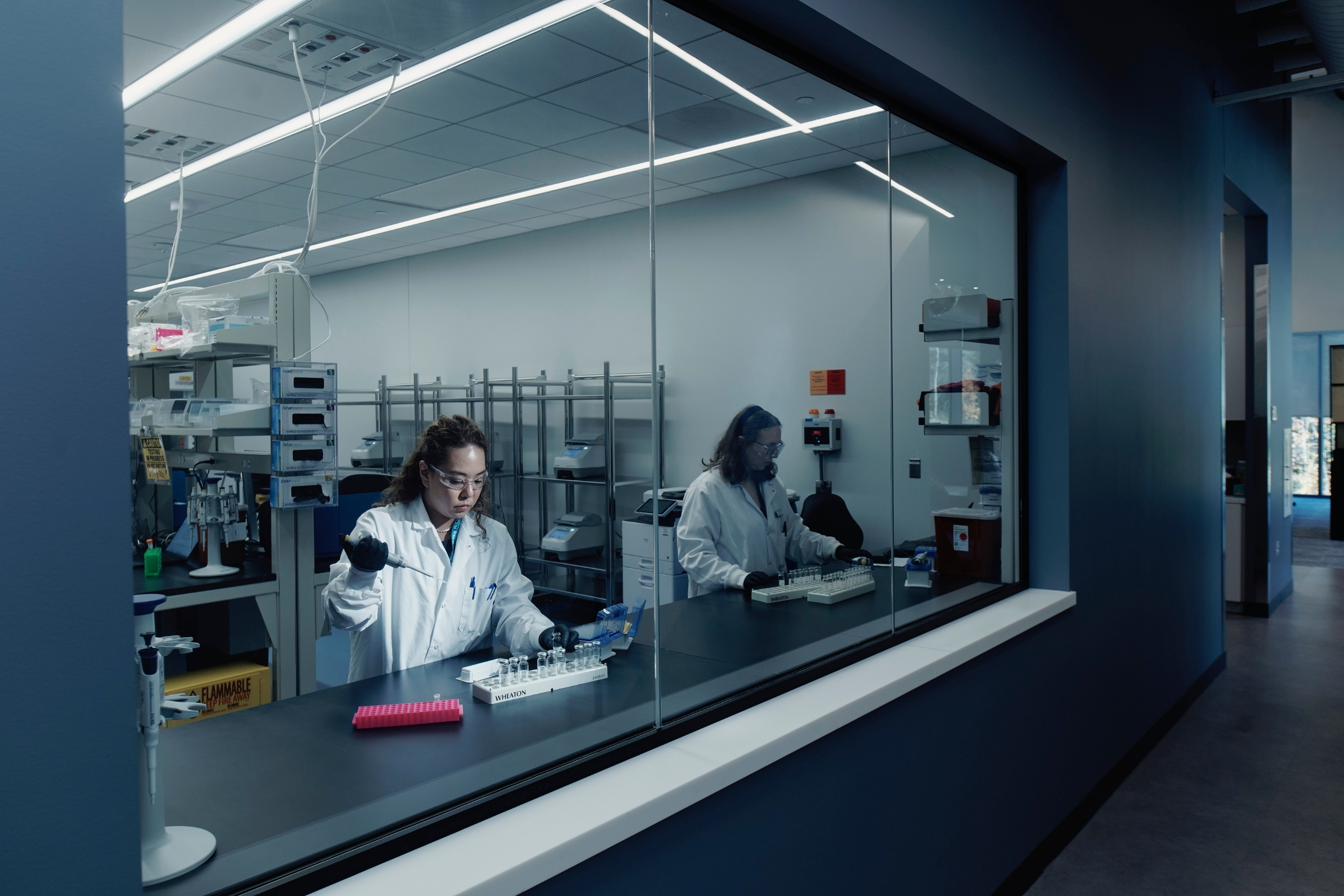
“I love the fact that the first mRNA COVID vaccine was made in the intismeran manufacturing facility,” says Hoge. “But we didn’t build Norwood for cancer or infectious diseases or rare diseases. We built it for all three. People ask, How could such a small company be ready for the COVID pandemic? We weren’t. We had a platform that allowed it to happen.”
Hoge says that “COVID, without a doubt, catapulted us forward,” referring both to the tremendous real-time knowledge the team gained while developing the first mRNA vaccine against SARS-CoV-2, as well as the worldwide validation of the safety and efficacy of the approach that might have otherwise taken a decade or more. It also put Moderna on the map.
Even while being diverted to produce billions of doses of the COVID vaccine, the cancer-vaccine program continued to enroll patients. This October, almost a decade after starting development on an mRNA cancer vaccine, Moderna and Merck reported the “whopping effect” that Zaks had hoped for. Intismeran, combined with pembrolizumab, reduced the recurrence of cancer by 42% in people with mid- to late-stage melanoma. And the benefit, as Zaks had predicted, started to emerge after six months of treatment. “The immune system takes time to be activated,” says Dr. David Berman, chief development officer at Moderna.
Beth Ryzyk heard the promising results while watching the news. In 2024, after being diagnosed with Stage IIIC melanoma, Ryzyk had decided to join the study of intismeran at Memorial Sloan Kettering Cancer Center (MSK). Surgeons removed her tumor as well as the lymph nodes under her arms, and after genetic sequencing, she learned she had 80 tumor markers. In the study, Moderna and Merck focused on the markers they thought would trigger the strongest immune response and designed a personalized vaccine for each of the patients in the treatment group. “It’s pretty amazing that they can individualize it to me and teach my body what to fight,” she says. The treatment is straight-forward enough that she received the intismeran and Keytruda near her home at MSK’s location in Westchester, New York. She still doesn’t know if she received the vaccine or a placebo, since the study has not been published yet, but she gets scans four times a year. Two years later, “so far so good—nothing has popped up, and it’s the best I can ask for,” she says. “The hard thing about melanoma is that it can come back to any part of your body, and it’s always in the back of your mind. So if it prevents 42% [of recurrence], I’ll take that.”
Bancel and Moderna are no longer alone in seeing the promise of mRNA, especially as part of the emerging group of immunotherapies for cancer. They have been joined by a chorus of researchers eager to capitalize on turning patients into their own treatment factories, with an assist from mRNA. They envision a future in which cancers are detected and treated with immune-based approaches like mRNA vaccines that can change the trajectory of cancer—bending the progression curve back down. “If we can increase the proportion of patients who have surgery and treatment [with an mRNA vaccine], then fewer patients with Stage IV melanoma will exist,” says Dr. -Michael Postow, chief of the melanoma service at MSK, who enrolled patients in the intismeran trial. “We could turn this disease into something where we exclusively prevent all recurrent melanoma, and that would be a wonderful place to be—although clearly we are not there yet.”
Bancel anticipates filing for U.S. Food and Drug Administration approval soon, with a possible decision on intismeran in 2027, but he isn’t waiting to explore other cancers for which the vaccine might also show benefit. Moderna is currently conducting nine clinical trials involving intismeran in melanoma, kidney, gastric, lung, and pancreatic cancer, as well as an early-phase study testing it alone, without a checkpoint inhibitor, in Stage I lung cancer.
Earlier this year, the National Cancer Institute launched a $200 million fundraising initiative to support mRNA cancer-vaccine trials, and in 2024, MSK created the Olayan Center for Cancer Vaccines to make personalized mRNA vaccines like intismeran from start to finish—beginning with genetically sequencing patients’ tumors, to generating the mRNA sequences targeting their cancer, to working with manufacturers to make the vaccine, to administering them. (The James P. Allison Institute at MD Anderson Cancer Center in Houston, where checkpoint inhibitors were discovered, is planning to launch a similar center.) It’s an opportunity to push development of next-generation vaccines by taking risks on new approaches that biotech and pharma companies are not as comfortable with. “We want to add on to what industry is already doing, and at the same time innovate and test futuristic versions of mRNA cancer vaccines that academic centers are more suited to developing and testing,” says Dr. Vinod Balachandran, head of MSK’s new center. “It’s an exciting time for cancer vaccinology.”
Future refinements will include exploring whether the personalized approach of designing vaccines for each patient is truly scalable and affordable. One of the advantages of mRNA is that it doesn’t require growing cells but relies instead on computing power to analyze and generate the right mRNA sequences to target each patient’s cancer. “No cell cultures need to be grown,” says Berman. Traditionally, bespoke approaches have not been practical as treatments, because of the time and cost required to custom-design therapies. But Berman “absolutely” believes an mRNA platform can uniquely address both the time and potential cost of customized treatments. “We have scaled down the technical footprint and have plans to scale up [the program] to look at different tumors,” he says.
While Moderna benefited from the unexpected revenues from the COVID vaccine, those profits, and growing concerns among the public about mRNA technology and vaccines more broadly, made Bancel and the company targets. During the pandemic, Bancel was criticized for earning a huge raise and benefiting from exercising stock options granted in 2013, while many countries were unable to secure enough doses of the COVID vaccine to protect their populations. Bancel says he donated nearly all of his increased -earnings to charity, including through one he and his wife launched, Bancel Philanthropies, and created mRNA Access, a program for bringing Moderna’s expertise in making mRNA vaccines to academic and public-health groups in the developing world without the high cost of licensing fees.
Then came the second Trump Administration. During President Trump’s first term, mRNA was given equal footing with more traditional vaccine-making approaches because of the urgency of the pandemic, but in Trump’s second term, mRNA became technology non grata. Robert F. Kennedy Jr., Secretary of the U.S. Department of Health and Human Services (HHS), is a longtime skeptic of vaccines, including ones involving mRNA. In 2025, scientists reported being confidentially advised by staff at the National Institutes of Health (NIH), which reports to HHS, to avoid using “mRNA” in research-grant proposals if they wanted to be successful in securing funding. Conspiracy theories about permanent genetic manipulation resulting from Moderna’s and Pfizer-BioNTech’s mRNA vaccines—not based on any scientific evidence—flooded the internet, and more people distrusted the technology.
In May 2025, HHS canceled a $766 million contract with Moderna to develop vaccines against pandemic influenza and bird flu. In a conversation the following month at Moderna’s Norwood facility, Bancel said he remained committed to mRNA technology, despite significant headwinds from the Administration. “The vision has not changed,” he said then. “It’s science, and you always have to start with the science. I don’t know how to do anything else. You can say it doesn’t exist, and you can fight it, but gravity is gravity—and I believe the same is true with biology.”
Bancel eventually secured funding from the Coalition for Epidemic Preparedness Innovations, the group that funded part of Moderna’s early COVID-vaccine development, after pledging 20% of production of a future approved vaccine to low- and middle-income countries, and began Phase III testing of its bird-flu vaccine in October 2026.
The company’s first mRNA vaccine for seasonal flu was on its way to being reviewed by the FDA when Bancel received a letter in early 2026 stating that the agency refused to review the application, finding fault with the way the trial was designed, despite having previously discussed and accepted the study. The government ultimately reversed its decision and approved the mRNA flu shot in August 2026.
But the drop in revenues from waning interest in the COVID shot and the canceled government contract were a brutal blow to Moderna’s financial health, and Bancel was forced to lay off 10% of his workforce and shut down or delay some projects. “Business-wise it was easy, because you do the math, but emotionally it was really hard to separate with people who helped us build the company,” says Bancel. He also made difficult decisions to terminate some projects, including one for developing a vaccine against cytomegalovirus, which had been the company’s leading candidate before COVID.
Then came the encouraging results on intismeran. Bancel hopes the latest findings lay the groundwork for a rich pipeline of cancer treatments to come. He’s realistic enough, however, to know that the biotech ride is a roller coaster. Weeks before Moderna’s encouraging news, the company’s competitor in the mRNA space, BioNTech, reported that its mRNA vaccine failed to show any benefit compared with placebo in a similar combination with a checkpoint inhibitor among patients with advanced head and neck cancer. Experts say that the two companies use different approaches in developing their vaccines and that BioNTech tested its vaccine in people with later-stage cancer that could not be surgically removed, while Moderna chose to intervene earlier, making it difficult to compare the two.
The conflicting results are not unusual with a new technology, and Bancel is even more convinced than he was in 2011, back in Afeyan’s office, that mRNA is the technology of the future and will generate hundreds of new treatments for a range of diseases. By the end of the year, he expects to announce late-stage results from the first mRNA treatment for a rare disease in which people are missing a key protein that processes other proteins and fats.
“I always think about the long cycle,” says Bancel. “I knew that if you can figure out the engineering puzzle of building a business with mRNA, then the impact of this technology on humanity—way after I’m CEO, way after I’m dead—is going to be gigantic. And we are just beginning. We are just getting started.”
The post The Next Chapter of mRNA appeared first on TIME.