Jason Fazekas has spent most of his adult life on the street or behind bars. He was addicted to heroin for decades and often stole to support his habit. On rainy days, he slept in building stairwells to stay dry. On winter mornings, he woke up with fingers too numb to bend.
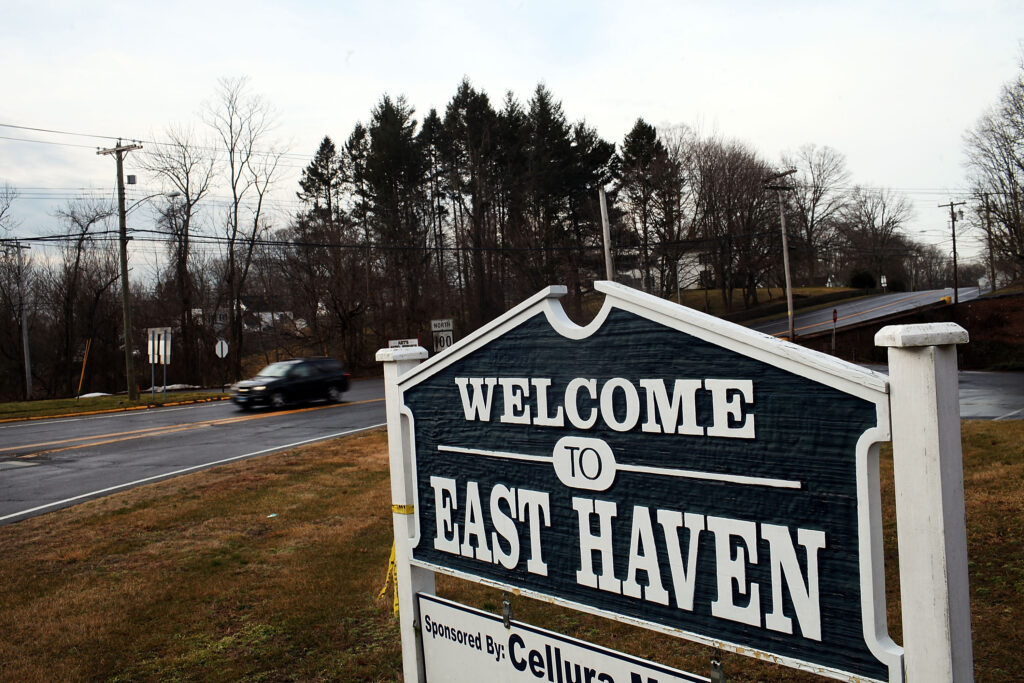
Everything changed in September when he moved into a one-bedroom apartment in East Haven, Connecticut, where he now makes grilled-cheese sandwiches for lunch and heads to bed most nights by 8:30.
This simple life is “the best thing in the world,” said Fazekas, 49, who attends a daily treatment program and celebrated nine months of recovery in October.
His new reality is thanks to a housing programthat the state of Connecticut funded with about $59 million in opioid settlement money, paid by companies accused of aggressively pushing painkillers and fueling the country’s opioid crisis. The program provides people with substance use disorders a rental voucher, a case manager to help them find and keep their home, and support to cover the costs of settling in, such as a security deposit or basic furniture.
Nationwide, state and local governments invested more than $340 million from opioid settlements into housing-related initiatives in 2025, according to an analysis by KFF Health News, the Johns Hopkins Bloomberg School of Public Health and Shatterproof, a national nonprofit focused on addiction. Some projects, such as the one in Connecticut, are aimed directly at helping people most affected by the opioid epidemic. But others lack a clear connection to the crisis, with recovery advocates worrying that the money risks being squandered.
Opioid settlement cash, expected to total about $60 billion over nearly two decades, is considered a once-in-a-generation opportunity to address a scourge that since 2000 has claimed more than 1 million lives in the United States. Though there are some spending guidelines in the landmark agreements reached since 2022 with some of the largest pharmaceutical manufacturers, distributors and pharmacy chains, there’s also a lot of wiggle room, little oversight and large gaps in the public’s ability to track the money.
To shed light on where funds are flowing, KFF Health News and its partners annually file public records requests, scour government websites and assemble a database of expenditures by state and local governments, which are then sorted into categories such as treatment or prevention.
The result represents the most comprehensive national resource of its kind, one that identified more than 17,500 ways settlement cash was used or left unspent last year.
Of the roughly $3.7 billion publicly reported as spent or committed, about 9 percent went to housing initiatives, ranging from permanent housing such as Connecticut’s program to temporary recovery housing to assistance in navigating complex applications and other social services.
Many public health researchers, recovery advocates and families affected by addiction welcome the investments. Housing can stabilize people’s lives enough to get them into treatment and increase their chances of maintaining long-term recovery.
Moreover, settlement funds provide flexibility at a time when President Donald Trump’s administration opposes federal support of efforts to house people before they’re sober — despite evidence of such policies’ effectiveness.
Yet some people closely tracking the money worry that lines will blur between general homelessness initiatives and those focusing directly on people with substance use disorders. As jurisdictions continue to grapple with people living on the street and public backlash over encampments, they may be tempted to use opioid dollars to reduce the visibility of homelessness with little or no programmatic link to addiction.
The most important factor in investing settlement dollars “is maintaining that connection to opioid remediation and the populations impacted by opioid use disorder,” said Dan Kelly, who worked in housing and homelessness initiatives before joining the Michigan Association of Counties, where he guides local governments on settlement spending.
In Connecticut, Fazekas and other participants must have a verified substance use disorder to be eligible for the housing program. Elsewhere, it’s less clear-cut.
New Brunswick, New Jersey, for example, spent $520,000 of its funds on “homeless services” — which may extend to the general homeless population rather than exclusively address homeless people with substance use disorders. To some recovery advocates, that violates the spirit of the settlements.
J.T. Miller, a spokesperson for the city government, did not answer questions about what specific services were funded or how they related to addiction. Instead, he replied by email that settlement money was used to “support staff and services who actively engaged with the homeless population addressing ongoing assistance, prevention and drug addiction programs.” He shared a link to the city’s community services website, which did not mention addiction.
In a report to the state, New Brunswick wrote that the money was for “budgetary offsets and allocations” in its Department of Human and Community Services.
Recovery advocates long have feared that governments would use the opioid money to simply replace general taxpayer funding for existing services, rather than enhancing those services or creating new ones.
Louisville allocated more than $1 million in settlement funds to a Goodwill program called Another Way, which aims to reduce panhandling by having people who are on the street work various jobs around the city — often picking up litter for a few hours — and paying them $50 plus lunch. They may have substance use disorders but are not screened for them.
Matt Mudd, a spokesman for Louisville Mayor Craig Greenberg, said the city invested in Another Way because it provides a “data-proven pathway to treatment, housing, and employment.” To explain the program’s connection to addiction, he noted that “overdose is the number-one cause of death for unhoused people.”
Sharon Allgeier, senior manager of homeless initiatives at Goodwill Kentucky, said the opioid settlement money is helping Another Way save lives. “The number of participants that are going into treatment is amazing,” she said.
Some 1,800 people were in the program last year, according to the organization. About 270 of those gained full-time employment, and about 240 connected to treatment.
Brittany Morris remains skeptical.
Another Way “helps people that are on the streets,” said Morris, who works at Vocal-KY, a nonprofit that advocates for policies addressing overdoses and poverty. “But do I feel like it’s related to the opioid crisis? That’s basically implying every homeless person is a drug addict hooked on heroin.”
Indeed, while many people assume homelessness and addiction go hand in hand, research suggests more nuance.
A major study on this topic was published last year, based on data from California, the state that accounts for about a quarter of the nation’s homeless population. Just over a third of homeless people regularly had used illicit substances in the previous six months, the study found, and a quarter never had used drugs.
“Most people who are homeless do not have an addiction. And most people who have addictions are not homeless,” said Margot Kushel, a co-author of the study and the director of the University of California at San Francisco Benioff Homelessness and Housing Initiative.
Given the complex relationship between these two issues, putting settlement money toward general homelessness services may fall short.
That’s why some people with firsthand addiction experience want to see the funds flow to programs such as the one that benefited Dominic Sitz.
After years on the streets of Louisville, he was connected in 2022 to Arthur Street Hotel, a transitional housing initiative that specialized in assisting people with mental illness and substance use disorders. With help from it and other local organizations, he eventually moved into a small apartment downtown.
“It made me feel human again,” Sitz said.
The Arthur Street Hotel had an annual budget of about $3.5 million, and required a lot of staff and intensive case management, said Susan Buchino, executive director of CARE, the nonprofit that ran the facility. Her team often spent weeks earning people’s trust before they would be ready to come inside.
In less than four years, the program housed more than 400 people. It closed this summer due to a lack of funding.
Sitz, now 49 and four years into recovery, wishes more opioid settlement funds went to efforts like that. If this money is used properly, “great things could be done,” he said.
Although housing programs such as the one in Connecticut are expensive, homelessness and addiction experts say they’re more likely to make a dent in the opioid crisis long-term. Research also suggests they save money over time by reducing health care, welfare and legal costs.
The initiative that backed Fazekas is receiving $14.25 million annually over four years to support up to 500 people. The money goes to rental vouchers; case managers and peer support specialists, who visit participants in their homes at least once a month; and a support fund for application fees, security deposits, furniture or utilities. An additional $400,000 a year is allotted to the University of Connecticut to evaluate the program.
As of mid-September, about 170 people had moved into housing, and about 180 others were searching for a place, according to the Connecticut Department of Mental Health and Addiction Services.
Fazekas hopes to stay in his apartment forever.
“When I was homeless and using drugs, I didn’t love myself. I didn’t care how my day went,” he said. These days he works occasional jobs, keeps connected through virtual “Sober at Seven” meetings and has a place, for the first time in a very long time, for his siblings to come visit.
The housing program, he said, “makes me want to live better.”
Read the methodology behind this project and download the data.
KFF Health News’s Rachel Spears; Shatterproof’s Kristen Pendergrass, Kelly Collins, and Mary Coyne; and the Johns Hopkins Bloomberg School of Public Health’s Abigail Winiker, Benjamin Eidman, Olivia Allran, Katibeth Blalock, Isha Desai, Saathvika Diviti, Joseph Olasupo, Veronica Steck, Amy Lund Stone, Erin Wang and Lillian Williams contributed to the database featured in this article.
KFF Health News is a national newsroom that produces in-depth journalism about health issues and is one of the core operating programs at KFF — the independent source for health policy research, polling and journalism.
The Johns Hopkins Bloomberg School of Public Health has taken a leading role in providing guidance to state and local governments on the use of opioid settlement funds. Faculty from the school collaborated with other experts in the field to create principles for using the money, which have been endorsed by over 60 organizations.
Shatterproof is a national nonprofit that addresses substance use disorder through distinct initiatives, including advocating for state and federal policies, ending addiction stigma and educating communities about the treatment system.
Shatterproof is partnering with some states on projects funded by opioid settlements. KFF Health News, the Johns Hopkins Bloomberg School of Public Health and the Shatterproof team that worked on this report are not involved in those efforts.
The post Opioid settlement money is helping fight homelessness. Some fear blurred lines. appeared first on Washington Post.