Trump’s push to install conservative judges is running into resistance from an unlikely source: his own Republican senators.
Sens. John Cornyn of Texas and Thom Tillis of North Carolina are using their influence on the Senate Judiciary Committee to block or delay Trump’s nominees, arguing that the White House has bypassed home-state senators in the selection process.
Their leverage comes from the Senate’s informal “blue slip” tradition, which gives home-state senators a say over judicial appointments. While not constitutionally required, the practice can give senators significant power to stall nominations, particularly for district court seats.
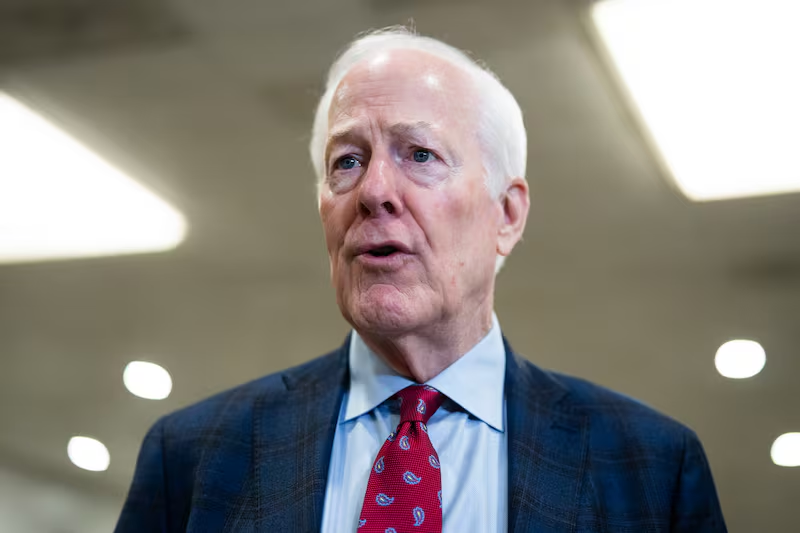
Donald Trump has said he isn’t a fan of Republican Sen. John Cornyn.
Tom Williams/CQ-Roll Call, Inc via Getty Images
The resistance has already had consequences. The White House withdrew its nomination of Arkansas judge Lee Rudofsky to the 8th Circuit Court of Appeals on Tuesday after Cornyn and Tillis privately indicated they would oppose him in committee, according to the Associated Press.
Neither of Arkansas’ two Republican senators, John Boozman and Tom Cotton, had endorsed Rudofsky.
Both were reportedly supportive of another candidate, Arkansas Supreme Court Associate Justice Cody Hiland, who interviewed for the appeals court vacancy. However, the White House counsel’s office instead offered Hiland a lower-level district court nomination, which he declined in August.
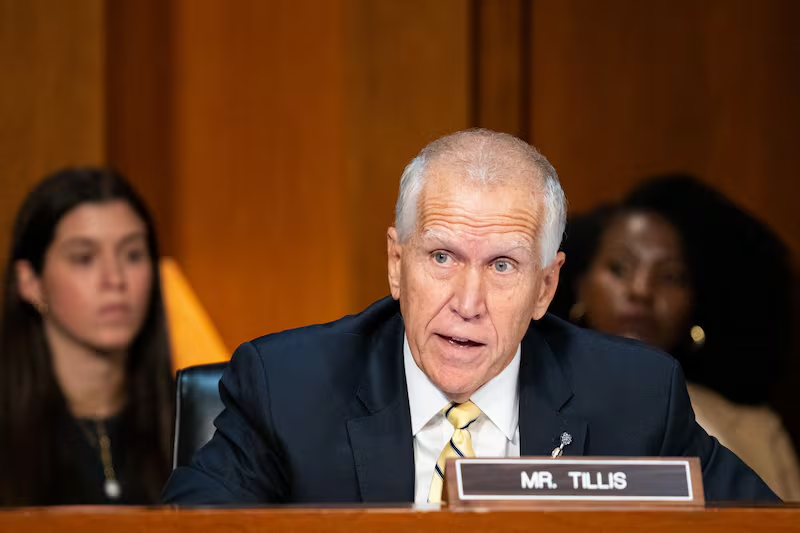
GOP Sen. Thom Tillis isn’t worried about upsetting Trump.
Bill Clark/Bill Clark/CQ-Roll Call, Inc via Getty Images
Tillis has also helped delay a vote on Oklahoma nominee Zachary West, acting on behalf of Republican Sen. Alan Armstrong. He said the White House must stop treating senators like a rubber stamp, telling AP, “Don’t treat us like a manufacturing facility. Treat us like the U.S. Senate.”
“I’m not making a judgment about the merit of the nominee. I’m calling a foul on a process,” Tillis added. “And the sooner the White House gets that, the more productive this next two years will be. If they don’t, they do so at their own peril.”
Meanwhile, in Texas, Cornyn has raised objections to the nomination of Elliot Gaiser, who leads the Justice Department’s Office of Legal Counsel, for a federal judgeship in Dallas.
Gaiser was first approached about the position by Sen. Ted Cruz’s staff on Nov. 4, the day after Republicans lost control of Congress in the midterm elections, according to AP.
It comes as Republicans are racing to confirm Trump’s judicial nominees before Democrats take control of the Senate. As of Nov. 11, 24 of Trump’s judicial picks were still awaiting confirmation, despite 57 judges having already been confirmed during his second term.
But Cornyn says he objects to what he sees as an attempt to rush Gaiser’s nomination through without proper scrutiny.
“Trying to air-drop somebody else in at the last minute for the Dallas vacancy that hasn’t been through that process, I think, is a concern,” he told AP.
He also pointed to Gaiser’s role in Trump’s efforts to challenge the 2020 election result. Gaiser, then a lawyer for Trump’s re-election campaign, advised on its legal challenges, according to testimony to the House January 6 committee.
“I think there’s a better choice through some of the other nominees that have been thoroughly vetted and are available to serve,” Cornyn said. “I certainly want to see us fill the seat.”
Senate Judiciary Committee Chairman Chuck Grassley (R-Iowa) has pushed the Judiciary Committee to process judicial nominees at its fastest rate since the Reagan administration.
In a Wall Street Journal opinion piece published Tuesday, he warned Republicans against slowing their efforts, writing: “The stakes are far too high for Republicans to take their feet off the gas now.”
Cornyn and Tillis say they remain committed to confirming Trump’s nominees but insist the White House must respect the Senate’s role in the process.
Tillis made clear he was unmoved by the prospect of a backlash, telling AP, “I couldn’t care less.”
The post Donald Trump’s Judge Plot Hits Major Obstacle appeared first on The Daily Beast.