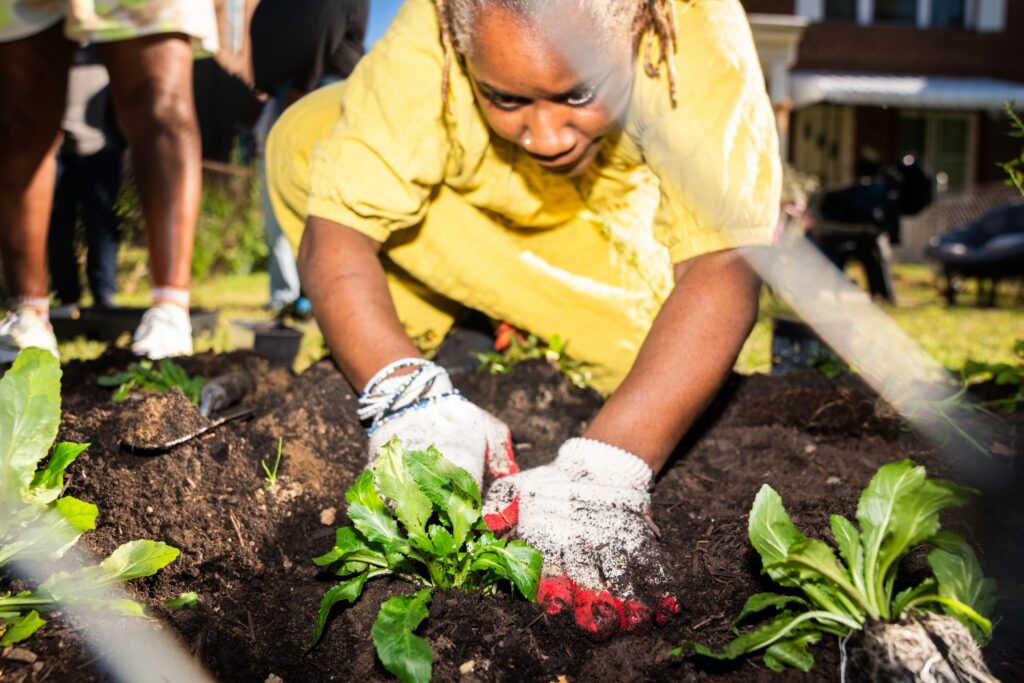
On a recent sunny Saturday, a small crew of people trickled into Margaret Kamara’s front yard in Congress Heights.
A patch of land was already sheet-mulched — covered in cardboard and fertile soil to naturally suppress weeds — and each new arrival brought hugs and warm greetings.
In the yard were members and volunteers with DC Natives, a nonprofit that aims to inform communities in the District about native plants — part of a small but growing movement in the D.C. area to bring indigenous species to more gardens and green spaces. Those who have participated in the practice for years are spreading the word — and the seeds.
At first glance, gardening enthusiasts say, native plants may not be as enticing as their colorful exotic counterparts. They can take longer to grow above ground, building root systems before reaching peak bloom. But once they do, they play the critical role in local ecosystems of attracting pollinators — insects and birds that naturally fertilize gardens and eat pests. Without them, critters that evolved with them can’t survive, causing a ripple effect across the food chain.
Since the start of DC Natives in 2017, “people are much more aware,” co-founder Thorne Rankin said. “People understand the importance of pollinators. People seem to be more knowledgeable about what to do.”
The group came together when co-founders Anne Miller, Peaches Dorsey and Rankin started helping seniors plant native species to create habitats for pollinators and beautify their homes.
“I think people are really hungry to work together and to collaborate on a project that’s positive,” said Rankin, a landscape designer born and raised in D.C. “We hope that by providing that opportunity through plants, that it enables people to feel like they’re part of this city and part of this solution.”
The group has since built out its model. If someone is interested in hosting a pollinator garden at their home with the organization’s help, they first attend an informational session. Then they work with a volunteer block captain in their neighborhood to plan their garden and choose what to grow from a menu of about 15 native plants, including beardtongue, black-eyed Susans and goldenrod.
For gardeners searching for native plant starters and seeds, typical nurseries may not always have what they need.
Jeremy Tidd, a longtime landscaper and native plant enthusiast, began Bona Terra, a native plant nursery, because he wanted to see more eco-friendly practices in landscaping and gardening, and wanted to invest in native plants once he learned about them.
“My whole goal was to have a net positive impact on the environment with my business. I was like ‘I don’t really want to be purchasing from these businesses that are shedding excess nutrients from their nursery into our waterways, not recycling our pots, using peat-based soil,’” he said, referring to a nonrenewable resource that is mined from bogs.
Tidd runs a 13-acre farm and delivers the native plants he grows to people and businesses across D.C. He also runs a plant grant program, which aims to grow and distribute about 1 million seedlings each year, though he said the actual number he gives out depends on how much time he has and how many people apply.
He agreed that there is a growing interest in native planting and that people are excited to learn about native gardening, but he said there is much more work to do. He said he sees a lot less business than he did when he worked at traditional nurseries.
“That’s because the vast majority of people, they just want to go to the plant store that’s the closest and get whatever’s blooming and whatever’s pretty,” he said. “… What I see in a lot of the movement is they’re reaching the people that are interested, and we are not reaching the mass public, which is going to be harder to get to because they’re not looking for it.”
Alexis Bumpers, who started a business that educates people about home gardening in small spaces, said she has gravitated toward native plants in recent years because her garden is pesticide and insecticide free.
“I understand the benefits of having different types of beneficial insects and pollinators in my garden. I realize how much more productive my garden is,” said Bumpers.
“Every year the bees are fluttering, just flying around my garden until late, late fall, like close to the frost,” she said. “I have bees still flying around, and then they come super early because I have food for them in my garden from these native flowers.”
Providing an environment for pollinators is one of the biggest benefits native plants offer, said Rankin. About 35 percent of all food crops and 75 percent of flowering plants depend on pollinators.
But there are additional benefits, Rankin said. Certain perennial and prairie species develop deeper and more extensive root systems than typical plants and grasses. These roots absorb polluted rainwater, which can carry motor oil, pesticides and other toxics washed from the street, and prevent them from reaching rivers. Native grasses also capture carbon more than non-native species — elements that Rankin said can help mitigate climate change “on a very micro level.”
Bumpers also noted the importance of retaining native plants in developing urban areas.
“As we cut down trees and we develop properties all across the city, we don’t replenish what these beneficial insects need to sustain themselves and live and help pollinate,” she said. “It’s just kind of disappointing.”
This restoration work is part of DC Natives’ mission, Rankin said. Much of their work is in Wards 7 and 8. Although the two wards have more parks and green space than other areas in the city, they are home to the highest levels of environmental pollution and a history of toxic dumping at places like the Kenilworth Park Landfill.
“People really are interested in this concept of trying to restore the degraded habitat,” Rankin said.
Late last month, Rankin arrived to Kamara’s front yard with trays full of native plant starts and introduced the group to each other. Some were longtime DC Natives participants, while others were just starting their journey with the organization, observing the process with hopes of their yards being next.
DC Natives worked with Kamara on another part of her yard last year, and what once was a patch of dirt and grass is now full of flourishing goldenrod and aster, buzzing with bees, monarch butterflies and other insects. When people ask how she’s had such success with her garden, she credits the plants themselves.
“That’s what I love is that these are regular plants. They’re natives. It’s not like you have to go buy something special,” said Kamara. “This is their home, and it’s easy for them to thrive.”
Over time, Rankin said, the group’s work became about more than the planting. As the group worked in her front yard, Kamara greeted neighbors who walked and drove by, curious about what the crew was doing.
“I think it’s almost like a vehicle for people to meet their neighbors, because when they get a garden and they’re out in their yards and then someone walks by and they want to know what they’re doing … they can talk about the milkweed that they just planted for the monarch butterfly, why that’s important,” Rankin said. “It’s really fostering a lot of those community connections, and offering people, I think, a way to feel less alone in the city.”
The post Why more people are turning to native gardens in D.C. appeared first on Washington Post.