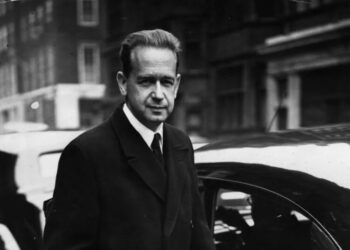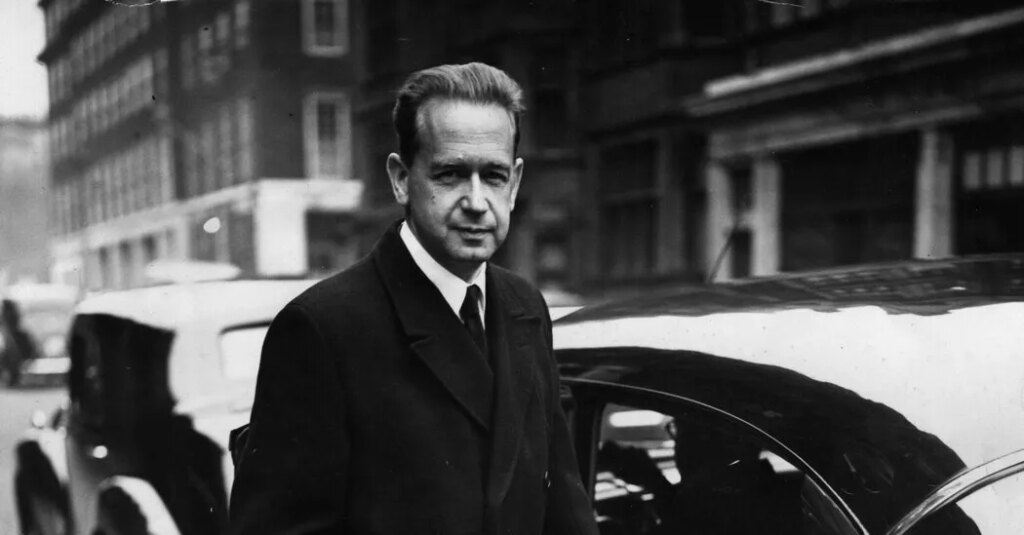
For a long time, the 1961 plane crash that killed the U.N. secretary general Dag Hammarskjöld has been a mystery: a nighttime catastrophe in Cold War Africa, unexplained and unexplainable.
In recent years, United Nations investigators have pushed for answers: What really happened to Mr. Hammarskjöld, a Swedish diplomatic titan who led the United Nations through Cold War rivalries and decolonization? Was it a tragedy? Or an assassination?
“We deserve answers,” Caroline Hammarskjöld, the diplomat’s great-niece, said in an interview. “If it was an attack, then we have the right to know.”
The lead investigator of a much-anticipated report released by the United Nations this week said it provided no definitive answers because he was “almost certain” that the United States, Britain and South Africa had not disclosed all their documents related to the case.
The State Department said in a statement to The New York Times that the U.S. had “cooperated extensively with this investigation, including by sharing thousands of pages of declassified documents.”
The British government declined to comment, and the South African government did not immediately respond.
The U.N. has vowed to keep pushing. In a preface to the report, António Guterres, the current secretary general, said, “We owe this to the life and legacy of Dag Hammarskjöld and to the members of the party accompanying him.”
A Dangerous Mission
Late on Sept. 17, 1961, Mr. Hammarskjöld was traveling across southern Africa to broker an end to separatist fighting in Katanga, a mineral-rich province in the newly independent Congo.
It was a pivotal period for the continent as countries teetered between colonial rule and independence. Mr. Hammarskjöld, then 56, was a fierce advocate of Africa’s liberation (and would become the only person to be awarded the Nobel Peace Prize posthumously).
He knew his mission was dangerous. The United States was covertly supporting different factions within Congo and had just helped assassinate Patrice Lumumba, one of Congo’s most charismatic political figures, earlier that year.
As Mr. Hammarskjöld’s plane skirted Congolese territory, it observed near-total radio silence. Moments before it was set to land in Ndola, a city in today’s Zambia, it crashed.
A ‘Direct Attack’?
The colonial authorities initially blamed pilot error. But newer evidence suggests foul play.
Mohamed Chande Othman, a former chief justice of Tanzania, has led the U.N. investigation into the crash for over a decade.
Mr. Othman, who declined to comment on the report released this week, wrote that both the United States and Britain knew of Mr. Hammarskjöld’s itinerary, as did people in the area, suggesting that an attack could have been planned.
Many witnesses saw two planes that night. According to the report, they said the other plane might have fired at Mr. Hammarskjöld’s. Several people recalled “a flash or light in the sky, or fire before impact.”
Mr. Othman noted that although 15 people on board died instantly, one passenger survived for a few more days, telling doctors that there had been an explosion aboard, followed by smaller explosions that forced the plane down.
The report refers to testimony from Charles Southall, a former American naval officer, who was monitoring radio traffic in Africa at the time. He has said he heard a radio transmission from a Belgian mercenary pilot the night Mr. Hammarskjöld’s plane went down.
“You could hear the gun cannon firing rat-tat-tat,” Mr. Southall told documentary filmmakers, “and he said, ‘I’ve hit it. There are flames coming out of it.’”
A Multinational Cover-Up?
The U.N. report suggests that the United States, Britain and South Africa hid the truth and are still doing so a lifetime later.
At the time, colonial officials appear to have steered the investigation away from foul play, and officials from Rhodesia, a former region of south-central Africa, suppressed the testimony of the surviving passenger.
Susan Williams, whose 2011 book “Who Killed Hammarskjöld?” kick-started the U.N. reports, said the case had “the appearance of a cover-up.”
This week’s 83-page document was the sixth U.N. report on the crash since it reopened the investigation in 2014. Mr. Othman said his repeated requests for more information from the United States and Britain had been denied, while a South African process had sputtered and died.
“The lack of full disclosure remains the primary obstacle,” he said.
‘That Final Piece’
Even if the answers are hidden inside the stubbornly sealed archives of some of Sweden’s closest allies, investigators say the inquest must continue. The point is to send a message, said Jan Eliasson, a former U.N. deputy secretary general: “The truth must take priority.”
Hans Kristian Simensen, a leading independent researcher, wants the Swedish government to open its own truth commission. He suspects foul play.
“It could also be pilot error,” he said. “But maybe a relevant question, then, is: Why are they still keeping classified documents if it was an ordinary air crash?”
Among those killed in the crash was Stig Olof Hjelte, a Swedish soldier, at age 21.
His brother Ingemar Hjelte has taken up the quest. The question for Mr. Hjelte, now 81, is not whether there was foul play. He’s certain of that. Instead, he wants “to know who gave the orders.”
“We still haven’t found that final piece of the puzzle,” he said: “the truth.”
Jeffrey Gettleman contributed reporting from London, and Zimasa Matiwane from Johannesburg.
The post Who’s Hiding Secrets About Dag Hammarskjöld’s Death? appeared first on New York Times.