While voters of all stripes rebuked President Trump’s tariff policies and the war with Iran on Tuesday, those issues were top of mind in farming and ranching communities across the country, catapulting Democrats into top positions in Iowa, Kansas and Texas.
That’s because farmers “have kind of been like the canary in the coal mine,” said Lesly McNitt, the vice president of public policy at the National Corn Growers Association. Over the past two years, farmers and ranchers immediately felt the effects of some of the Trump administration’s decisions and executive orders, she said.
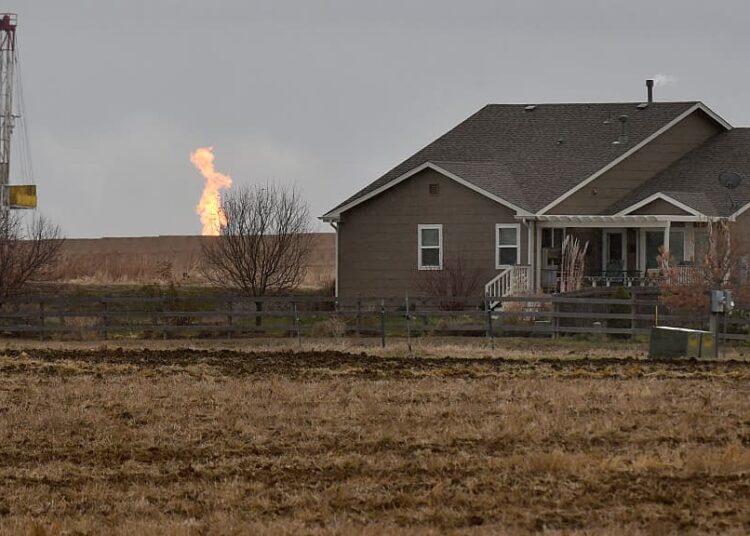
Months before tariffs drove up the prices of imported consumer goods, China stopped buying American soybeans in retaliation, depriving farmers of expected income. Weeks before gas prices soared, the war in Iran caused a spike in fertilizer prices, raising farm costs.
Democrats now face the challenge of finding long-term ways to support farmers and ranchers, negating the uncertainty of recent years.
The biggest piece of legislation that Democrats can tackle is the five-year farm bill, which has passed in the House and is awaiting consideration in the Senate, where it will need 60 votes to end debate and move to a full vote. That could happen before the Democratic-majority House and Senate are seated in January, but legislators are more likely to approve a one-year extension instead, and the new Congress will have take up the bill again next year.
Corn-heavy states will also look to Congress to allow the year-round sale of 15 percent ethanol fuel blends. Dairy groups have been clamoring to reform visa programs for temporary agricultural workers.
“We want steadiness with what is going on,” said Kyle Hemmert, a Republican rancher in western Kansas. “That is where Republicans have failed so bad for Kansas and the nation. That’s why they got their butt whipped.”
While farmers welcomed the $12 billion farm bailout disbursed early this year, several groups said the funding was a Band-Aid that didn’t address deeper problems in the industry. The additional $15 billion in promises that the Trump administration made to farmers and ranchers — including $8 billion in aid tied to high diesel prices in the weeks leading up to Election Day — did little to sway Republicans.
And neither did Mr. Trump. At his final rally before the election, in central Kansas, the president bragged that farmers had told him he was the “best president in the history of presidents for the farmers and ranchers” before admonishing ranchers — not for the first time — to produce cattle faster.
(The gestation period for a heifer is about nine months, and it takes about two years to raise a calf before it can be slaughtered for beef.)
It was not a winning closing message: Kansans elected a Democrat, Adam Hamilton, to the U.S. Senate for the first time since 1932.
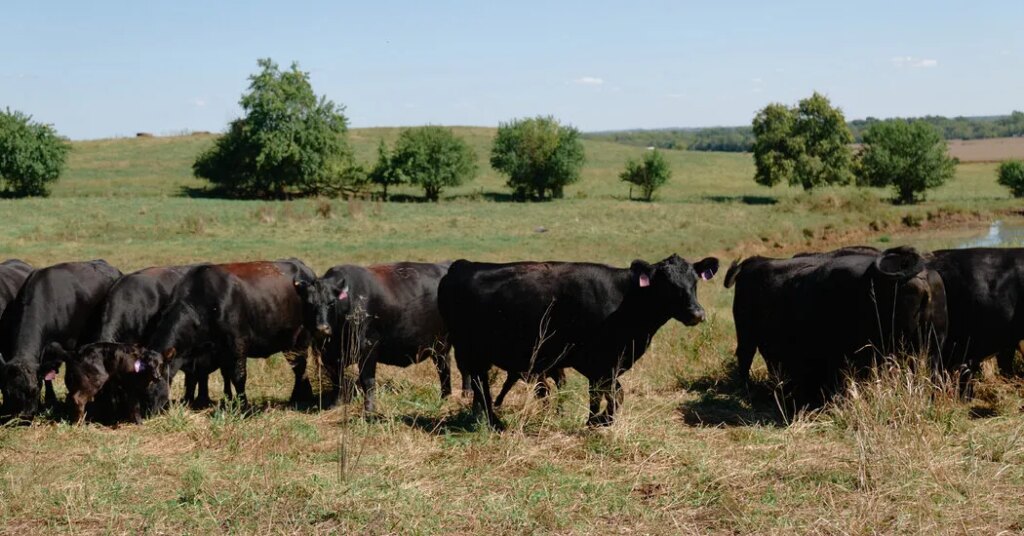
The biggest loss of Republican support came in Seward, Ford and Finney Counties, rural areas in southwest Kansas that are home to around 25 percent of all beef production in the country. The region is heavily Latino, and was the target of federal immigration raids in September that the cattle industry roundly denounced.
In 2024, Mr. Trump won 66 percent of the vote in Finney County. On Tuesday, Senator Roger Marshall, a Republican seeking a second term, won just 47 percent of it. Democrats did not even run a candidate from the area for the Kansas House of Representatives in 2022, and their candidate lost by more than 30 points in 2024.
This year the party won. The seat was one of up to 20 that Democrats may have flipped in the Kansas Statehouse after votes are counted and certified.
Martin Rosas, president of the United Food and Commercial Workers union local that represents Kansas meatpacking plant workers, said that after the raids he had received a concerned call from the state’s senior Republican senator, Jerry Moran. He did not receive one from Mr. Marshall.
“Everyone you talk to is very conscious that the Republican Party is not a friend of the working people,” Mr. Rosas said. Gov. Laura Kelly, a Democrat, spoke to those workers after the raids and told them that immigration policy was decided on the federal level, and that the way to change it was to get out and vote, he said.
The economy of southwest Kansas, from dairies and feedlots to farming and trucking, relies on meatpacking plants operating at full capacity. “We hear a lot from farmers in southwest Kansas that are not happy,” Mr. Rosas said. “The gas prices, fertilizer and war in Iran have triggered their anxiety, and the party of Trump no longer identifies their needs.”
Mr. Hemmert, the Kansas rancher, said he didn’t like Mr. Marshall but had voted for him anyway. He considered voting for Mr. Hamilton but disagreed with his reluctant support of legal abortion, illustrating the challenge Democrats will have to hold on to rural voters in the long run in ways that go beyond agricultural issues.
In Iowa, even though Republicans won in many rural areas, there was a swing toward Democrats. In the second-biggest farming state, Democrats won the governorship, a Senate seat and three of four House seats. All were held by Republicans.
The Iowa Farmers Union doesn’t typically endorse candidates for national office. But it decided to do so this summer, after two years of what its president, Aaron Lehman, called “policy blunders” by the Trump administration.
The Farmers Union asked for, and expected, Iowa’s all-Republican congressional delegation to push back against tariffs, the war in Iran and cheap imported beef, he said.
The state’s farmers were “really disappointed that they did not see an Iowa voice standing up in reaction to these proposed policies from the administration,” Mr. Lehman said.
Some farm organizations endorse candidates closer to Election Day, concerned more with supporting the front-runner than trying to influence the outcome. But the Iowa Farmers Union endorsed a Democratic slate in September, hoping it would change the minds of some people who traditionally vote Republican.
“We expected that we would feel some blowback,” Mr. Lehman said. “And in fact, the opposite happened. We were hearing from folks saying, ‘I’m glad someone is standing up and saying this.’”
Sid Miller, the departing Republican agriculture commissioner in Texas, did not mince words about how his party fared on Tuesday. “It was a zombie apocalypse,” he said. “It was our Waterloo or our Little Bighorn. We got annihilated.”
Mr. Miller was not on the ballot Tuesday after he lost in the primary when Gov. Greg Abbott, a Republican, backed his opponent. That candidate lost on Tuesday to the Democratic nominee, Clayton Tucker. Mr. Abbott also lost.
Voter opposition to data centers was the biggest factor in Republicans losses in Texas, Mr. Miller said. He said farmers and ranchers opposed data centers because they were largely built near their land and the transmission lines ran along their farms. Ranchers were also hurt when the president’s plan to import more beef lowered the price they received for their cattle, and farmers had to pay more for fertilizer and diesel.
The thought process of many of these voters, he said, was “I’m a Trump supporter through and through, and they’re killing us, so I’m not voting for them or I’m not going to vote at all.”
But perhaps the biggest surprise has come from the U.S. Senate race in Mississippi, where Scott Colom, the Democrat, was leading the Republican incumbent, Cindy Hyde-Smith, by 1,813 votes. Votes were still being counted.
Mr. Colom worked to frame Ms. Hyde-Smith, a rancher, as out of touch and unsympathetic to soaring costs, calling her “Cindy High Prices.” Eight months after Ms. Hyde-Smith told a local news anchor that “there are plenty of other proteins to choose from,” Mr. Colom dropped a campaign ad that went quickly went viral.
“Pick another protein?” says a man flipping burgers on a backyard grill in the ad. “I’d rather pick another senator instead.” (Except for chicken, shoppers aren’t picking other proteins.)
If the unofficial results hold, Mississippi voters, just like those in Kansas, Iowa and Texas, will have picked another party.
Emily Cochrane contributed reporting.
The post Swings in Farm Areas Helped Propel Democrats to Victory appeared first on New York Times.