For the first time in a generation, Texas Democrats will have a real chance to govern. Republicans may not make it easy.
On Tuesday, Democrats won races up and down the ballot, from U.S. Senate to agriculture commissioner, and took control of the Texas House after Republican domination since 2003. The new leaders take office in January, just ahead of the next legislative session.
The Democratic victory was thorough and stunning — and left big questions about what comes next for the country’s second most populous state.
How aggressively will Democrats seek to remake the political landscape in what until Tuesday was the incubator of American conservatism? What promises will become legislative priorities? And how much can Democrats get done with Republicans still in control of the State Senate?
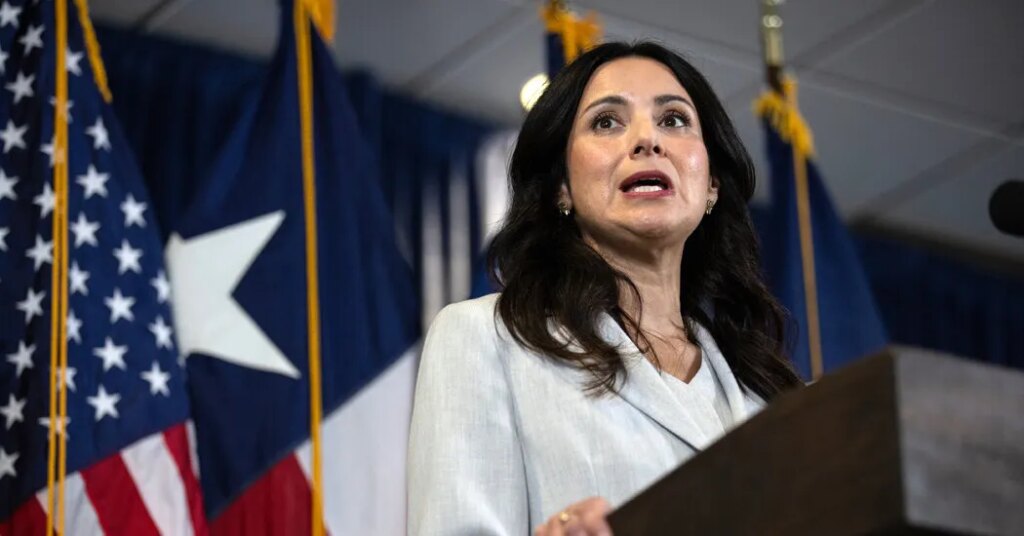
The newly elected Democratic governor, Gina Hinojosa, is a longtime state representative who knows the inner workings of the Texas government. But she’s never served in statewide office, and on the trail, she and the Democrats made big promises.
Ms. Hinojosa pledged to abolish the state’s billion-dollar school voucher program, which districts say drains resources from public education. She has said she will regulate data centers. She has promised to tackle affordability, proposing an end to corporate tax subsidies, a ban on private equity firms buying houses and a one-time $1,500 refund check from the state’s rainy day fund for every household.
The governor-elect has said she will oust her predecessor’s picks to lead state agencies and root out corruption. As a lawmaker, Ms. Hinojosa opposed the state’s abortion ban and restrictions on L.G.B.T.Q. rights. She helped organize a walkout against conservative voting bills.
Ms. Hinojosa ran for governor as a populist, pledging that she and her party would not shut out conservative voices.
“We will have a bipartisan transition, and we will have a bipartisan administration,” Ms. Hinojosa said at her first post-election news conference in Austin on Thursday.
Nevertheless, some in the far-right old guard, including prominent conservative activists, are pressuring the Republicans left in power to block, obstruct or otherwise undermine Democrats.
Tom Oliverson, a lawmaker from Cypress who chairs the House Republican Caucus, said he wants to protect three decades’ worth of conservative lawmaking.
His job is “to keep the Republicans together and preserve what we have already achieved,” Mr. Oliverson said. “We’re going to make the best of it.”
One institution in particular — the State Senate — remains firmly in Republican hands. If it so chooses, the conservative majority could stymie the state’s newly elected leaders. Some senators appear ready.
“Texas stands as long as the Texas Senate Republican caucus holds the line,” Charles Schwertner, a Republican senator, posted on X on Tuesday. “We will.”
State Senator Bryan Hughes, who wrote the abortion ban, promised on social media that Republicans would work with Democrats — with one caveat. “Make no mistake: We will be the firewall against bad and destructive policy.”
Under Dan Patrick, the hard-line Republican lieutenant governor, lawmakers outlawed abortion, loosened gun restrictions and injected Christianity into public schools.
Ken Paxton, the scandal-ridden attorney general, was a national standard-bearer for conservative policies.
Greg Abbott, the outgoing governor, issued orders and rules backing Donald Trump’s border policies and targeting L.G.B.T.Q. rights. He installed friends and donors in every state institution, targeting diversity and inclusion programs and instituting policies that could take Democrats years to unravel.
Mr. Abbott, Mr. Paxton and Mr. Patrick all lost their jobs Tuesday night.
Ms. Hinojosa is expected to reverse many of Mr. Abbott’s executive orders and choose new leaders for dozens of agencies, commissions and public universities — which means thousands of hires. She has promised on her first day to fire Mike Morath, the head of the Texas Education Agency, an architect of some of the most conservative school policies.
Finding thousands of talented people who can implement Ms. Hinojosa’s vision will be difficult, said Gene Wu, the chairman of the Texas House Democratic Caucus. The transition team will be looking for people to step away from private sector roles, he said, to “replace Abbott’s cronies and sycophants.”
Installing Ms. Hinojosa’s picks in top jobs could be difficult. The State Senate has the power to reject many appointees. Its Republican members could also hold up or block House bills to exert leverage.
Conservative senators could cause gridlock in the State Capitol, said John Colyandro, a former senior adviser to Mr. Abbott.
“It is going to be really tough for her to get people confirmed if she doesn’t compromise on policy,” Mr. Colyandro said.
Senate Republicans also could try to gut the power of the lieutenant governor, who presides as the chamber’s president, before the Democrats officially take over next year. Vikki Goodwin, who will step into the role in January, also ran on an affordability platform — and backed legalizing marijuana.
Mr. Oliverson, the Republican representative, said an early priority would be to find a House speaker whom conservatives can support. He would not weigh in on the early front-runner for the job, Senfronia Thompson, a Houston Democrat first elected in 1973. Ms. Thompson would be the first Black speaker and first female speaker.
When asked Thursday about the possibility that Republicans would undermine Democrats before they even take office, Ms. Hinojosa said she looked forward to working with the party’s lawmakers. She said Mr. Abbott had been “gracious” and helpful.
“I would hope that elected leaders from both parties don’t get in the way of the progress we can make together,” she said.
Texas Democrats have not determined what policies they will focus on first. But leaders say they will not put social or cultural fights ahead of pocketbook issues.
“Fun fact about L.G.B.T. people: They pay bills like everyone else,” Kendal Scudder, the chairman of the Texas Democratic Party, said in an interview.
Carol Alvarado, the chairwoman of the Texas Democratic Senate Caucus, said Democrats in the Legislature will be looking for an issue on which they can deliver quickly with Republicans, like regulating data centers.
“People don’t want the bickering,” Ms. Alvarado said. “There is so much that we have to do, and we can’t start off on the wrong foot.”
Mr. Wu said Democrats don’t plan to “ram stuff down people’s throats like the Republicans did,” but predicted big changes. He wants government out of bedrooms and doctor’s offices, he said. He wants power shifted back to local communities.
“Texas is a place where people value their freedom,” Mr. Wu said. “We can go back to being Texans today.”
The post A Democrat Will Govern Texas. Republicans Won’t Make It Easy. appeared first on New York Times.