The Scythians, a nomadic people who once roamed the Eurasian steppes on horseback, were many things: warriors, equestrians, metalsmiths, lovers of tattoos. But were they also the first stoners?
In 2017, a team of archaeologists discovered an enormous Scythian burial mound in the Uyuk Valley of southern Siberia. The site, which was 2,800 year old and was named Tunnug 1, was among the oldest and largest of these burial sites and became a literal treasure trove for archaeologists studying the Scythians, who thrived from the ninth century to the third century B.C.
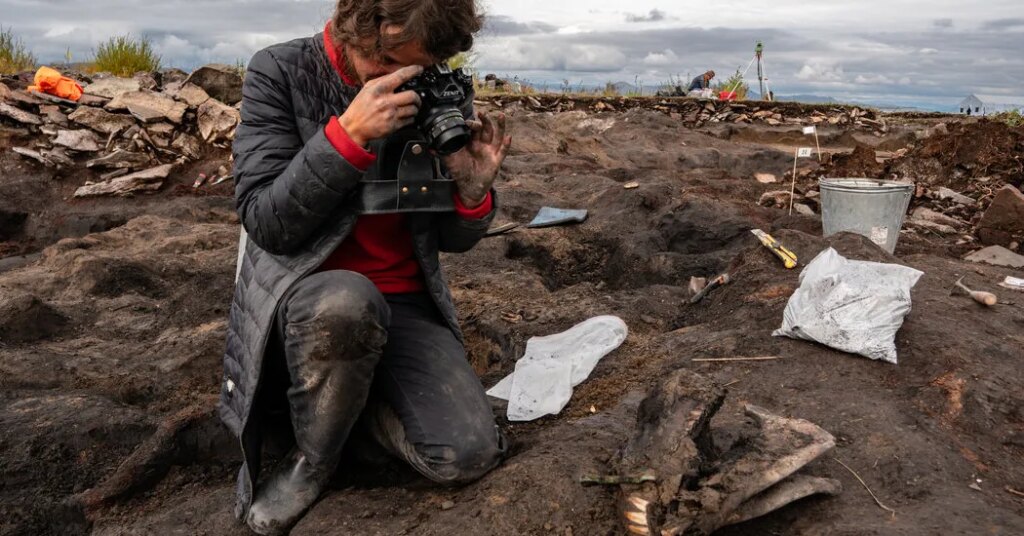
Over the next six years, archaeologists excavated its tombs and cataloged their contents. They found gold jewelry, animal statues, daggers, human remains and hundreds and hundreds of cannabis seeds. The presence of the seeds inspired the scientists to perform drug tests on strands of human hair they had found during the excavation (call it probable cause), and they came back positive.
The results of their archaeological analysis, published on Thursday in the journal Science, suggest humans were getting high at least three centuries earlier than previously thought. The study also raises questions about the role cannabis played in the culture of ancient Asia’s nomadic peoples.
Despite decades of scientific investigation, the history of humanity’s relationship with cannabis is hazy at best. We know that cannabis was cultivated in East Asia at least 6,000 years ago, likely for its oil-rich seeds, but it has been difficult to determine exactly when humans started purposefully using the plant’s psychoactive properties.
In 2019, an international team of researchers discovered tetrahydrocannabinol, or THC, the plant’s most powerful psychoactive component, inside 2,500-year-old stone-filled vessels at an ancient burial site high in the Pamir Mountains of far western China.
Their findings matched a description of Scythian funeral practices written by the ancient Greek historian Herodotus in 440 B.C. The Scythians, he wrote, “take some of this hemp seed and, creeping under the felt coverings, throw it upon the red-hot stones; immediately it smokes and gives out such a vapor as no Greek vapor bath can exceed; the Scyths, delighted, shout for joy.”
Although such evidence is compelling, it doesn’t definitively prove that Scythians were using marijuana for psychoactive purposes 2,500 years ago. After all, it’s entirely possible that they were burning bushels of cannabis to cover up the smell of the dead at the burial mounds.
Gino Caspari, an archaeologist at the University of Bern in Switzerland and an author of the new study, said he believed the Scythians in the Pamir Mountains were probably smoking cannabis 2,500 years ago, but he agreed that there wasn’t enough evidence to prove it.
The Scythians who built Tunnug 1 “were probably not the first to use cannabis in a psychoactive way, but this is the oldest instance where we can actually prove it,” Dr. Caspari said.
Dr. Caspari and his team recovered more than 1,400 cannabis seeds from Tunnug 1 and used radiocarbon dating to determine that they were deposited there some 2,800 years ago. The plethora of hair found in Tunnug 1, a rarity for such ancient sites, also presented a unique opportunity for the researchers to test their theory.
“It’s only so often as an archaeologist that you get to drug test a person that’s been dead for nearly 3,000 years,” Dr. Caspari said.
The analysis revealed the presence of cannabinol, a compound produced when THC oxidizes, alongside weaker chemical signatures associated with THC.
“This is tremendously exciting,” said William Taylor, an associate professor of archaeology at the University of Colorado Boulder, who was not involved with the new study. “I think it’s clear that burning this plant was spiritually and ceremonially significant.”
Exactly how significant remains a mystery. It’s possible that these ancient people smoked weed only during funerals, and it’s equally likely that they blazed for recreational or medicinal reasons, as millions of people still do today.
“There might also be something a bit more sinister going on,” Dr. Caspari said. “On the surface of the tomb we have dozens of sacrificed horses, and we also have scattered human bones, which could indicate human sacrifice.”
Although Dr. Caspari said this was pure speculation, he noted that “if you’re about to sacrifice a human, it might be beneficial if they’re sedated before something bad happens to them.”
While we may never know if a smoking session with the Scythians would end in spiritual enlightenment or a beheading, Dr. Caspari is grateful that these ancient stoners left enough evidence of their activities behind for him and other scientists to clock them as cannabis consumers.
But were they the first? Dr. Caspari said he thought that unlikely. “I honestly think that Neanderthals, Denisovans and maybe Homo erectus already had an idea of what things like cannabis could be used for,” he said. “But that will remain really, really difficult to prove.”
The post Were These Ancient Siberian Nomads the First Stoners? appeared first on New York Times.