Despite his enormous accomplishments, the French soldier and statesman Charles de Gaulle has had a small cinematic profile. While a decisive figure in World War II, he didn’t actually see action in Europe.
But de Gaulle was hardly inactive during the struggle. After the Nazis invaded France, he went to London and immediately got on the BBC to inspire the Free French movement. In “De Gaulle: Résistance,” a new film directed by Antonin Baudry and based on a book by the British historian Julian Jackson, de Gaulle is viewed by some political operatives with cynicism. “A petty colonel promoted to general during the rout,” one observer calls him.
As played by Simon Abkarian, de Gaulle has an imperiousness that tracks with real-life archival footage of the man. In London, he is quick to befriend Prime Minister Winston Churchill (Simon Russell Beale); the two resolve to compel the United States to enter the war.
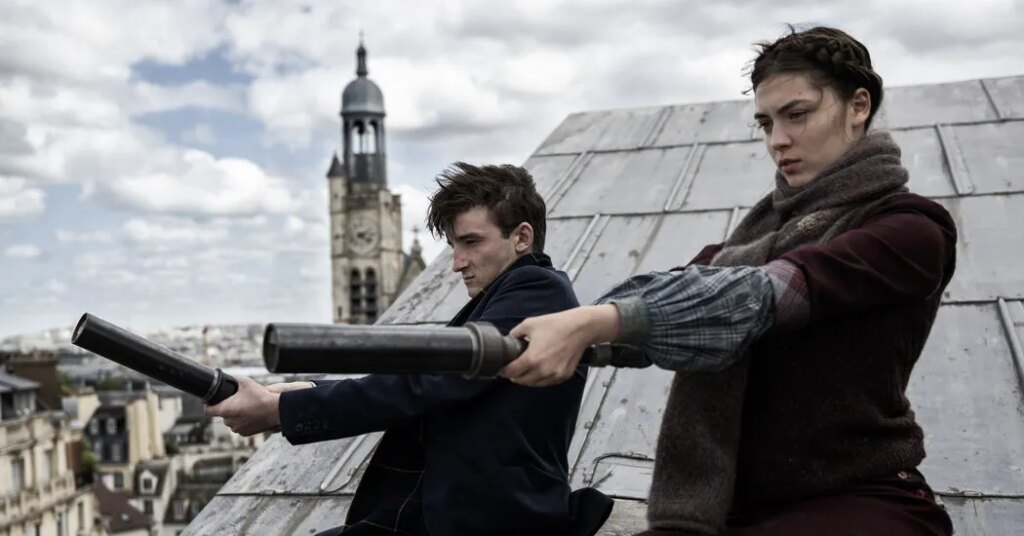
The film also offers the parallel tale of young resistance fighters, Fernand (Florian Lesieur) and Livia (Anamaria Vartolomei), whose rage at the Vichy government of France compels them to radical action. The movie follows de Gaulle to Brazzaville (in what was then part of French Equatorial Africa, and is now the Republic of Congo), which he declares the capital of Free France. The scenes of him in a tank, which appear largely computer-generated, are less intriguing than the simple depictions of the man strategizing with his own staff. Even with its generous running time, the film, which has a sequel coming, is hard-pressed to contain all the action it aspires to convey.
De Gaulle: Résistance Not rated. In French and English, with subtitles. Running time: 2 hours 40 minutes. In theaters.
The post ‘De Gaulle: Résistance’ Review: Uniting a Country at War appeared first on New York Times.