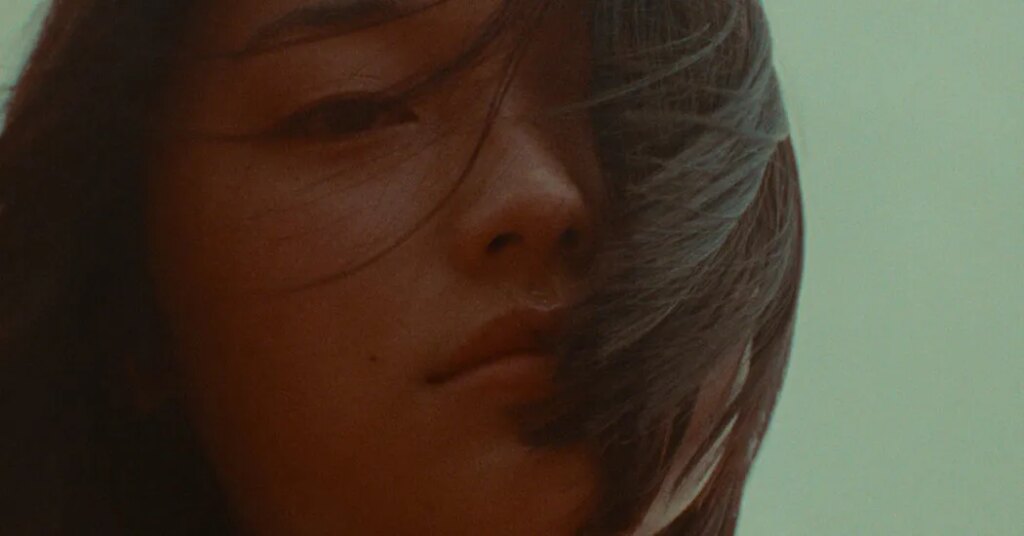
About halfway through “Zi,” the film clicks into place. Just as it begins slipping away into an impressionistic maelstrom, the film’s protagonist, Zi (Michelle Mao), asks if she is currently living in the present or the past. “For you, it’s always the past,” her friend explains.
The question pertains to the mysterious ailment giving Zi troubling visions of herself, but this idea, the sensation of a forever past, is what the writer and director Kogonada is really after. The film is suffused with the ineffable — the hazy melancholy of nostalgia, the feeling of an indelible night becoming evanescent as it fades into memories.
This sensory experience is what enlivens the film, rather than its loose plot. The semi-story takes place over one night, as Zi, suffering from a potential brain tumor and its strange side effects, wanders Hong Kong with two strangers she meets: a lost dancer named Elle (Haley Lu Richardson) and Elle’s ex-fiancé, Min (Jin Ha).
The film can feel like a wisp, at times practically disintegrating into montages of dusky corridors and slow motion tears set to plaintive piano chords; Kogonada is creating a somewhat heavy-handed combination of Richard Linklater’s “Before” trilogy conceit and Wong Kar-wai’s stylized romantic flourishes.
But it’s gorgeously photographed and meaningfully felt, acting as the filmmaker’s experimental rebuttal to “A Big Bold Beautiful Journey,” his 2025 misfire into big studio sentimentalism. This isn’t so much a return to indie roots as it is the purest distillation of Kogonada’s consistent preoccupations: connections between lost souls, an existentialism both mournful and precious, seeing life as moments that continue to pass us by.
Zi Not rated. In English, Cantonese and Mandarin, with subtitles. Running time: 1 hour 39 minutes. In theaters.
The post ‘Zi’ Review: The Perpetual Past appeared first on New York Times.