A record number of Democratic doctors, nurses, scientists and engineers will arrive next year in Washington, where they are expected to help shape a new health care agenda for the party and scrutinize Health Secretary Robert F. Kennedy Jr.’s tenure.
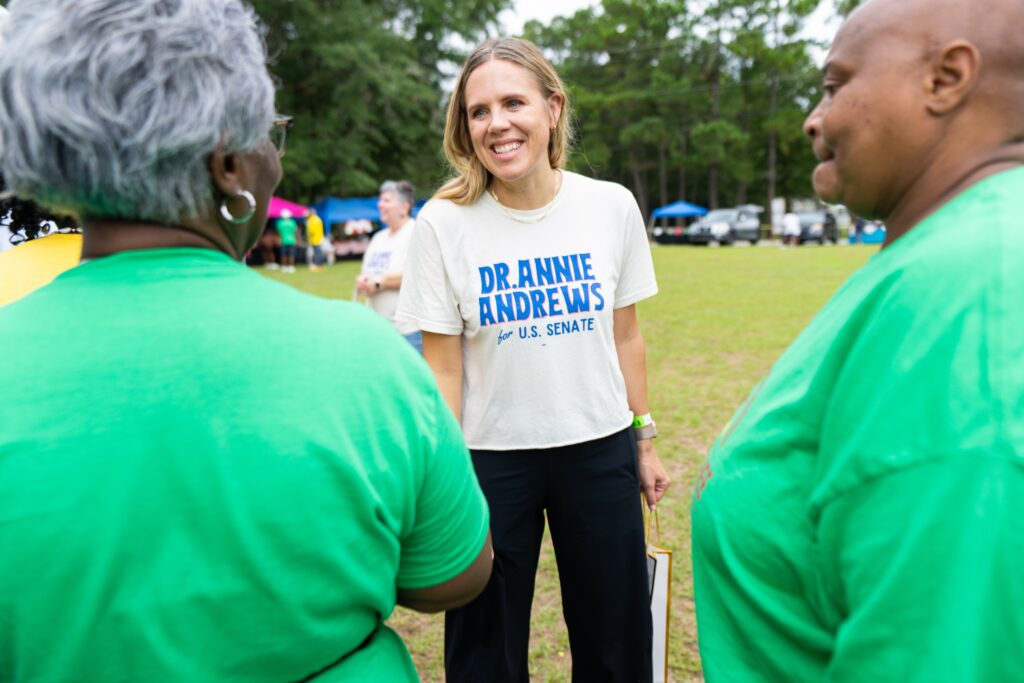
Among them is Annie Andrews, who launched her bid by touting her credentials as a pediatrician before notching a stunning victory to become the first Democrat elected to the Senate in South Carolina in nearly 30 years. Abdul El-Sayed, who defeated Republican former congressman Mike Rogers in a competitive Michigan Senate race, is a former public health official who wrote a bookon Medicare-for-all.
In Wisconsin, emergency room nurse Mitchell Berman flipped a House seat in a district President Donald Trump carried by 4.5 points in 2024. In California, pediatrician Richard Pan prevailed in a newly redrawn district. And in Iowa, Christina Bohannan, who has an engineering and law background, flipped a House seat.
The organization 314 Action, which helps elect Democrats with a science background to public office, called the victories in battleground states a “STEM wave,” noting the first Democratic doctors were elected to the Senate since the 1960s. Democrats won the House and Senate with sizable majorities and succeeded in states once unthinkable, such as Texas and Kansas.
Before the election, top Democratic leaders pledged to prioritize health policy if they succeeded in capturing control of Congress, with a focus on reversing Republicans’ cuts to Medicaid and restoring enhanced Affordable Care Act financial aid. 314 Action doubled its investment in the midterms, reaching over $23 million expressly supporting candidates compared to its previous highest spending of $11.4 million during the 2024 presidential cycle.
But there’s a recognition within the party that they’d need to go further than attempting to undo Trump’s cuts — given he would likely veto — and would need to showcase concrete plans to make health care more affordable ahead of the 2028 presidential election. The coming moves could highlight differences in how Democrats’ moderate and progressive wings approach expanding government-run programs and overhauling the health care systems.
Democrats are also certain to intensify their oversight of Kennedy with newfound subpoena power, allowing them to compel testimony and obtain documents.
“[Kennedy’s] been our number one villain, recruitment tool and fundraising tool,” said Erik Polyak, 314 Action’s executive director.
But in their campaigns, the 314 Action-backed candidates’ main messages were largely not about Kennedy.
Of 16 candidates in competitive races endorsed by 314 Action, more than 2,300 ads aired hundreds of thousands of times in October. Of those, about 7 percent of ads mentioned health care costs. Ads from these candidates that reference health care costs aired over 140,000 times since July, according to a Washington Post analysis of data from the ad-tracking firm, AdImpact.
About 27 percent and 13 percent of Pan and El-Sayed’s ads this year respectively highlighted the rising costs of health care. Statewide candidates like El-Sayed and Andrews also highlighted public health, including everything from vaccines to measles outbreaks in 7 percent and 3 percent of their ads, respectively. Kennedy and his Make America Healthy Again movement were rarely mentioned in ads by these candidates overall, with the exception of Pan, who highlighted Kennedy or MAHA in a little over 2 percent of his ads.
Instead, they sought to portray themselves as people who had witnessed patients struggle to get health care or a rural hospital shutter — and argued they could bring that experience to the halls of Congress. They rode Democrats’ massive electoral wave in a repudiation of Trump, as the party spent two years hammering an economic message and pledging to bring prices down.
“Going after Kennedy, people tend to see it as a political fight,” said Celinda Lake, a Democratic pollster working with El-Sayed. But, she said, voters wonder, “What [are the attacks] going to do for my family? How is it gonna get my health care costs down? It isn’t.”
Kennedy was ushered into the nation’s top health job amid the backlash to the pandemic, and his supporters have characterized the medical establishment as untrustworthy and corrupt. He had sought to focus his messaging on affordability, food and nutrition while he crisscrossed the country instead of divisive issues like vaccines.
The results do not necessarily signal renewed trust in the medical establishment, said Amanda Iovino, a Republican pollster who recruits state and local candidates. Rather, she said, the credentials could have helped candidates whom voters already found relatable.
“I do think that is a personal trust rather than a profession trust,” Iovino said.
The “STEM wave” was also a product of the political environment: Democrats, as the out party in a midterm, were better positioned to recruit high-quality candidates, she said. Some Republicans whom strategists had approached decided not to run after concluding it would be a difficult second-term midterm for Trump.
Affordability, she said, “outperforms pretty much everything,” which helps explain why candidates emphasized patients’ bills, premiums and access to care more than Kennedy’s vaccine policies.
Heading into Election Day, the cost of living was a top issue for voters, with Democrats holding a 20-percentage point advantage over Republicans on the party voters trust to tackle the cost of health care.
Kristina Knickerbocker, a former Air Force nurse who most recently worked as a neuro-oncology nurse practitioner at Ohio State University, faced a Republican who has represented the Dayton-area district for almost a quarter-century. Her race had not been called by the Associated Press as of Wednesday evening, though she had the edge with 98 percent of votes counted. The race tightened in the final weeks, prompting the Cook Political Report in mid-October to shift it from “likely Republican” to “lean Republican.”
Knickerbocker said her campaign did not test messages about Kennedy specifically, or her medical credentials in isolation. Instead, the focus centered on her experience to make a broader argument about health care costs and the consequences of policy made by politicians she contended were far removed from patients and military families.
In California, Pan — a former state senator — said the notion of grilling Kennedy under oath was one of his motivators to run for Congress. He led the charge to stop parents in his state from citing personal beliefs as a reason to skip school vaccine requirements. Kennedy, the founder of a prominent anti-vaccine group, had traveled to the state to oppose that effort.
On the campaign trail, Pan’s conversations largely focused on health care costs, particularly as some major provisions of the One Big Beautiful Bill Act, such as Medicaid work requirements, are set to take effect at the start of next year. Though, he added, he did discuss vaccination rates as well.
“We want to be sure we’re prioritizing the main concerns of the people, which right now is the cost of living, their access to health care,” he said in an interview last week.
The post A ‘STEM wave’: Democratic doctors, scientists win a record number of seats in the midterms appeared first on Washington Post.