Congrats, America. You didn’t blow it.
Lots of people have a story about election night 2016. Mine is that as a center-left opinion journalist at a big national newspaper, I was pre-writing a joint column with a libertarian conservative colleague who couldn’t stand Donald Trump or Hillary Clinton. We both expected her to win.
Late that evening, we realized to our shock that we would have to start all over and write a new piece. The headline: “Congrats America. You blew it.”
Back then, it was astonishing that America would elect someone like Trump. He was far from an unknown. And what we knew — from bigotry, misogyny and sexual assault allegations to bankrupting businesses, stiffing contractors and utter ignorance about government, policy and the values that Joe Biden would call “the soul of America” — was disqualifying. Or should have been.
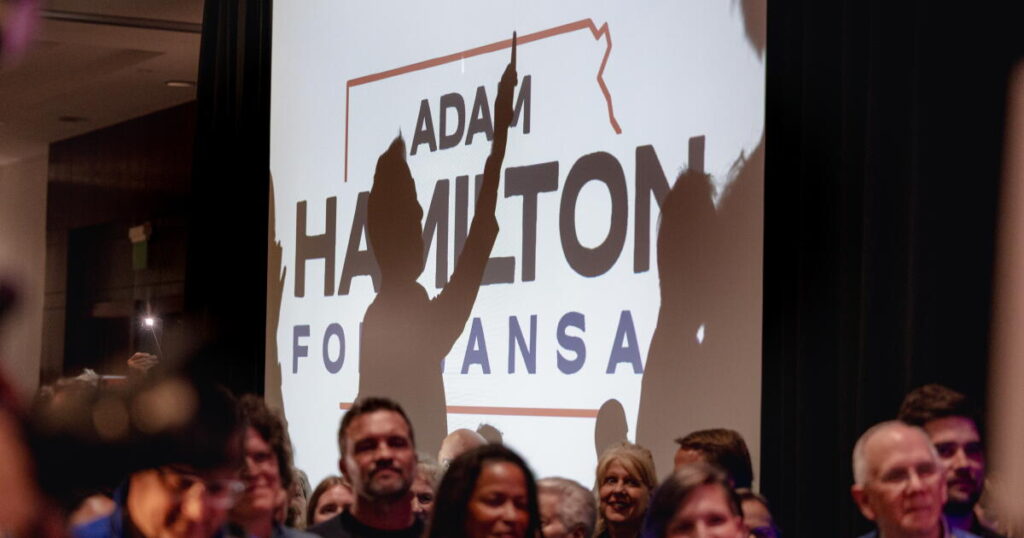
This year the astonishment is that voters finally said, “Enough.” So many that Democrats have not only won the House, they could end up with a hefty 259-176 majority. And their 54 seats in the 100-member Senate (including seven flips this week) could rise to 56 after the Mississippi and Alaska races are called.
Young people and minorities drove the backlash. In a national poll of people after they voted, Democrats won 64% of the Hispanic/Latino vote, compared with 54% in 2024. The party’s 73% share of voters under 30 was an even larger shift, up from 56% in 2024. And Trump loomed large in their decisions, with 61% of those under 30, 61% of Black voters and 52% of Hispanic voters saying opposition to Trump was one reason for their vote.
The economy and “the state of democracy” were voters’ top issues. Six in 10 people under age 45 said the cost of living was crucial to their vote, the highest “crucial” rating of any issue in any age group. The top crucial issue for all age groups, and the only one with an overall majority, was “government corruption.”
None of this should be surprising, given Trump’s outright racism, brutal deportation and detention regime, and overt pursuit of power, gifts, profits and quid pro quos, on top of his callousness toward those starting out in life or working hard just to stay afloat. His mistakes have been legion.
Yet consequences have been rare, which may be why it was a jolt to both parties this week when the Great Blue Wave rolled ashore. The hopes of doom-scrolling Democrats have been crushed repeatedly as they (OK, we) waited for Trump-MAGA fever to break, for that magic tipping point to appear. And Republicans apparently thought that they could coast forever on Teflon Don’s bizarre but seemingly untouchable brand — that voters would never notice his selfish preoccupations and careless directives, or his zeal to stop progress and even reverse it.
Trump’s second term feels like the whole country is trapped in a super-sized Wayback Machine: Capricious, price-hiking tariffs that recall the late 19th century Gilded Age, when oligarchs flourished and the working class struggled. TLC for coal and fossil fuels while knifing renewable energy projects. The return of preventable diseases amid a war on science, and millions of people losing insurance as a result of Dickensian health cuts.
All that plus the war Trump started against Iran, and the terrible candidates he endorsed and sometimes hand-picked to run against an excellent crop of Democrats. This is in itself a statement about the two parties: The Democrats were a motley crew. Some were recruited by establishment figures and some drew belated backing after winning primaries. They are centrists, liberals, progressives and Democratic Socialists of America members. They are in their 20s and in their 70s, from farm country, huge cities and all points between.
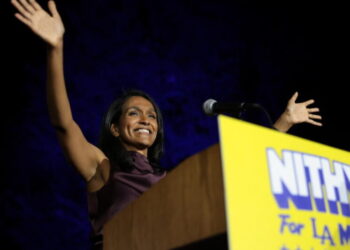
And they are clear evidence that despite Trump’s best efforts to stamp out diversity, equity and inclusion, DEI is very much alive and making a big splash this week in the winners circle. There will be more than 100 Democratic women in the House next year, up from 12 when Nancy Pelosi arrived in 1987. The party has elected Black governors of Georgia and Wisconsin, Hispanic governors of California and Texas, Native American women as governor of New Mexico and senator from Minnesota. The Senate will have its first Democratic doctor since 1938, first gay man, first Muslim and first Paralympic gold medalist. And lest we forget, Florida will have a Black, Trump-aligned Republican governor.
None of this means that MAGA or Trumpism or Republicans are done for. I asked in early 2022, a year after the Jan. 6 Capitol attack, if fissures within the still roiling GOP would be the beginning of the end for Trumpism or the Republican Party. It is now the beginning of the end of Trump’s time in office. But what happens to him and the party he commandeered, and how this nation will handle its next chapter, is still unknowable — and as worrying as ever.
President Obama triggered a bit of a furor early Wednesday morning with a social post that said voters had chosen “a politics that brings people together rather than divides them, and leaders who offer concrete solutions to the challenges they face.” Forget it, commenters told him, we want trials and justice and accountability.
In fact Obama went on to say the job of Democrats while Trump remains in office is to “make changes wherever we have the power to do so, prevent further damage, and lay the groundwork for the future.” A reckoning is part of that groundwork. Future officeholders and government officials must know that there are consequences for violating our laws and Constitution, and Congress must pass safeguards to protect the country from future authoritarians and kleptocrats.
That said, Obama’s not wrong to promote civility and problem-solving. We need solutions and investigations. Democrats are preparing to deliver both. That’s how you bring people together.
Jill Lawrence is a journalist and the author of “The Art of the Political Deal: How Congress Beat the Odds and Broke Through Gridlock.” Bluesky: @jilldlawrence
The post A reckoning is coming for the corruption and brutality of Trumpism appeared first on Los Angeles Times.