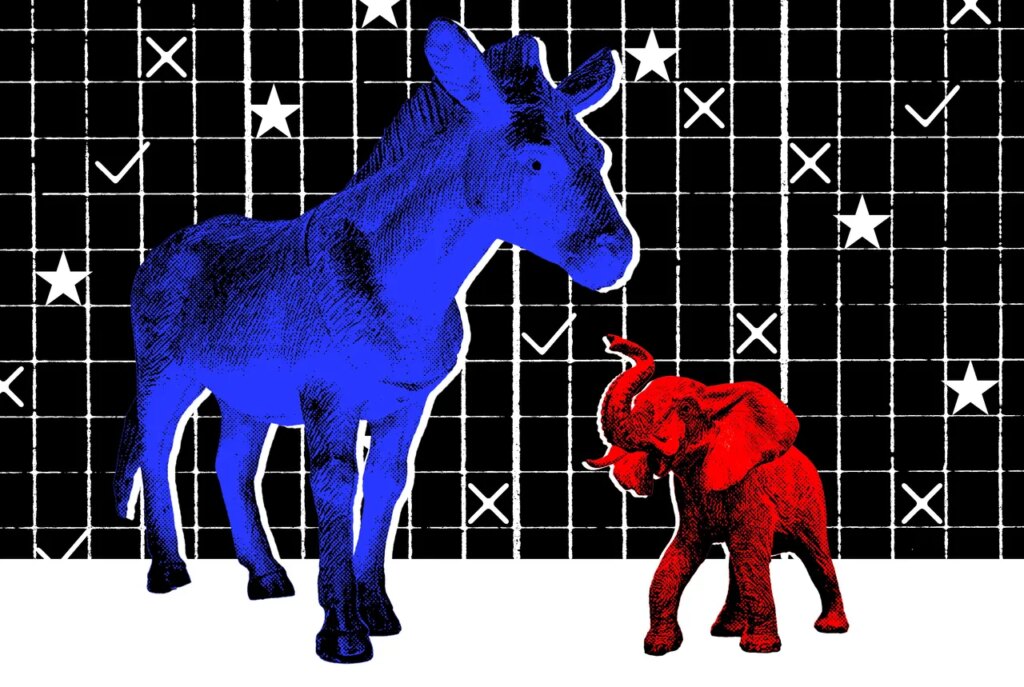
President Donald Trump’s aides were reeling from the scale of Republican losses on Tuesday night, but they almost immediately began figuring out who to blame.
The ultimate responsibility, officials acknowledged only in private, lay with Trump for taking the country into an unpopular war with Iran that drove up prices, which became the number one issue for voters.
But in the absence of being able to blame Trump publicly, there has been growing pressure to find scapegoats in all places, from cabinet officials to White House aides to conservative media commentators.
Recalling how then-president George W. Bush pushed out defense secretary Donald Rumsfeld after the GOP lost both chambers in 2006, sources say there is an expectation from furious officials and donors for Trump to do something similar.
Trump does not seem to have made up his mind on whether he should, sources say, in part because of a recognition that there was perhaps not much that his staff could have done to stave off such overwhelming Democratic victories.
He has also been advised recently, sources tell Inner Loop, that it may be better to keep top staff inside the proverbial tent to ensure they remain loyal in the event they receive subpoenas from congressional investigators next year.
Still, some early scrutiny has been cast on people around Trump who have been viewed as encouraging the president to continue the Iran war even as it started to drag down polls months before the midterms.
Some scrutiny has been directed at defense secretary Pete Hegseth, who has been the target of a whisper campaign that he kept presenting rosy military outlooks that misled Trump into believing more strikes could win the war.
The presentations had been so glowing, sources say, that a number of top officials, including vice president JD Vance and secretary of state Marco Rubio this spring started requesting their own intelligence briefings to get a more somber assessment of the situation.
The Department of Defense did not immediately reply to a request for comment.
In other quarters, Trump advisers have been furious with conservative media commentators who they see as having encouraged the president to double down on the war even after it became mired in a stalemate over the Strait of Hormuz.
And still others returned to blaming White House deputy chief of staff James Blair, who temporarily left the administration to develop the GOP midterm strategy, including an effort to redraw congressional maps to favor Republicans.
In the end, that redistricting gambit backfired in epic fashion. Out of 14 key districts that got redrawn this cycle, Republicans won just one race in Texas and one race in Tennessee, while Democrats won most races in deep red Texas and Ohio by double digits.
Blair was already getting flak preemptively as polls ahead of the midterms showed Republicans down even in those races, some of which Trump carried by wide margins in the 2024 presidential election. But with many of the results now final, Blair has become a target, sources say.
Trump, for his part, spent the latter part of election night blaming the quality of candidates in key battleground races and claiming voters did not support Republicans because he was not on the ballot himself.
Still, other people in Trump’s orbit have been horrified but unsurprised that the president took no personal responsibility and denied that the devastating GOP losses were effectively a referendum on his second term.
Many of the candidates in key Senate races were people that Trump had chosen and endorsed, including the scandal-plagued Republican state attorney general Ken Paxton in Texas and the inexperienced Darline Graham, sister of the late senator Lindsey Graham, in South Carolina.
And in North Carolina, the former RNC chair Michael Whatley was defeated resoundingly by the Democratic Roy Cooper—but only after Trump primaried the popular incumbent Thom Tillis earlier this year.
As for Trump’s claim that he wasn’t on the ballot, that was undercut by the president explicitly telling voters at rallies across the country to pretend that he was, in order to drive turnout. And at those same rallies, some advisers noted, Trump overshadowed his own message by repeatedly talking about record profits of oil companies and his vanity construction projects.
Voters, it’s clear, didn’t like that message.
This is an edition of Hugo Lowell’s Inner Loop newsletter. Read previous newsletters here.
The post Knives Are Out in the White House appeared first on Wired.